Tendai Gukutikwa
Health Reporter
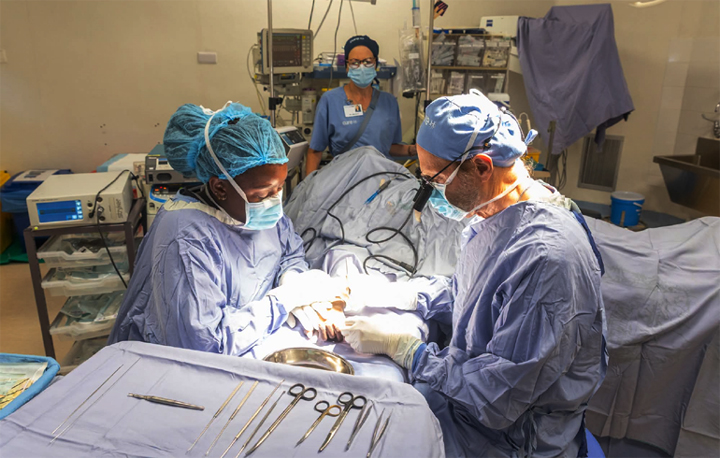
CHILDREN living with specialised orthopaedic and plastic reconstructive in Chipinge District are set to receive free consultations and assessments when a team from Cure Children’s Hospital of Zimbabwe conducts a mobile clinic in the district next week.
The paediatric mobile clinic, being conducted in partnership with the Ministry of Health and Child Care and health facilities in the district, will target children aged between zero and 18 years who may require specialised care. Cure Children’s Hospital therapist, Ms Panashe Sithole, said The Cure Children’s Hospital team will move across four sites in the district from October 12 to 15, giving parents and caregivers an opportunity to have children assessed without having to travel to the hospital’s base in Bulawayo.
“As Cure Children’s Hospital of Zimbabwe, in partnership with the Ministry of Health and Child Care, we will be going around Chipinge from October 12 to 15 offering free screening, consultations and counselling services for children living with such conditions.
“We will be screening children, and encouraging parents and caregivers to come in their numbers so that these children can get the help they need. The programme is aimed at identifying children with conditions that can affect their mobility, development and quality of life,” she said.
The first clinic will be held at Chipinge District Hospital on Monday from 8am to 4pm, followed by Tongogara Refugee Settlement on Tuesday.
She said the team will conduct assessments at Mt Selinda Mission Hospital on Wednesday, before concluding the outreach at St Peter’s Mission Hospital in Chisumbanje on Thursday. Ms Sithole said parents and caregivers should bring children for assessment if they notice physical conditions that require specialist attention.
“Among the conditions targeted during the outreach are cleft lip and palate, clubfoot, bowed or knocked knees, windswept legs, rickets and osteogenesis imperfect (brittle bones).
“Children with untreated bone infections or complications resulting from trauma will also be assessed, while those with disabling scars or contractures caused by burns are encouraged to attend,” she said.
Ms Sithole also said the outreach is expected to provide an important link between communities and specialised paediatric services, particularly for families who may struggle to access specialist care because of distance or financial constraints. She said the programme seeks the involvement of people who regularly interact with children in communities, including community health workers, teachers, churches and traditional and community leaders.
“We are encouraging parents, caregivers, community health workers, schools, churches and community leaders to help us identify and refer children who may benefit from this specialised assessment.
“The mobile clinic will, not only focus on identifying conditions, but will also provide counselling and guidance to families on the available care,” she said.
She said early identification of some childhood orthopaedic and reconstructive conditions can be important in determining the most appropriate intervention and preventing complications from worsening.
“For children with conditions affecting their legs and feet, delays in treatment can affect mobility, and in some cases, their ability to participate fully in school and other activities,” she said.
Similarly, children with cleft lip and cleft palate may require specialised care to address difficulties associated with feeding, speech and other aspects of development.
Children who develop severe scars or contractures following burns can also experience restricted movement, depending on the affected part of the body.
The mobile clinic therefore provides an opportunity for children who may have lived with such conditions without specialist assessment to be evaluated by a team from a specialised paediatric hospital.
Ms Sithole urged families not to assume that a condition is untreatable simply because a child has lived with it for a long time.
“We want people to come and have these children assessed. Early identification can help connect them to the appropriate specialised care,” she said.
The programme also seeks to improve awareness within communities about conditions that require specialist attention, while strengthening the referral link between local health facilities and specialised services.
“Parents and caregivers do not have to wait for children to develop severe complications before seeking assistance, as the outreach is specifically intended to identify children who may benefit from further specialised care,” she said.
The four-day programme will run from 8am to 4pm at each venue. Children from surrounding communities are encouraged to attend the nearest outreach point with their parents or caregivers.
Ms Sithole said the success of the outreach will depend on communities helping to identify children who needed specialist attention.
Free specialised care for Chipinge children