admin
admin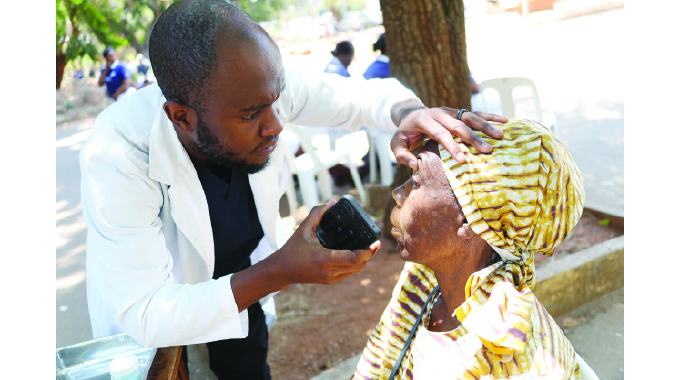
Precious Manomano-Herald Reporter
THE Albino Trust Association has partnered the Ministry of Health and Child Care in diagnosing eye health challenges, with 23 000 people set to get free treatment and spectacles before year end.
Speaking on the sidelines of the commemorations of the World Sight Day at Parirenyatwa Group of Hospitals in Harare yesterday, Albino Trust Association executive director Mr Bruce Nyoni said free eye health treatment should be cascaded to all provinces to ensure no one with sight challenges was left behind.
Yesterday, over 200 people benefited from free eye screening and spectacles provided by the organisation.
“We are giving free services to members of the public. This will go a long way in assisting people, especially those who cannot afford,” said Mr Nyoni.
“Remember it’s not all about money, but it’s about us being humans. Spectacles are hard to come by and they are expensive. We are now talking about universal health care.
“We look forward to complementing the Government’s efforts, especially when we come to the national health strategy. So, once this is done, we are very sure that it will go a long way in preventing blindness.”
Mr Nyoni urged the people to challenge myths and misconceptions regarding eye health, adding that the majority have a tendency of thinking that eye problems come as a result of witchcraft or that wearing spectacles can damage eyes.
Experts say a lot of people could have deteriorating eyesight as a result of the phones they are using or computers. Head of Sekuru Kaguvi Eye Hospital, Dr Bornface Macheka, said 80 percent of the avoidable blindness is reversible and preventable.
“The majority of people in the country fall in the category of common diseases that we prioritise. We prioritise child eye diseases and cancer, we also prioritise cataracts, glaucoma, complications with diabetes mellitus.
“If mechanisms are put in place we will be able to prevent a big chunk of our population from blindness,” he said.
Dr Macheka said there are other causes which are not preventable, those that account for 15 to 20 percent for example, people born with abnormal eyes.
People with eye challenges must avail themselves for screening and treatment so that other conditions can be reversed, he said.


 Online Reporter