Online Reporter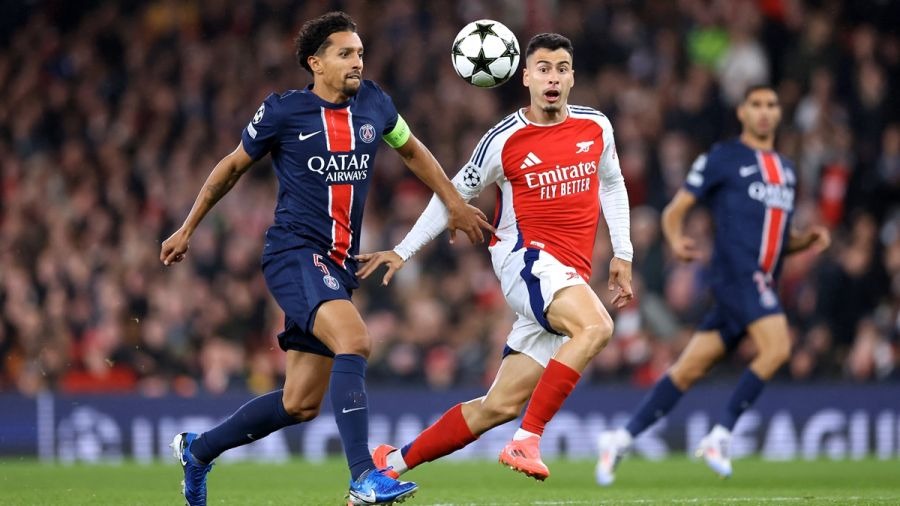
Opta Analyst
A quick glance at the numbers suggests that Arsenal and Paris Saint-Germain have had similarly demanding seasons on their way to today’s Champions League final in Budapest. Arsenal will be playing their 63rd match of the campaign, while PSG will be playing their 56th. But the picture changes when you look closer. PSG also played seven matches at last summer’s Club World Cup, meaning both teams have played 62 matches since last June.
Even so, those numbers do not tell the full story.
While Arsenal enjoyed a proper break last summer, PSG were competing in the United States in difficult, sweltering conditions. That tournament began just 14 days after they had beaten Inter in the Champions League final, leaving them with almost no time to recover.
Their schedule did not ease up afterwards either. Their new season started exactly a month after the Club World Cup ended, with a Super Cup clash against Tottenham, followed just days later by the start of their Ligue 1 title defence.
The expanded Club World Cup ultimately left PSG playing catch-up, with very little time to rest compared to their rivals.
It is hard to measure exactly how much that affected teams. Chelsea, for example, also went deep into the Club World Cup and struggled early in the season, winning only two of their first six league matches before finishing 10th. Cole Palmer endured a poor campaign and will not feature at this summer’s World Cup.
Since the start of the current season, however, the demands placed on PSG’s players and those on Arsenal’s have been very different.
Arsenal have played more matches than any other side in Europe’s top five leagues this season, largely because of their deep runs in both the League Cup and FA Cup. More importantly, they have had fewer chances to rest key players.
PSG, by contrast, have been able to rotate heavily.
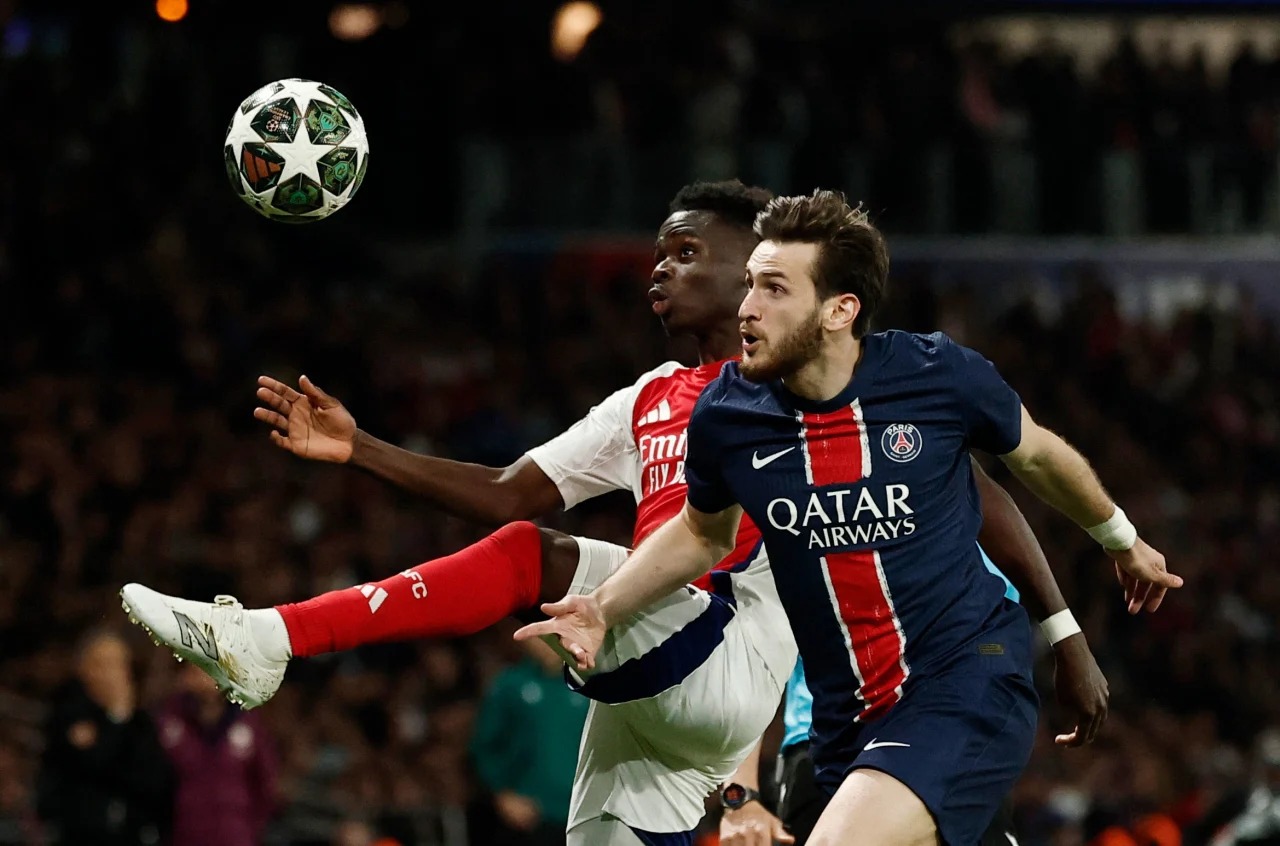
When their domestic campaign began against Nantes, only two players from their Champions League final starting line-up were included in the team. Nuno Mendes, Achraf Hakimi, Ousmane Dembélé, Désiré Doué and Khvicha Kvaratskhelia all came off the bench to help secure a 1-0 win. But such strong reinforcements have not been needed every week.
Luis Enrique has regularly rested his top players in Ligue 1 matches. As a result, although PSG have played many games, their most important players have stayed relatively fresh heading into the final.
Several of their key players have played limited domestic football. Dembélé, the Ballon d’Or winner, started only 11 of their 34 league games. Joao Neves, Mendes and Fabián Ruiz each started 13, while Kvaratskhelia made 18 starts, Doué and Hakimi 16, and Marquinhos just 11. Importantly, none of them has played even half of PSG’s total minutes in Ligue 1.
Instead, many have been saved for European nights. Mendes and Marquinhos, for example, have played more minutes in the Champions League than in Ligue 1 this season, despite PSG playing far fewer games in Europe.
Injuries have played a part, but rotation has been the main reason for absences. Kvaratskhelia has missed only three league matches through injury, Marquinhos two, Mendes eight, Neves nine and Dembélé 10. In most cases, they have simply been rested whenever possible.
PSG’s squad, filled with young and peak-age players, has allowed them to handle a busy schedule while still keeping legs fresh for crucial matches. Their dominance in Ligue 1 has made this approach easier. They secured a fifth straight league title with room to spare, which allowed Luis Enrique to carefully manage workloads.
Arsenal’s situation has been very different.
Their push for the Premier League title required relentless effort. After three straight second-place finishes, the pressure to finally win the title was huge. That urgency showed in their performances, especially towards the end of the season, when they struggled to gather points and made hard work of narrow wins, such as their 1-0 victory over already relegated Burnley.
Part of that struggle can be put down to fatigue, and also to Mikel Arteta’s reluctance to rotate his squad as much.
Despite strengthening his squad last summer, Arteta relied heavily on certain key players. David Raya played every minute of the Premier League season until the title was secured, missing only the final game, and started 13 of their 14 Champions League matches.
Declan Rice and Martín Zubimendi were ever-present in midfield, with Rice missing just two league games and Zubimendi playing them all. In defence, Gabriel Magalhães and William Saliba were only absent when unavailable.
All five players started at least 30 league matches — a clear contrast to PSG, where no player started more than 27 league games.
In total, each of those Arsenal players has played more than 4 000 minutes this season. At PSG, only Warren Zaïre-Emery has crossed that mark.
Across both squads, 12 players have played at least 3 000 minutes this season, and nine of them are from Arsenal. If Jurriën Timber is fit, all nine could start the final.
Of course, these are elite players who are more than capable of lasting one more game. But the weight of a long, demanding season can still make a difference.
Over 90 minutes — or even 120 — energy, sharpness and freshness could prove decisive.
On that front, PSG may just hold the edge.