Online Reporter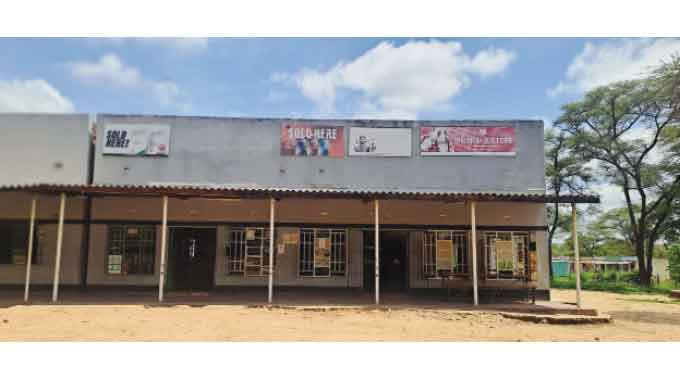
Fungai Lupande-Mashonaland Central Bureau
WITH no education, no income and no social safety net, many young mothers in Mbire District drift towards Mushumbi Growth Point, where survival often leads them to a local beer hall nicknamed “KwaSatan”, literally translated as Satan’s Place.
By day, the beerhall appears harmless, a modest structure tucked quietly on the edge of the growth point.
But when night falls, it transforms.
Darkness gives it a different name, a different purpose, KwaSatan.
On ordinary nights, the place already teeters on chaos.
But during major holidays, particularly Christmas Day and New Year’s Day, the descent is complete.
“When the clock strikes midnight on New Year’s Day, heavily intoxicated men strip naked in full view of everyone,” said Kenias Chingore, a regular patron.
He described the bar as a place where rules collapse after sunset, where broken windows tell silent stories of violence and where alcohol fuels both escape and destruction.
Asked what draws him back night after night, Chingore admitted that domestic disputes often drive him away from home.
“I find solace here,” he said quietly.
Behind the counter, bartender Samson Mugundika speaks with frankness.
“Everything is found here,” he said. “Including sex workers.”
According to Mugundika, men who feel rejected at home seek satisfaction at the bar, where transactional sex is readily available.
“The women charge between US$3 and US$10 depending on what one wants,” he said.
The brothels, he added, are located just behind the bar on a different premise.
By mid-morning, when this reporter visited, the women were said to be resting after a long night.
Men, including some from the white garment donning churches huddle in corners, eyes roaming as they silently negotiate their choices.
Young girls linger uneasily on the fringes, not allowed inside the bar, hoping to attract cattle buyers, gold and chrome miners, or travellers waiting for transport.
“Underaged girls are not allowed into the bar,” Mugundika said.
“They do their business outside. Sometimes we call local artistes to entertain our clients.”
In a rare nod to harm reduction, the beerhall keeps a steady supply of condoms.
“We receive them from the National AIDS Council,” Mugundika said, crediting Mbire District AIDS Coordinator Mr Claudious Musandaira.
KwaSatan’s reach extends far beyond Mushumbi.
“People come from as far as Mozambique, Kanyemba, Kapururira and Gonono,” he said.
Miners from Guruve, Mvurwi and surrounding areas arrive flush with cash, ready to squander their earnings. Pickpockets, too, find opportunity in the crowd.
“In the middle of all this, the owner makes a killing,” Mugundika said.
During peak agricultural seasons, especially cotton harvesting, the beerhall thrives.
“At the height of cotton farming, some men blow their entire payout here,” he said. By morning, the wife comes looking for him.”
Business hours officially end at 3am, but when patronage is high, the bar operates until dawn.
“On a good day, I can cash over US$1 000,” Mugundika said.
Next door, Teclar Gutsa, the wife of the bar owner, runs a grocery shop.
She said the name KwaSatan was given by the community, not the family.
“We are not fazed by it,” she said. “As long as business is viable.”
Her husband, she explained, was a teacher in Chitsungo before venturing into business as he approached retirement.
“We believe the name came because divorces increased when the bar opened,” she said.
During peak periods, sex workers from Guruve and Mvurwi arrive by bus in the evening and leave the following morning.
“We learn from other business owners and improve our services,” Gutsa said.
“We are centrally located and close to the bus stop.”
By morning, KwaSatan returns to silence, sweeping away the evidence with yesterday’s dust.
But the forces that drive young women here remain.
Mbire District Development Coordinator Mr Richard Maruta said hunger, desperation and the need to feed a child push young girls and women towards the beerhall.
“The place has become a magnet for young brides from failed marriages,” he said. “They resort to transactional sex to fend for their children.”
In Mbire, childhood often slips away quietly, long before it should. Some children walk more than 10 kilometres to the nearest primary school.
Others never make the journey at all.
“Normally, a child starts school at six or seven,” Mr Maruta said. “But here, you can find a 10-year-old girl in Grade One.”
By the time she reaches Grade Seven, she is already a teenager, caught between childhood and adulthood, exposed to pressures far beyond her years.
The Government has responded by channelling devolution funds towards building new schools and health centres, while promoting satellite schools closer to communities.
“These satellite schools are critical,” Mr Maruta said. “They reduce distance and make education accessible, especially for girls.”
However, infrastructure alone cannot dismantle deeply rooted social practices.
In Mbire, cultural teachings known as Chinamwari introduce children to adult relationships at an early age.
“In Grade Six or Seven, girls are taught how to handle a man,” Mr Maruta said. “Boys are also taught how to deal with girls.”
The result is a rise in teen-to-teen marriages, unions between two children who become pregnant and are then allowed by their families to live as husband and wife.
“These marriages collapse under economic strain. The boy goes back home. The girl is left alone with a baby.”
Through the Not in My Village initiative, traditional leaders now enforce laws against child marriages, with arrests already having been made in some cases.
Although Mbire currently records one of the lowest HIV prevalence rates in the country, Mr Maruta warned that the trend could easily reverse.
“It may look good statistically,” he said. “But the risk is always there.”
And when night falls at Mushumbi, KwaSatan is always waiting.