Online Reporter
Fungai Lupande-Mashonaland Central Bureau
In Ward 13 and 14 of Mbire District, a toilet was once little more than a shallow pit covered with logs, surrounded by grass or makeshift poles.
Built without cement and barely stable, the structure was locally known as “Mukokanhunzi,” a fitting name, as it attracted swarms of flies and posed serious health risks.
Today, that reality is slowly, but surely changing.
At Mr Muroyiwa Kusangana’s homestead in Kaude Village, Ward 14, three such toilets collapsed within a short space of time.
Each collapse stripped the family of six of privacy, safety and dignity. With no alternative, the family resorted to using toilets at an apostolic sect shrine nearly 400 metres away from their home.
The journey was long, uncomfortable and dangerous, especially at night.
“I had already started digging a fourth pit,” Mr Kusangana recalls.
“We had no choice.”
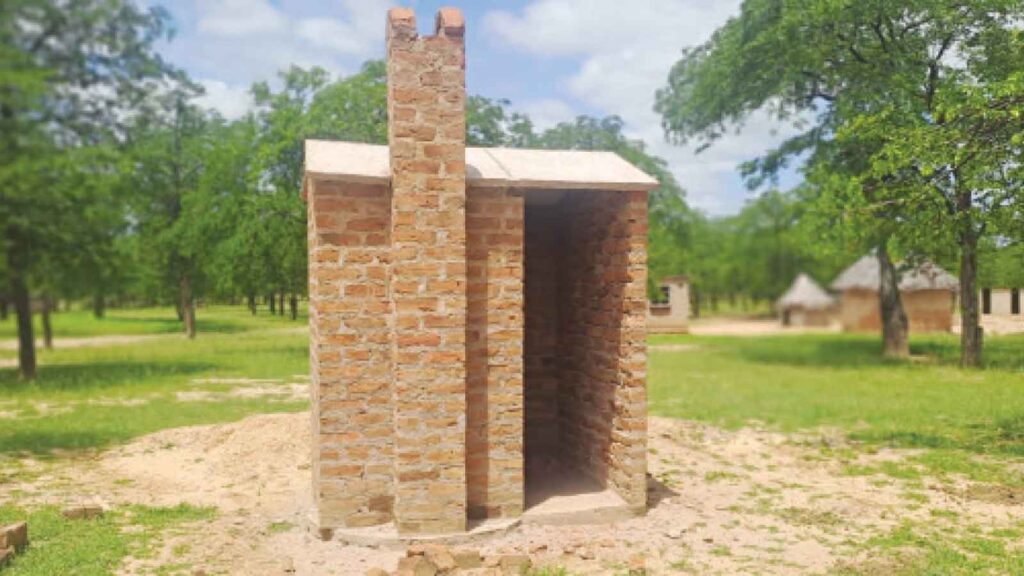
Mbire communities have now taken hygiene to a new level by using Blair toilets.
Hope finally arrived when his wife, Rudo Phiri, was selected as a beneficiary of a latrine programme funded by the Government of Japan through UNICEF.
That moment marked a turning point for the family.
“This is the first time we have owned such a standard structure,” Mr Kusangana said, his voice filled with relief.
“I am very happy. The previous toilets that collapsed attracted flies we failed to control.”
He said the poor sanitation exposed his family to diarrhoeal diseases and dysentery.
“My wish is for the whole village to be uniform. Some people still do not have toilets and resort to open defecation,” he added.
“The pain of travelling long distances to use a toilet that did not belong to me pushed me to quickly mobilise what was needed.”
For Mr Victor Murefu (68), a double amputee from Mburuma Village in Ward 13, the situation was even more painful.
He lost both legs following a crocodile attack in the Hunyani River. Using a makeshift toilet built without cement or reinforcement was a nightmare.
It collapsed in no time, leaving his family dependent on neighbours.
“We became a burden, but we had no choice,” he said.
To use the toilet, Mr Murefu would leave his wheelchair at the door and crawl inside, often coming into contact with filth on the floor.
“I cannot believe my ancestors,” he said emotionally. “I now have a wheelchair-friendly toilet at my homestead.”
His only concern now is security.
“I fear that donkeys, goats and cattle might invade my prized possession,” he said, appealing for a barricade at the wide entrance.
Mbire is one of the districts in Mashonaland Central that has been repeatedly ravaged by cholera outbreaks, especially during the rainy season.
During the 2023/2024 season, the district recorded 303 cholera cases, resulting in 13 deaths.
However, due to ongoing water and sanitation programmes, no cholera cases have been recorded so far in the 2025/2026 rainy season.
Communities in the two Wards identified 15 vulnerable households to benefit from the latrine programme.
Each beneficiary received eight bags of cement, damp-proof course, mesh wire, termite poison and skilled builders.
The families were responsible for providing bricks, sand and quarry stones.
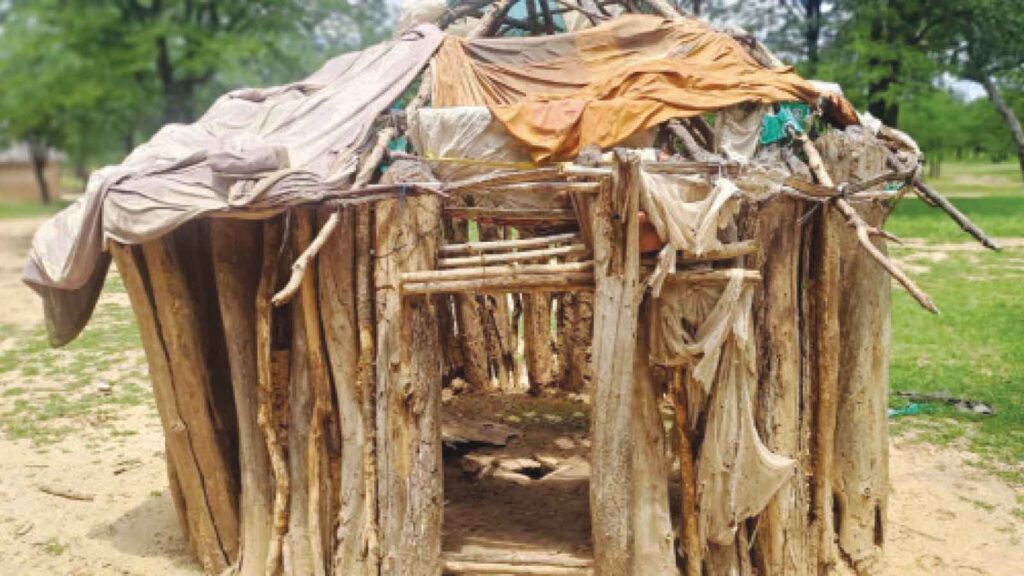
Pit toilets in Mbire are slowly being phased out.
Inspired by the new standard toilets, 11 other community members in the two wards replicated the model using their own resources, a clear sign of behavioural change.
A field officer, Mr Maccyrillo Mugonhi, said beneficiaries were selected by community members, with oversight from councillors, village head and local leaders to ensure transparency.
“Low WASH coverage in Mbire triggered the response from UNICEF,” Mr Mugonhi said.
“The district is prone to cholera outbreaks due to rampant open defecation. Water from wells and other sources tested positive for faecal contamination.”
UNICEF, working with implementing partner Welt Hunger Hilfe (WHH), rolled out a pilot WASH and nutrition project.
The synchronisation of WASH and nutrition meant that while the community built toilets, they were also taught hand washing techniques, the importance of eating a balanced diet, utilising available food sources, and preparing well-cooked meals, especially for children under the age of five.
While most community members welcomed the initiative, jealousy and lack of cooperation initially slowed progress.
“Some refused to help their neighbours, even though they were involved in selecting the beneficiaries,” Mr Mugonhi said.
“Some beneficiaries, including people with disabilities, stood alone.”
Despite the challenges, progress is visible.
Mbire district health officer, Mr Samson Chipiri said the programme began with training care group coordinators, supervisors, promoters and lead mothers.
“Lead mothers train neighbouring women on good hygiene practices. Demonstration toilets encourage others to build similar structures,” he said.
Sanitation coverage in Ward 14 has increased from 11 percent to 13 percent, a significant gain considering the number of households in the ward.
“A model home must have a toilet, hand-washing facilities, a dish rack and waste pits,” Mr Chipiri said.
The project has also extended to Masomo Primary School and Hoya Secondary School, where menstruation-friendly toilets for girls have been constructed.
Ward 14 Councillor Hondo Derere said the re-engagement drive spearheaded by President Mnangagwa is being felt through life-changing projects in marginalised communities.
“Mbire has suffered from recurrent cholera outbreaks for years,” he said.
“The construction of toilets has reduced diarrhoeal diseases. We are witnessing a change in social behaviour.”
From collapsing pits to ventilated Blair toilets, Mbire’s story is no longer just about sanitation. It is a story of restored dignity, renewed hope and a community slowly transforming, one toilet at a time.