Online Reporter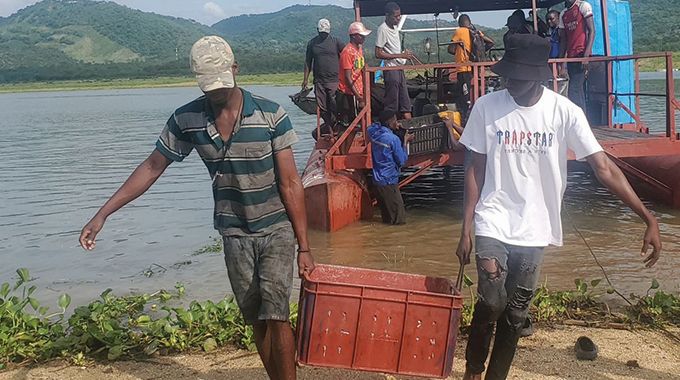
Theseus Shambare, [email protected]
At dawn, the surface of Lake Kariba lies still, like a sheet of leaded glass reflecting a pale sky.
Fishers gather along the shore, but the nets — once brimming with kapenta — sag in silence.
For Gogo Annah Shonhiwa (80), the lake was never just water — it was her family’s livelihood, her community’s food source.
Across Southern Africa, declining fish stocks are driving innovative aquaculture solutions, as governments and farmers turn to fish farming to secure food, boost incomes and protect fragile ecosystems.
“Before, we pulled 15 crates by sunrise,” she said, fists tightening around water-worn rope.
“Now… four is a blessing.”
Across the great inland waters of Southern Africa, stories like hers are becoming increasingly common.
Kapenta catches have plunged from nearly 30 000 tonnes in the 1990s to just over 5 000 tonnes in recent seasons — a collapse of more than 80 percent that has rattled one of Southern Africa’s most important inland fisheries.
Efforts to protect kapenta stocks have included temporary regulatory adjustments as authorities try to balance conservation with the livelihoods of fishers.
Kapenta rigs are normally prohibited from fishing in waters shallower than 20 metres to protect spawning grounds and juvenile fish.
However, due to declining lake levels and reduced fishing grounds, the Zimbabwe Parks and Wildlife Management Authority temporarily reduced the minimum allowable depth to 17 metres.
The measure was first introduced between November 2024 and February 2025 and has since been extended in phases, with the current extension running from December 1, 2025 to March 31, 2026.
But environmental shifts deepen the crisis.
Rising water temperatures and erratic rainfall are disrupting kapenta breeding cycles, while receding lake levels are shrinking their habitat — with Lake Kariba at times falling to nearly 13 percent of usable storage capacity during recent droughts, a trend scientists increasingly link to long-term climate shifts in the Zambezi Basin.
With unsustainable fishing — including illegal operations and poaching — adding pressure, the lake’s ecosystem reflects both human and climate stress.
Yet from this crisis is emerging a new experiment in resilience.
Where Lake Kariba’s penniless nets once told of loss, community ponds now speak of possibility.
At the Inaugural National Fisheries and Aquaculture Symposium in the capital recently, Lands, Agriculture, Fisheries, Water and Rural Development Permanent Secretary Professor Obert Jiri described a sector poised not only for recovery but for transformation.
“Fisheries and aquaculture are central to our blue economy — guiding food security, job creation and climate resilience,” Prof Jiri said.
Director of Livestock and Fisheries Production Mr Milton Makumbe outlined a bold vision.
He said aquaculture could generate up to US$2,37 billion in revenue if scaled across the country’s villages, dams, schools and markets.
Achieving this, he said, requires far more than ponds.
“It means feed production, cold chain networks, community empowerment and inclusive market access,” he said.
Research by the World Bank and the Food and Agriculture Organisation shows aquaculture is among the fastest-growing food systems globally, contributing to food security and rural economies when supported by policy, finance and technology — lessons Zimbabwe is now applying locally.
But innovation is also unfolding on the waters of Lake Kariba itself.
At Musamba Fishing Camp along the Mid-Zambezi shoreline, a quiet transformation is taking shape.
For decades, fishers here ventured into the waters near the mouth of the Ume River — a fertile breeding ground for tiger fish but also one of the most dangerous fishing zones on the lake.
Crocodiles patrol the shallows.
Currents shift without warning.
For some families, the lake carries painful memories.
Fisher Mr Siabulimo Chigwambari still remembers the day his brother was taken while checking fishing nets near the river mouth.
“There was nothing we could do,” he said quietly.
“The river decided.”
Human-wildlife conflict remains a serious challenge around Zimbabwe’s water bodies, with dozens of crocodile attacks recorded in the Mid-Zambezi region each year.
Today, however, something different floats on the water.
Three large aquaculture cages now rise gently with the rhythm of Lake Kariba at Musamba Fishing Camp.
Inside them are more than 73 000 fingerlings, part of a pilot initiative designed to change how communities harvest the lake’s resources.
The cages form part of a resilience programme supported by the United Nations Development Programme under the Zimbabwe Resilience Building Fund.
Project coordinator Mr Shupikayi Zimuto said the technology was introduced to protect biodiversity while providing safer livelihoods.
“We deployed floating cages mainly to protect the breeding sites for tiger fish while offering communities alternative ways to produce fish in the lake,” he said.
More than 170 fishing households are expected to benefit once the project is fully handed over to local fishers.
UNDP Resident Representative Dr Ayodele Odusola said aquaculture also reduces the dangers associated with traditional fishing.
“One of the objectives is diversification of livelihoods,” he said.
“We want to move communities away from purely traditional fishing practices and provide safer options like aquaculture, which reduces the risks associated with fishing in the lake.”
Zimbabwe’s Presidential Community Fisheries Scheme — part of the national Agriculture Food Systems and Rural Transformation Strategy — has established thousands of fishponds stocked with millions of tilapia fingerlings across the country.
The FISH4ACP programme, led by FAO with EU and BMZ support, has strengthened inclusive aquaculture value chains, promoting climate-smart practices and improved livelihoods for women, youth and smallholders.
In Honde Valley, a Village Business Unit run by Ms Elizabeth Sibangwe produces over 20 tonnes of tilapia per season, generating nearly US$60 000 in revenue. Ms Sibangwe, 28, leans over a pond net brimming with fish.
“Before, I thought farming was only for men,” she said in an interview during a visit to her rural home.
“Now I run the pond, hire local staff, pay school fees, and send money home.”
Her success reflects the rapid growth of smallholder aquaculture in the region, which has expanded from a few pilot ponds to hundreds of village-level enterprises in just three years.
Nearby, a women-led FISH4ACP fingerling hub currently houses 420 000 fingerlings and aims to distribute over two million this season, which could yield 600 tonnes of fish worth approximately US$1,8 million.
The hub directly benefits over 150 women fish farmers in Honde Valley, and the programme projects an additional 500 households will join in the next two seasons, illustrating how targeted interventions translate into measurable livelihoods and food security gains.
Community-level production like this is crucial for reducing pressure on wild fisheries while strengthening climate resilience.
In Goromonzi, the Pamodzi Fisheries and Fresh Produce collective — a group of 10 young women — has transformed their lives through aquaculture.
Since receiving initial support from the Livestock and Fisheries Production Department in October 2024, they stocked 2 000 tilapia fingerlings and underwent hands-on training in pond management and feeding techniques.
At a recent harvest, the group pulled in over 200 kilogrammes of tilapia, which sold quickly at US$4 per kilogramme, providing essential income for household needs and reinvestment into the project.
Many members — including Chantelle Mabande — previously relied on precarious work, including sex work.
“Fish farming gave me a future,” she said, lifting a basket of tilapia.
The initiative highlights how community-level aquaculture offers both economic empowerment and social stability.
Youth involvement is also rising.
At the Emmerson Dambudzo Mnangagwa Vocational Training Centre in Marondera, students manage School Business Units that blend education with enterprise.
“It’s science and business,” one trainee Takudzwa Maoresa said while adjusting aerators in a pond.
“We’re not just farming — we’re running enterprises.”
Yet scaling the sector still requires investment.
Access to quality feed and fingerlings remains limited in many rural areas.
Innovations such as black soldier fly larvae feed, which converts organic waste into protein-rich fish feed, are helping reduce costs by up to 40 percent.
Policy support is also strengthening the sector.
Zimbabwe’s proposed Fisheries and Aquaculture Bill is currently undergoing internal Ministry processes in preparation for tabling before Cabinet, aiming to standardise regulation, attract investment and create an enabling environment for sustainable growth.
Technical advances, including national hatchery management guidelines, are improving fingerling quality, traceability and breeding outcomes — key steps towards resilient aquaculture systems.
Zimbabwe’s ambitions are also tied to a broader regional push.
Across the Southern African Development Community, countries are working with the African Development Bank to develop a regional tilapia value chain, improving fish genetics, hatchery systems and market competitiveness.
Across Southern Africa, the pressures facing Lake Kariba are not unique.
From the vast waters of Lake Malawi to coastal fisheries in Mozambique, communities are grappling with declining wild fish stocks driven by climate change, population growth and decades of intense harvesting.
In Malawi — where the vast waters of Lake Malawi support hundreds of species and form the backbone of local diets and economies — fish landings have been slipping.
Government figures show a 9,2 percent drop in total fish catch in 2024, and per capita consumption fell from 9,65 kg to 8,5 kg in one year alone, straining food security.
At the same time, aquaculture output grew by more than 50 percent, reaching around 14 300 metric tonnes as farmers and policymakers alike turn to fish farming as a vital alternative livelihood and source of protein for rural households.
Meanwhile, on the northern shores of Lake Kariba in Zambia, commercial cage aquaculture has expanded dramatically from just a handful of cages in the late 1990s to well over 100 today, part of a broader national surge that helped Zambia produce an estimated 75 647 tonnes of farmed fish in 2022.
Companies such as Yalelo Limited now harvest more than 18 000 tonnes of tilapia annually from Lake Kariba, making Zambia one of the largest aquaculture producers in Africa and underscoring how commercial fish farming is helping meet demand while relieving pressure on wild fisheries.
Further west, Namibia offers another lesson.
Sustainable fisheries management has increasingly become a national priority.
The government, through the Ministry of Fisheries and Marine Resources Namibia and in partnership with FAO, has developed and begun implementing a National Plan of Action for Small Scale Fisheries designed to improve stewardship of aquatic resources, strengthen food security and support the livelihoods of hundreds of thousands of coastal and inland fishers, while initiatives such as the Marine Stewardship Council certification of the Namibian hake fishery demonstrate the country’s commitment to science based, sustainable fishery practices.
In neighbouring Mozambique, small scale aquaculture and fishing contribute more than half of the daily protein intake for millions of people, with the fisheries and aquaculture sector producing over 460 000 tonnes of fish in 2022.
Development programmes supported by FAO and other partners are helping inland and coastal communities establish fish ponds, cooperatives and hatcheries, strengthening food security, expanding rural incomes and reducing pressure on wild stocks
Together, these experiences reflect a growing shift within the Southern African Development Community, where governments and development partners are increasingly viewing aquaculture as a strategic pillar of the region’s blue economy — one capable of creating jobs, improving nutrition and building resilience in the face of climate change.
Against this regional backdrop, Zimbabwe’s expanding aquaculture sector is part of a wider transformation taking shape across Southern Africa’s waters.
As countries invest in fish genetics, hatcheries, feed production and cross-border trade in tilapia, the region is steadily building a more resilient and sustainable fisheries future.
As the sun climbs over Lake Kariba, Gogo Shonhiwa watches boats no longer heading only to the open lake.
Some now move between village ponds.
“They grow tilapia here now,” she said, eyes glinting.
“Before, we prayed for fish. Now we farm it with our own hands.”
From empty nets to productive ponds, the story unfolding across Zimbabwe’s waters reflects a wider transformation sweeping Southern Africa’s lakes, rivers and villages.
Women are leading new enterprises.
Youth are turning science into business.
Communities are protecting ecosystems while building livelihoods.
From the quiet ripple of a village pond to the vast expanse of Lake Kariba, a new blue economy is beginning to rise across Southern Africa.
Feedback: X@TheseusShambare