Online Reporter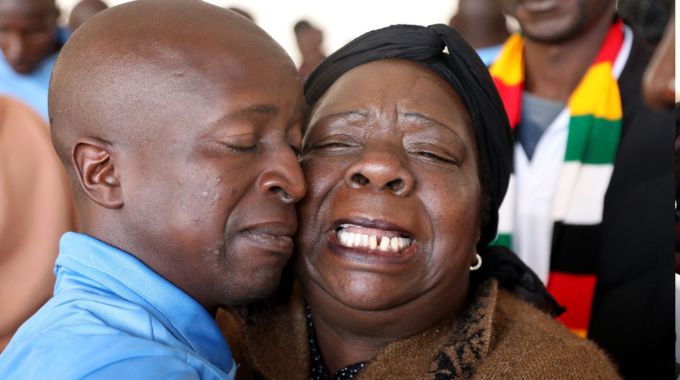
Blessings Chidakwa, Senior Zimpapers Reporter
IT was a day of tears, but not tears of sorrow.
They were tears of joy, relief and gratitude as families who had feared losing their loved ones to drugs and substance abuse finally embraced them again.
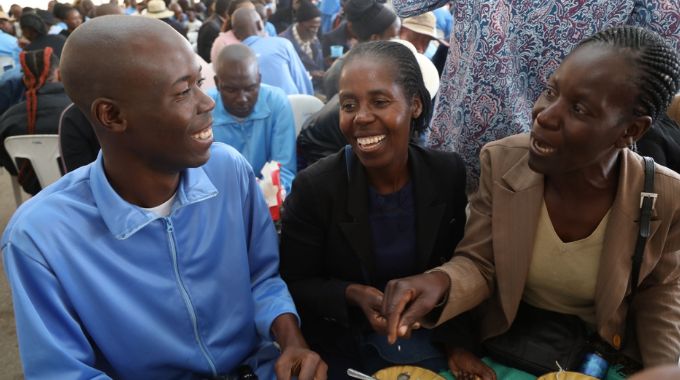
For many, the 9th intake reunion at the Angel of Hope Drug Rehabilitation Centre in Mbare was a moment they had almost stopped believing would come, seeing their loved ones return with renewed hope, discipline and a determination to rebuild their lives.
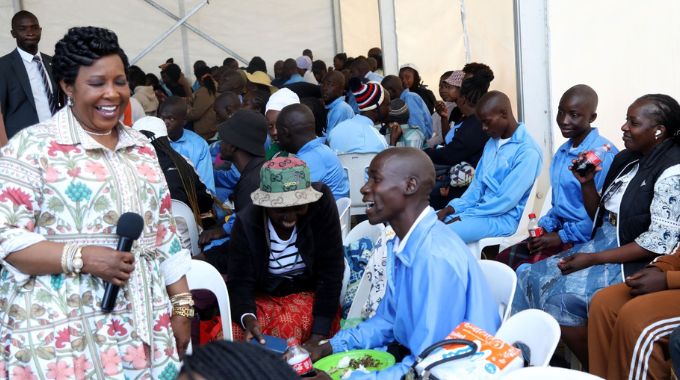
The scenes were a striking contrast to the painful circumstances surrounding some of their admission to the centre, with families recounting how addiction had left their loved ones distressed, disoriented and difficult to manage.
Some had arrived in chains, unkempt and smelling of neglect, reflecting the devastating grip drugs had taken on their lives.
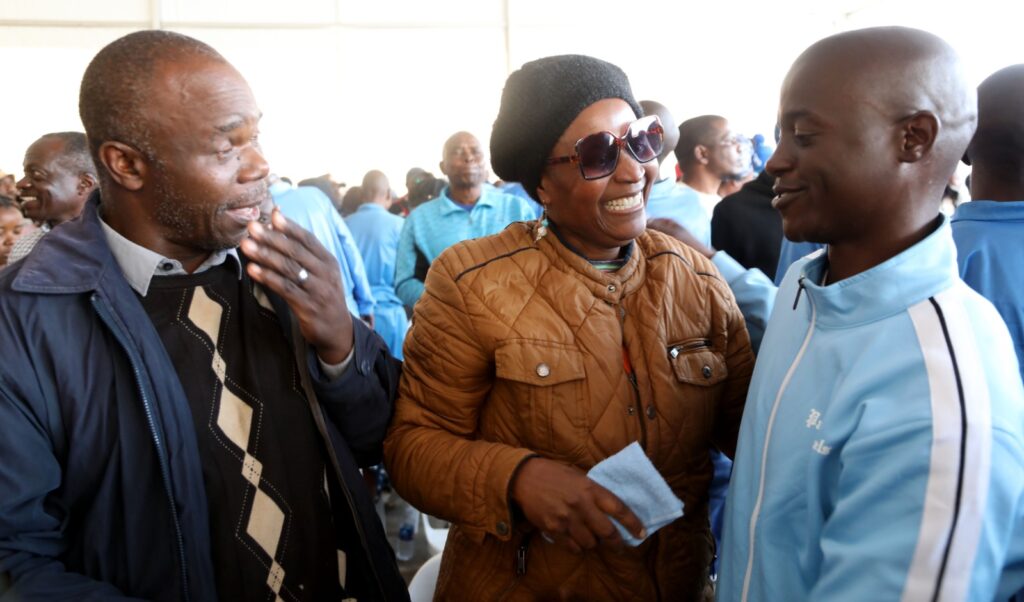
At the reunion, however, those painful memories gave way to laughter, song, dance and warm embraces as recovering patients sat with their families, shared meals and began repairing relationships damaged by addiction.
The most emotional moments came when recovering patients knelt before their families, asking for forgiveness for the pain they had caused.
Some parents shed quiet tears. Others wept openly.
One of the most heart-wrenching moments came when an eight-year-old girl, who personally helped her mother gain admission to the centre after enduring immense pain, approached First Lady Dr Auxillia Mnangagwa to express her gratitude.
“Thank you, Dr Mnangagwa. You have helped my mum leave her violent ways and removed drugs from her life. I thank you so much. I always keep her in my thoughts and prayers, and everything I do is for her. Thank you, Angel of Hope,” she said.
With the innocence of a child, she said she now missed having her mother at home, a deeply moving reminder that behind every person battling addiction is a child longing and hoping to have their parent back.
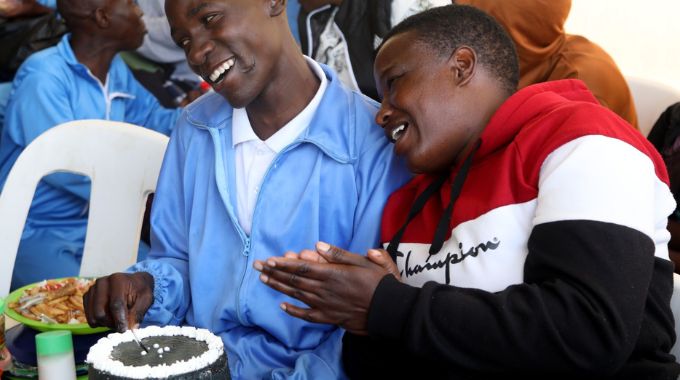
In another touching moment, parents brought a cake to celebrate their son’s birthday, turning the occasion into a symbolic celebration of a new chapter in his life.
Another emotional scene involved a father gently holding his one-year-old child, a simple act that carried enormous meaning because, barely three weeks earlier, such a moment had seemed almost impossible.
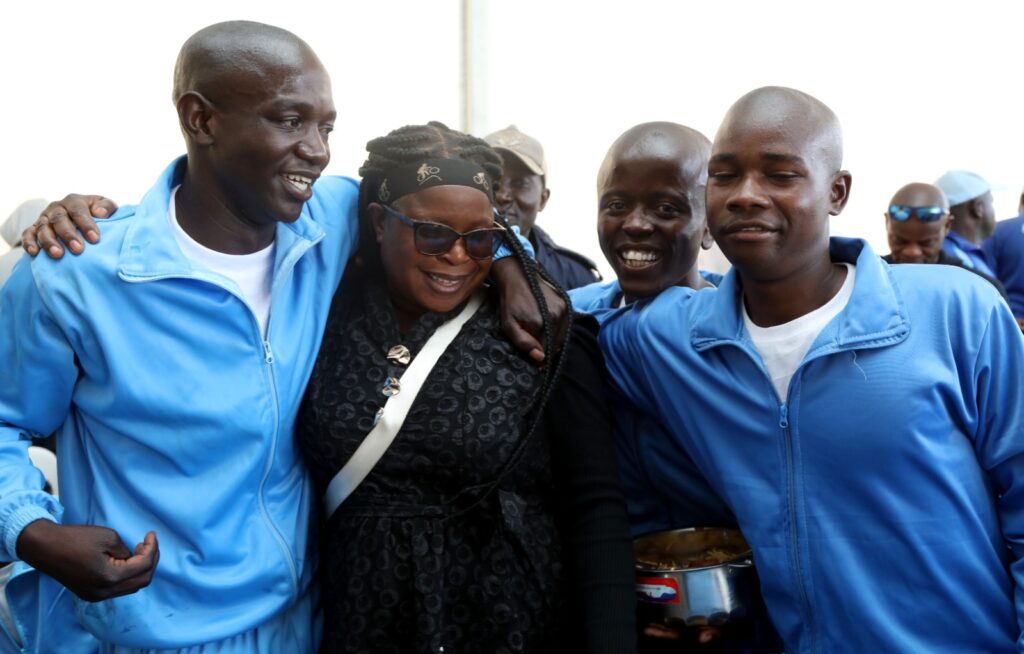
The encounters demonstrated the far-reaching impact of the rehabilitation programme championed by First Lady Dr Auxillia Mnangagwa, whose intervention has placed the plight of people battling drug and substance abuse at the centre of a compassionate national response.
Through the Angel of Hope Drug Rehabilitation Centre, Mother Zimbabwe has consistently emphasised that rehabilitation must go beyond treating addiction.
It must restore dignity, repair broken relationships and give affected people an opportunity to start again.
The First Lady was welcomed with overwhelming joy by parents and guardians, many of whom had endured years of pain, fear and uncertainty as they watched their loved ones battle addiction.
In her address, Dr Mnangagwa expressed her happiness at meeting the families again, noting that the reunion was a far cry from the day they first brought their loved ones to the centre.
She urged parents and guardians to look closely at the changes in their children and reflect on whether the progress they were witnessing matched the hopes they had when they sought help.
Dr Mnangagwa thanked the families for their appreciation and satisfaction, saying their encouragement gave her the strength to continue the work, while graduates would proceed to vocational training to acquire skills to rebuild their lives.
The First Lady moved among the families, listening to their experiences, offering encouragement and sharing in their moments of joy, reinforcing her personal and motherly approach to the fight against drug and substance abuse.
Her message was clear: rehabilitation is only the beginning, with lasting recovery requiring love, discipline, acceptance and continued support from families.
Parents arrived carrying memories of pain, fear and broken relationships, but many left embracing sons and daughters they had almost given up on.
For former renowned football referee Brighton Mudzamiri, the reunion brought overwhelming emotion as he reflected on the second chance given to his son, whom he said had excelled academically before drugs derailed his life.
His son had scored 15 points at Advanced Level and was studying at university, but addiction threatened to destroy the future he had worked so hard to build.
Mudzamiri broke down as he spoke about seeing his son again.
“Our First Lady, you humbled yourself. When we enrolled, you sat with us. We have no words to thank you. Today I met my son. He has changed, conquered. There is nothing he lacks.
“He had 15 points at Advanced Level and was studying at university, but drugs had destroyed his life. He assured me he would complete his studies. I am grateful for the love you have shown us, our First Lady.”
For Gogo Choto, the transformation of her grandson, Tawanda, was almost difficult to believe.
“When I brought Tawanda here, he smelled so badly that you did not want to stand near him,” she recalled.
She said she had lived with him since he was one year and seven months old, making it painful to watch his life deteriorate despite his potential.
“He is a lawyer. He went to Europe for four years. Today, I am grateful because I have seen a change in him.”
For Mrs Nyamukondiwa, the reunion began with fear.
She had watched her child become so difficult that she feared his return home would mean an endless battle.
“I came here with a lot of fear because of the way I had left him. He used to tell me that if he came out of here, there would be an endless war,” she said.
But the fear melted away when she saw the transformation before her.
“I came with fear, but it is gone. I saw him come and embrace me, something he never used to do.
He knelt and asked for forgiveness. Honestly, he has changed.”
Her son, Gilbert Nyamukondiwa, said the rehabilitation programme had gone beyond treating addiction by helping him address the conflicts and mindset that had torn him apart.
“We came here to correct our words and our thinking. Indeed, the war mindset has disappeared,” he said.
For Precious Sanyika, a beneficiary of the life-changing programme who was part of the sixth intake, rehabilitation brought discipline and a new sense of responsibility.
“I used to drink Bronco and take drugs. I even sold my mother’s clothes. Here, I was taught discipline and how to do household chores,” she said.
Precious said the transformation extended beyond recovery, with beneficiaries also receiving vocational training to equip them with practical skills for life after rehabilitation.
Mrs Esnat Mahuku recalled the painful days when her child even attempted to rape her.
“At one point, my child climbed onto my bed wanting to sleep with me. Today, he came and pleaded for forgiveness for everything he did. I can only say thank you,” she said.
For Mrs Saizi, the sight of her grandson kneeling before his family and asking for forgiveness was equally overwhelming.
“My grandson wanted to give his wife a divorce token (gupuro), but today he knelt and asked her for forgiveness, something I never imagined would happen in my entire life. He even joyfully spoke with all his children,” she said.
For Mai Sean, the reunion offered proof that the person she once feared was beginning to return.
“When he came in, he could not even be controlled by six police officers, but today I am happy. He has come back a free person. He is no longer violent and we are eating together,” she said.
For another mother, addiction had brought violence and fear into her own home.
“My child was very violent, such that he held a knife and chased me out of the house. He brought lodgers into the home and spent all the money on drugs,” she said.
But the rehabilitation programme had given her son a new outlook on life.
“He said that for more than 10 years, the people he started with had died. He feels fortunate to have survived this far. He has made a decision that he will never take drugs again. He said, ‘I started
using them in Mbare, and I will stop using them in Mbare again.’”
She said the experience had also changed her understanding of drug abuse, particularly how it can fuel conflict within families and communities.
“Many families have accused each other of witchcraft because of drugs. I have also learnt that we should not accuse each other of witchcraft because drugs can cause all these things,” she said.
For the families, the reunion was more than a ceremonial gathering.
It was a moment of forgiveness, restored dignity and renewed hope — a chance to see loved ones not as they were when addiction had taken hold, but as the people they could become once given an opportunity to heal.
The stories also showed that drug and substance abuse does not affect only the individual.
Its pain reaches parents, children, spouses, grandparents and entire communities.
Yet the reunion demonstrated that when families choose to support recovery rather than abandon those affected, even relationships deeply damaged by addiction can begin to heal.
What began as an intervention to rescue individuals is increasingly becoming an effort to restore families and strengthen communities.
As the families departed, they carried with them something many had feared they had lost forever — hope.
Hope that their children could return home.
Hope that broken relationships could be repaired.
And hope that, with timely intervention, professional rehabilitation, family support and compassion, even those who have lost their way can find a path back home.
For Dr Mnangagwa, the journey continues.
For the families of the 9th intake, the reunion was a deeply emotional reminder that lives damaged by addiction can still be restored and that sometimes, the road back home begins with a second chance.