Chronicle Editor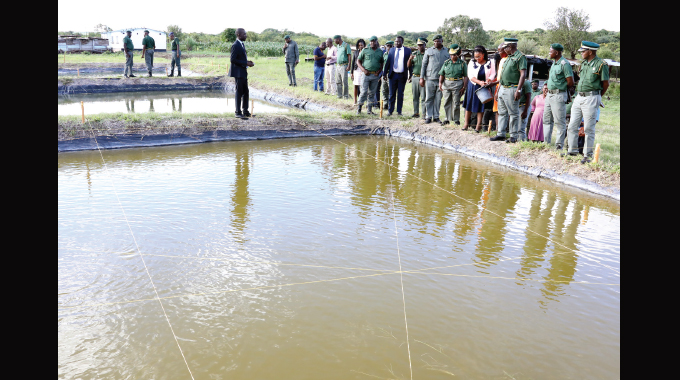
Nqobile Tshili, [email protected]
“THROW away the key!” This statement had become synonymous with the sentencing of criminals who would have committed serious crimes and were deemed social outcasts to be imprisoned and forgotten in prison.
Communities had to forget about the prisoners as they would have committed seemingly unforgivable crimes making them unsuitable to live in a normal society.
Instead of the prison system locking away the inmates and ensuring that their memory is forgotten by the communities they come from, the Zimbabwe Prisons and Correctional Services (ZPCS) has embraced them, giving them a second chance to normal life.
ZPCS rehabilitates the inmates in line with the dictates of the country’s 2013 Constitution that compelled Zimbabwe Prison Services to rebrand to ZPCS.
Since then, the ZPCS has embarked on a remarkable journey of empowering prisoners with skills to make them better citizens when they leave jail.
Prisoners are getting life skills and authorities argue that the skilling of inmates is reducing cases where ex-convicts are re-arrested for committing crimes, earning themselves the tag “jail birds”.
With the country’s laws still unfavourable to the employment of ex-prisoners, ZPCS provides skills to inmates so that they become resourceful upon completing their jail terms.
A Chronicle news crew recently visited Anju Prison in Matabeleland North where it observed several inmates being involved in life skills.
Some of them are involved in farming while others are into mechanics.
They seemingly have cordial relations with prison officers, who are not just there to ensure that they do not escape from confinement but rehabilitate them.
Prince Cheza (27) from Masvingo, Madamombe area, who is serving a six-year sentence for attempted murder, said when he came to prison, he had no life skill, which contributed to him committing crime.
“I was sentenced to six years but two years were removed from my sentence. I have served 2,4 points of my sentence, meaning I’m left with 1,6 points now. When I came here, I wasn’t skilled but I’ve been taught a lot by the officers here, especially with regards to farming. At prison, I learnt fisheries farming as well as establishment of the fish ponds. I’m also involved in piggery and poultry projects all which I learnt within prison confinement,” said Cheza, while tending to some pigs at the prison farm.
He said his expectation was to start a fisheries project when he leaves prison.
Cheza said he would consider setting up fish ponds and earn money through the projects.
He is one of many prisoners whose lives are being transformed behind the prison walls.
ZPCS Matabeleland North principal correction officer Mr Shingirai Katsvairo said the rehabilitation programmes have seen a decrease in re-offending.
“The percentage that returns based on statistics at Anju Farm Prison; out of the hundreds of inmates who were released during the Presidential Amnesty last year, I think only one inmate returned to prison. The rest managed to successfully re-integrate into society,” said Mr Katsvairo.
He said through providing life skills, some prisoners are able to support their families from prison.
Mr Katsvairo said some prisoners are contracted to private sector institutions where they work and get paid, preparing them for life after prison.
“We have the prison empowerment programme, or the correctional employment programme. We have about 109 inmates who are employed at McDonald Bricks under the programme. It is a new concept that was recently introduced and is covered in our new Prisons Act which was established last year,” said Mr Katsvairo.
“The success of the programmes was seen when two of our inmates lost their relatives sometime at the end of last year. One of them lost his father and the other lost his brother and father at the same time. They were given a temporary release and went to attend the funerals. From the funds they earned from McDonald Bricks, they managed to make contributions to those funerals as part of their rehabilitation and re-integration into the society.”
Mr Katsvairo said the prison system cannot successfully rehabilitate inmates without society playing its role.
ZPCS Commissioner General Moses Chihobvu said the rehabilitation of inmates is an ongoing process.
As part of the continuous re-branding exercise, ZPCS even moved from its khaki and white uniform to the orange kit in line with international standards.
Female prisoners now wear pink uniforms shifting from a green one while the males have moved from khaki to orange ones.
“We might have gone a decade but the restructuring of ZPCS is an ongoing process. When we look at rehabilitation activities, they have been of benefit to the inmates. We now have inmates who are able to do their work after being released from prison,” said Comm-Gen Chihobvu.
He said the prisons are also harnessing skills from the inmates, with one of the ex-convicts involved in partnership with ZPCS.
“The one in Bulawayo, we have asked him to come and partner with the prisons to teach the inmates and some of the officers to make furniture,” he said.
Convicted for fraud, Antony Mhizha (35) never imagined that he would find a career behind prison walls and later on voluntarily visit prison, which now aids him in securing a livelihood.
For Mhizha, the prison became a blessing in disguise as it enabled him to refocus his life and harness his skills. He is now employed by ZPCS, teaching carpentry not just to prisoners but also to prison officers who are assigned to impart skills to inmates in Bulawayo.
He concurred with Comm-Gen Chihobvu that only skills learning and entrepreneurship will liberate prisoners from a life of crime.
“We know it’s not easy to get a job, but if they have these life skills, they will create their own jobs. When someone goes to prison, it doesn’t mean they’re going to die, but they will learn different skills including how to be good people in communities because there are so many projects which are being done in prison.
“When I finished my term, I got assistance from Bulawayo Prisons, they gave me a place to work from and some equipment to start the job and so far, we’re planning to start producing beds, wardrobes and couches if the prison officials finalise the issue. I’m grateful for the opportunity that ZPCS has given me to partner with them and to teach other inmates the skills that I have learned. I hope to inspire others to change their lives for the better,” said Mhizha.
ZPCS spokesperson Chief Superintendent Meya Khanyezi said all inmates are expected to take up available rehabilitation activities which prepare them to become better citizens upon completing their prison sentences.
She said ZPCS also has a programme to follow up on ex-convicts to assess their reintegration back to society but is financially hamstrung to effectively carry out the exercise.
Chief Supt Khanyezi said community acceptance is critical for ex-inmates to effectively reintegrate into the community.
“We have a follow-up programme that does the assessment of ex-convicts as they reintegrate back into society. This programme is however running at a small scale due to financial constraints. The community should give ex-convicts a second chance as they have the potential to contribute towards the development of the nation. Where possible, members of the community are expected to empower ex-inmates with resources such as starter packs which act as a springboard for their economic life. This contributes to their living as law-abiding citizens,” said Chief Supt Khanyenzi.
Justice, Legal and Parliamentary Affairs Permanent Secretary Mrs Vimbai Nyemba commended the ZPCS for fulfilling its mandate of being a correctional facility through the rehabilitation of inmates.
She said with most prisons generating some funds through actively involving inmates in cash generating projects, the State can even be relieved from the funding of jails.
“We’re happy that prisons and correctional services are doing what they are supposed to do. There are a lot of projects that are happening, stock rearing, and even hair dressing which ladies can do. They can do artefacts. We can see that prisons are now correcting individuals, they are rehabilitating them. They are making prisoners useful to sustain themselves and this is very commendable. At the end of it all, we may have prisons who are not relying on the fiscus,” she said.
Mrs Nyemba said prisoners are acquiring skills that may help them when they leave confinement. — @nqotshili



 Online Reporter