Muvhuso Chibi, [email protected]
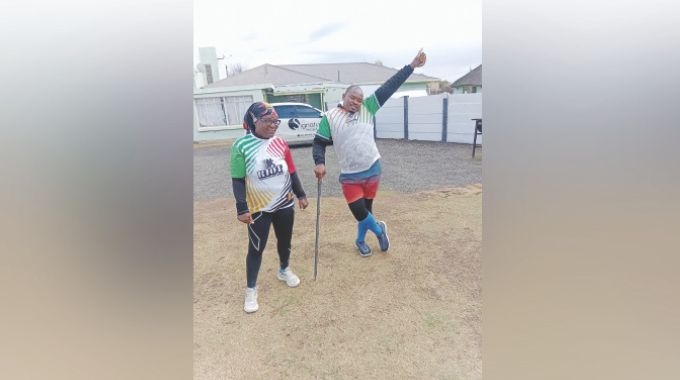
WHAT began as an ambitious cross-border health campaign has turned into an extraordinary test of human endurance, with Beitbridge athlete and fitness advocate Stella Dhokotera and Lesotho national Raphael Tlali now on the verge of completing a demanding 600-kilometre walk from Lesotho to Botswana.
The pair have spent nearly two weeks battling tough terrain, harsh weather and physical exhaustion as they carried a message of healthy living, mental wellness and safe migration across southern Africa.
As of Tuesday, the duo had covered almost 550 kilometres, leaving only a short stretch before reaching the end of their historic Botswana Kamaoto Health Campaign.
The journey began on August 7 at the Lesotho border and has seen the two walkers spend up to 14 hours a day on the road, setting off at 8am and often continuing until 10pm.
For Dhokotera, the expedition has been as much a mental challenge as a physical one.
The walkers carried their own backpacks loaded with water, snacks and other essentials while navigating steep mountain routes, strong winds, rain and cold conditions.
Speaking during the trek, Dhokotera said the journey nearly failed before it even started after many participants pulled out at the last minute.
She said some foreign participants were worried about anti-immigrant sentiments associated with South Africa’s Operation Dudula, while others were unwilling to spend long periods away from their jobs and families.
“In the end, only two of us remained. Many people wanted something in return and could not understand the purpose of the campaign because there were no financial rewards attached to it,” she said.
Undeterred, Dhokotera and Tlali pressed ahead on their own, crossing into South Africa through the Free State before making their way through North West Province towards Botswana.
The first few days proved particularly difficult.
“At first my legs were speaking in tongues,” she said jokingly. “The weather was also against us. We faced rain, strong winds and cold temperatures.”
The challenge became even tougher when the support vehicle that was meant to accompany them failed to arrive at the start of the expedition because travel documentation had not been finalised.
For five days, the two walkers carried everything themselves.
Despite the added burden, stopping was never an option.
Dhokotera said there were days when they had no choice but to cover extremely long distances to reach their overnight accommodation.
“If the next guest house was 50 kilometres away, we had to walk those 50 kilometres regardless of whether it was raining, windy or cold,” she said.
Most nights were spent in guest houses that had been booked in advance, although there were occasions when the pair had to sleep in remote areas along the route.
“I am feeling good. Sometimes we even sleep in the bush. This is something I never imagined doing, but it has become part of the adventure,” she said.
While the physical demands of the expedition have been immense, Dhokotera said the support received from ordinary people has kept them going.
Throughout the journey, strangers have donated money, offered words of encouragement and welcomed the pair into their communities.
That support became even more evident when they crossed into Botswana.
According to Dhokotera, residents, traditional leaders and media representatives turned out to welcome the walkers at the border.
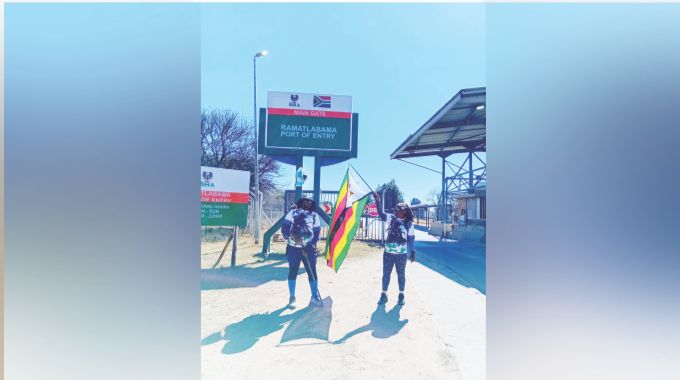
“When we arrived at the border, journalists were waiting for us. We were even allowed to fly our flag. People were excited to see us, and many came to cheer us on,” she said.
The warm reception left a lasting impression on the Beitbridge athlete.
One of the highlights of the trip came when the chief of the first Botswana town they entered personally welcomed the team and later invited Dhokotera to attend his inauguration ceremony in October.
“That was a special honour for me, especially because my birthday is also in October,” she said.
Beyond the kilometres covered and borders crossed, Dhokotera believes the campaign’s greatest achievement has been the conversations it has sparked along the way.
The initiative was launched to encourage healthy lifestyles while also raising awareness about mental health and safe migration, issues that affect many communities across the region.
“We are here preaching about health and safe migration. What started as a simple trekking challenge has touched many people’s hearts,” said Dhokotera.
She said the journey has also become a powerful symbol of perseverance and hope.
Every step, she added, carries a message for people who may be struggling with difficult circumstances in their own lives.
“This journey teaches endurance and strengthens both the mind and body.
“If we can sacrifice our comfort and keep moving through difficult conditions, then people should not give up when they face challenges in life. Share your problems and seek help instead of keeping everything bottled up.”
Dhokotera said travelling through different countries and communities has given the pair a rare opportunity to learn about new cultures while sharing their own experiences and traditions.
Reflecting on the journey so far, she described it as one of the most rewarding experiences of her life.
“The journey has been one of the most rewarding experiences of her life. It has not been easy, but every journey comes with challenges,” she said.
Her message to others is simple: determination can carry people further than they think.
“Whenever people face difficulties in life, I hope they remember that two ordinary people walked all the way from Lesotho to Botswana for better health and a better life. Challenges can be overcome if you refuse to give up.”
With the finish line now within sight, Dhokotera and Tlali are preparing to complete a journey that many thought would never happen.
What started with dozens of hopeful participants has become the story of two determined individuals who refused to turn back, carrying a message of health, resilience and hope across three countries, one step at a time.