Chronicle Editor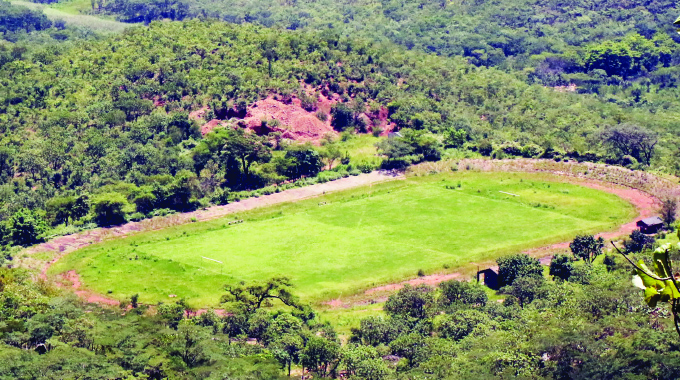
Raymond Jaravaza recently in Shurugwi
POINTING at a huge crater big enough to swallow a two-storey building, 79-year-old Clement Mpofu says his heart bleeds when he reminisces about the good old days when the Shurugwi Golf Course was a carpet of lush green grass, exotic trees lining its boundary and a hive of activity with golfers teeing off every Wednesday afternoon.
What he sees now is nothing short of total decay.
A few metres from the crater left by illegal gold panners, also known as amakorokoza, is an abandoned building that was once known as the Sanders Pub — named after a medical doctor Victor Sanders who worked at the local hospital in the chrome mining town that Mpofu described as an immaculate drinking joint in its heydays where mine executives and managers would hang out after playing golf or off from work.
He started working at Zimbabwe Mining and Smelting Company (Zimasco) at the dawn of the country’s independence in 1980 in the mining company’s geology department and remembers when workers knocked off early on Wednesdays to take part in various sports and recreational activities and he would play the role of a “caddie” for some of the golfers — usually bosses in his department.
“I wasn’t active in any sport so I found it better to carry golf clubs for my bosses when they played golf and I remember walking around the vast golf course following them around on Wednesday afternoons. I wasn’t really interested in the sport but carrying golf clubs for the bosses had its perks like free beer in Sanders Pub later.
“I joined the company in the early 1980s when Shurugwi was a bustling town that was one of the best places to live in here in the Midlands province, the town had everything from the best schools, sports facilities, good housing, roads and entertainment places for the young and the old.
“I used to wonder what was so exciting about playing golf the whole afternoon because to me it looked like they (golfers) just hit the ball with a club, follow it around in the golf course to hit again the whole afternoon but I could tell their excitement that the bosses really enjoyed spending their Wednesday afternoons on the golf course,” said Mpofu.
In the 1980s and the following decade, Zimasco was not only the biggest employer in the mineral rich town, but the employer of choice in Shurugwi and beyond until the country’s biggest producer of ferrochrome started scaling down operations as a result of the decline in prices on the international market.
Mpofu retired at age 65 around 2010 but says the decay of sports amenities such as the Shurugwi Golf Course started at almost the same time when Zimasco’s woes began and recreational facilities were no longer well taken care of as before.
“Gold panning became the biggest employer for the youth and those people (gold panners) have no respect for order or authority. They started mining right in the middle of the golf course and to evade Zimasco security, they worked at night and each day we woke up to trenches everywhere.
“Just take a look at that huge crater, it’s dangerous for both humans and livestock because when it rains it fills up with water and becomes a death trap. It’s hard to believe that this place used to be a beautiful golf course,” he added.
Saturday Chronicle spent the day touring what used to be well managed sports facilities such as the golf course, the Chrome Sports Club and Peak Mine Stadium, that have all be abandoned and have been taken over by illegal gold panners that have destroyed anything in their path by pick, shovel and explosives in search of the precious yellow metal.
Our next stop was at Peak Mine Stadium, a few kilometres from the golf course, accessible by vehicle when driving on a tarred road that meanders atop a beautiful mountain range, giving visitors a bird’s view of Shurugwi town and surrounding landscapes.
The decay of Peak Mine Stadium became evident the moment the news crew got to about 100 metres from the football facility. Deep holes and ditches created by the illegal miners prevent one from accessing an old building that used to be the commentary box for soccer commentators on match day.
A young man, who identified himself as Liberty, said tunnels dug by gold panners run underneath the football pitch as the area was ravaged by groups of amakorokoza for years in search of gold.
“Those ditches go about 10 metres vertically then turn into tunnels that run horizontally underneath the football pitch and those tunnels are so many because a lot of guys used to dig for gold here. These days they have moved to another area almost a kilometre from the stadium where gold deposits were recently discovered.
“It’s the only way (gold panning) to survive, there are no jobs so we have no choice but to dig for gold. Almost all the young people that I know in Shurugwi are into gold mining; it’s a reality that we have to live with that gold panning is the only way for us to survive,” said Liberty.
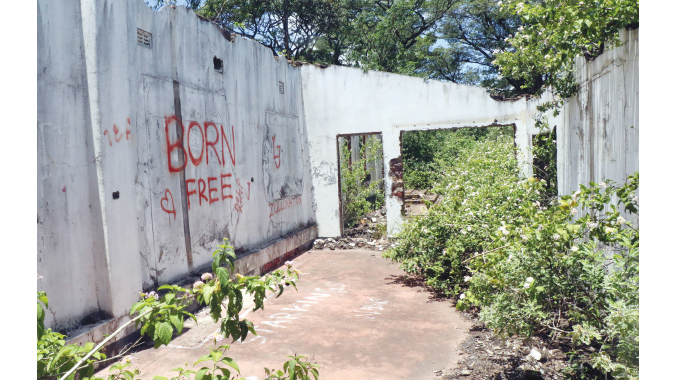
Chrome Stars, a former Zifa Central Region league club that was sponsored by Wildlooks Entreprise, one of the companies contracted by Zimasco to do ferrochrome mining, used Peak Mine Stadium as its home ground until it folded a few years ago.
Shurugwi Town lies about 195km from Bulawayo, 33 kilometres south-east of Gweru, and has a population of 20 900 people, according to the 2022 census, was established in 1899. It is located on the mineral-rich belt — the Great Dyke — and is endowed with a number of minerals among them chromite, gold and nickel.
The town is ranked one of Zimbabwe’s largest producers of chromite and is located on one of the most beautiful places in the country, the Boterekwa Escarpment.
The name Boterekwa is derived from the winding and meandering nature of the road as it negotiates its way up, between and down the mountains on the way to Masvingo.
This brief profile of Shurugwi would somehow paint a picture of a town with a thriving economy, where infrastructure is in good shape, social services are efficient and job opportunities abound given the diversity of mineral resources that the town is endowed with.
The demise of giant chromite mining concern Zimasco, the biggest employer in Shurugwi and the mainstay of the town’s economy, almost two decades ago contributed to the decay of another sports facility, the Chrome Sports Club.
Tungamirai Mutendi, a former barman who worked at Chrome Club, a sprawling building that has a tennis court and a squash court, says the place has been abandoned for years.
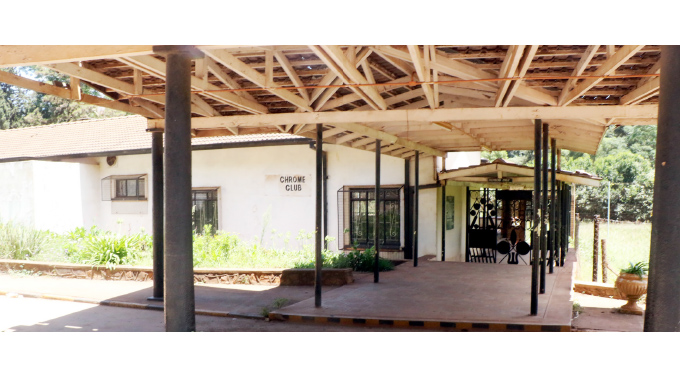
“As you can see, the tennis and squash courts have not been used for a long time and the place has not been maintained in years. The doors were locked about 10 years ago after squatters invaded the place and stripped copper cables.
“I used to work as a barman and believe it or not, I raised my three children from the salary I earned here and it breaks my heart that it’s now dilapidated and no one cares about reviving it,” said Mutendi.
Shurugwi residents live in the hope that just like Zvishavane town, which almost turned into a ghost town after the closure of asbestos mining firm Shabanie Mine and has sprung to life with the emergence of Mimosa Mine, their town will also rise from the ashes.


 Online Reporter