Marshall Ndlela
Zimbabwe has never lacked economic blueprints.
Since 1980 the country has launched plan after plan, and many failed to deliver sustained growth. The challenge facing Vision 2030 is not vision. It is execution.
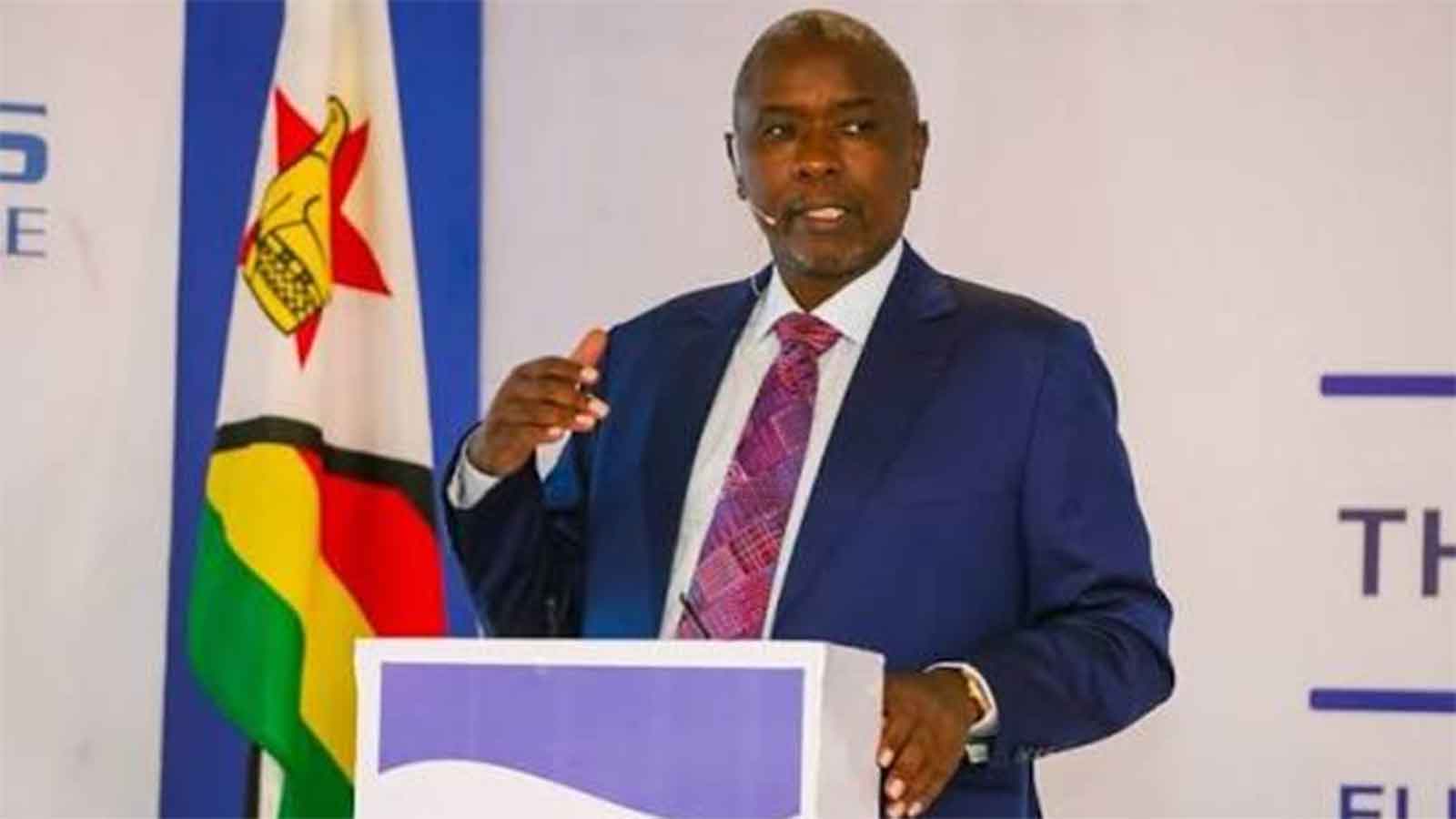
That is why the appointment of Dr Kudakwashe Tagwirei as Minister of Economic Development and Investment Promotion matters. President Mnangagwa has placed a seasoned dealmaker at the centre of the country’s growth agenda, with four years left to reach the 2030 targets.
The message is clear. The era of rhetoric must give way to economic practice: projects financed, factories commissioned, mines expanded and jobs created.
Vision 2030 at a glance
Vision 2030 commits Zimbabwe to becoming a prosperous and empowered upper-middle income society by 2030. It is being delivered in three stages:
Transitional Stabilisation Programme (2018-2020), focused on stabilising public finances and the economy.
National Development Strategy 1 (2021-2025), aimed at laying foundations for recovery and growth.
National Development Strategy 2 (2026-2030), whose focus is industrialisation, value addition and inclusive growth.
Under NDS2, the Government targets a gross national income per capita above US$4 900 by 2030, with formal employment rising to 45,3 percent. The strategy rests on sound macroeconomic management, good governance and private sector-led growth, with emphasis on trade, investment and exports.
Finance Minister Professor Mthuli Ncube has described NDS2 as a shift from stabilisation to structural transformation. The split of the ministry gives each phase its owner. Finance guards stability, while Economic Development drives transformation.
Capability: a good story to tell
Dr Tagwirei’s own path mirrors the self-reliance Vision 2030 calls for. A geologist by training, he founded Sakunda in 2003 with his wife Sandra, working from a home office and selling 15 000 litres of fuel. He once sold his only house to keep the business going.
From that beginning, he built a group spanning the sectors NDS2 depends on, which are:
Energy and fuel logistics: Sakunda grew into a major fuel supplier. In 2013, it formed Trafigura Zimbabwe, a joint venture with a Swiss commodities giant in which Sakunda held 51 percent. That partnership showed that Dr Tagwirei can negotiate on equal terms with global firms.
Agriculture: Sakunda financed inputs under the Command Agriculture programme, linking private capital to food security.
Mining: His interests have included gold, nickel and platinum assets, sectors central to Zimbabwe’s export earnings.
Infrastructure and finance: His group has been involved in construction and banking, the backbone of any investment drive.
This breadth is his economic prowess. Few public officials have structured cross-border joint ventures, financed farmers, run mining assets and managed fuel supply chains. These are the skills a growth ministry needs to turn NDS2 targets into bankable projects.
Philanthropy and social capital
Dr Tagwirei is widely described as a philanthropist who has supported health, education and community causes. One of his most visible gestures came in 2021, when Sakunda committed about US$5,3 million to sponsor Dynamos and Highlanders. It also funded houses for football legends Moses Chunga and Madinda Ndlovu, and for the family of the late George Shaya.
Backing clubs that represent both Harare and Bulawayo carried a message of national unity, and honouring retired heroes spoke to a culture of giving back. As an elder of the Seventh-day Adventist Church, he often frames business through “faith-driven leadership”.
In economics, social capital means the networks of trust that make cooperation cheaper and faster. Robert Putnam and other scholars have shown that societies rich in trust tend to attract more investment and grow faster.
Dr Tagwirei brings two kinds:
Bonding capital within Zimbabwe’s business, farming, mining and faith communities
Bridging capital with regional and international traders, financiers and investors, built over two decades of cross-border deals.
For an investment ministry, these networks are an asset. They can shorten the path from first meeting to signed agreement.
Economic positioning: a market economy with a balanced state
Dr Tagwirei’s career sits at the meeting point of private enterprise and State partnership. That positioning fits the economic model many African countries have moved towards since Independence.
From liberation socialism to social democracy
After independence, many pan-African governments embraced socialist ideals: Tanzania’s Ujamaa under Julius Nyerere, Zambia’s Humanism under Kenneth Kaunda and Zimbabwe’s own early socialist commitments.
These ideals stressed equity, self-reliance and state ownership. Heavy state control often slowed growth, and from the 1990s most countries liberalised.
What has emerged is neither pure socialism nor pure capitalism. It is a social democratic market economy: free markets drive production and investment, while the state sets the rules, builds infrastructure, protects the vulnerable and partners with business in strategic sectors.
Botswana, for example, uses a state-business partnership model in which Debswana, a 50/50 joint venture between the government and De Beers, channels diamond wealth into public investment.
Mauritius has an open economy, with a welfare state. Export processing zones and free markets are combined with free education and healthcare.
Rwanda uses a Developmental state, where a strong state agency courts private investors and sets clear national targets.
Another example is Germany with a social market economy, marked by competitive markets alongside strong social protection and worker voice. And China, which uses a socialist market economy in which state planning and strategic ownership coexist with a vast private sector.
Zimbabwe’s own policy language reflects this balance. The policy, “Zimbabwe is open for business” signals a free-market orientation. Nyika inovakwa nevene vayo, a country is built by its own people, signals national ownership. NDS2 also commits to devolution, social protection and inclusive growth.
A minister with deep private-sector roots, who has also worked in partnership with state programmes, is well placed to operate in this middle ground. The aim is not to replace the state with the market, but to let each do what it does best.
Driving Vision 2030: where practice must replace rhetoric
With four years to 2030, the new ministry’s success will rest on a handful of practical levers that match NDS2’s priorities. These are:
Value addition in mining: Moving beyond raw ore exports to processing gold, platinum, lithium and chrome locally. This builds on industrialisation, the backbone of NDS2.
Agriculture as a business: Scaling private financing for farmers, contract farming and agro-processing, building on lessons from Command Agriculture.
Energy security: Unlocking private investment in power generation and fuel logistics, where Dr Tagwirei has direct experience.
Special Economic Zones and industrial parks: Making zones genuinely competitive with fast approvals, reliable utilities and clear incentives.
Diaspora capital: Turning remittances into investment through diaspora bonds, housing schemes and pooled funds.
Public-private partnerships: Structuring bankable infrastructure projects, including roads, dams, housing and digital networks.
Investor aftercare: Ensuring investors who arrive stay and expand, by solving problems quickly through ZIDA.
Each lever needs a public scorecard: investment pledged versus landed, projects commissioned, exports added and jobs created. Measurable delivery is what separates economic practice from economic rhetoric.
Building under pressure: a lesson in economic sovereignty
Dr Tagwirei’s capability has been proven under conditions few business leaders face. Since 2020 he and his companies have been targeted by United States and United Kingdom sanctions, measures the Government regards as illegal and that the Southern African Development Community has repeatedly called to be lifted. His supporters see them as part of a wider effort to constrain Zimbabwe’s economic independence.
Under those restrictions, his businesses did not retreat. They diversified across energy, mining, construction and finance, reinvested at home and built partnerships with regional and eastern investors. That is the self-reliance Nyika inovakwa nevene vayo calls for, applied in practice.
This experience is directly relevant to Vision 2030. Zimbabwe must reach upper-middle income status while working around restricted access to Western finance. A minister who has already done this at company level can help the country do it at a national scale.
Vision 2030 has a clear destination: an upper-middle income Zimbabwe with more jobs and a better quality of life. NDS2 provides the road map. What the country has often lacked is a driver who can turn plans into projects.
Dr Tagwirei brings a self-made business story, a record of large cross-border deals, a philanthropic profile and deep social capital. He also brings a pragmatic economic outlook suited to Africa’s balanced, social democratic market model. If he matches that capability with transparency and measurable results, his appointment could mark the moment Vision 2030 moved from rhetoric to economic practice.