Online Reporter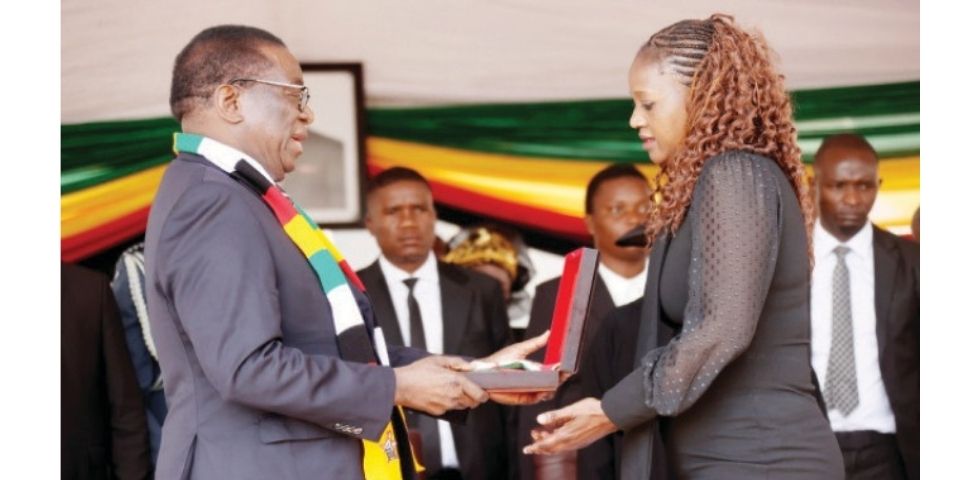
Wallace Ruzvidzo [email protected]
PRESIDENT Mnangagwa has said the Second Republic’s policies and initiatives are delivering clear results, with Zimbabwe transitioning from economic recovery to accelerated growth.
Speaking at the burial of national hero Brigadier-General (Retired) Donald Silundi Tshuma at the National Heroes’ Acre in Harare yesterday, the President said the country’s current macroeconomic stability was the result of discipline, resilience and unity of purpose.
“Our economy remains on an irreversible growth trajectory, expected at 5 percent in 2026, following a 6,6 percent rebound in 2025. The IMF, World Bank, and United Nations Economic Commission for Africa all confirm this trend,” he said.
Reflecting on the life of Brigadier-General (Retired) Tshuma and other liberation heroes, President Mnangagwa urged Zimbabweans to serve their country diligently, stressing that their sacrifices secured independence and gave the nation control over its resources and future.
“Our late National Hero, Brigadier General (Rtd) Tshuma, stayed the course and together with his generation, they remained committed to see a prosperous Zimbabwe, where our communities have a higher quality of life. In this regard, it is critically important that, sector by sector, we must take pride and celebrate the evident success milestones,” he said.
The President said the Second Republic would continue to honour the country’s liberation history by recognising heroes, preserving culture and promoting national identity.
“Nyika inovakwa, inotongwa, inonamatigwa nevene vayo/ Ilizwe, lakhiwa, libuswe, likhu-le-ke-lwe ngabanikazi balo. Nation-building entails daily patriotic acts, by all of us. Province by province, community by community, let us always remember that a nation without an identity and culture is like a tree without roots,” said the President.
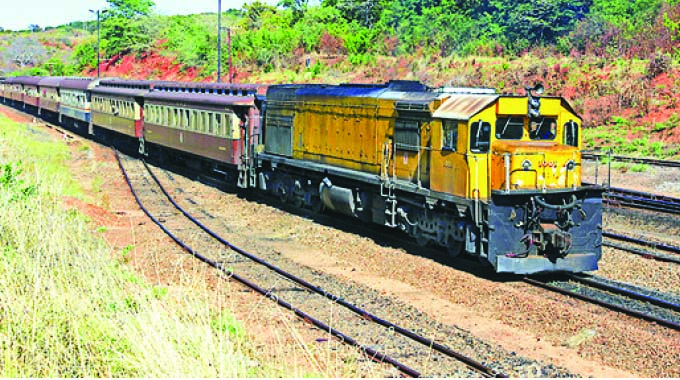
He pointed to improvements in key sectors, including energy, transport, water and information communication technology, as signs of progress across the country.
The mining sector, a key pillar of the economy, is also performing strongly, with earnings reaching US$7 billion in 2025. With attention now on beneficiation and value addition, the President said his administration would continue to implement policies aimed at empowering citizens and creating wealth.
President Mnangagwa said reforms in the mining sector, particularly in small-scale gold mining, would increase local participation. He added that the agriculture sector was also improving, helping to strengthen food security and national self-sufficiency.
The President also addressed young people, reminding them of the sacrifices made by liberation fighters at their age. He said the country was enjoying peace and independence because of the efforts of its forebears and urged the youth to remain patriotic.
As such, the President rallied the youth to “defend our revolution and reject those who want to use you as tools to denigrate your country”.
“Choose to be part of those building our nation as entrepreneurs across all sectors, including the digital space and in laboratories and on our God-given land. The modernisation, industrialisation and the realisation of Vision 2030 is ours together,” he said.
President Mnangagwa described the late national hero, who died at the age of 71, as a dedicated and disciplined soldier who served both before and after independence. He said Brigadier-General (Retired) Tshuma showed exemplary leadership during his time in the Zimbabwe Defence Forces.
“On behalf of our revolutionary mass Party, ZANU PF, the nation, Government, and on my behalf, I once again express my deepest and heartfelt condolences to the Tshuma Family. As we mourn with you the loss of a beloved son, father and relative, we collectively honour his heroic contribution to Zimbabwe.
“He endured the weighty responsibility of our liberation struggle and national assignments with bravery and steadfast commitment. It is, therefore, befitting that we inter our National Hero alongside luminaries of our country, at this sacred national shrine.”
President Mnangagwa said the late Brigadier-General (Retired) Tshuma’s life should serve as an example to others. He described it as a “template of persistent patriotism and loyalty, which should be emulated”.
Born on July 12, 1955, in Nkayi District, the late national hero grew up during the height of colonial repression. He later joined the Zimbabwe African People’s union (Zapu) to fight against colonial rule.
His leadership qualities were soon recognised, leading to his appointment as District Organising Secretary for Gwabalanda in the Zapu Youth League.
President Mnangagwa said Brigadier-General (Retired) Tshuma played a key role in mobilising young people to join the liberation struggle.
“His activities made him a person of interest and a target of the Rhodesian Special Branch. In 1976, he escaped, through Botswana en route to Zambia, to join the Liberation Struggle,” he said.
The late national hero underwent military training at Mwembeshi in Zambia, where he learnt the realities of armed struggle. He was later deployed along the Zambezi River, carrying out reconnaissance, surveillance and protection duties for cadres.
In 1978, he was among a group sent to Libya for further training under the leadership of the late national hero General Lookout Masuku.
However, the group could not proceed with the training due to certain conditions attached to it.
President Mnangagwa said this decision showed a strong sense of identity.
“We are a people with our own culture, norms, values and identity”.
He added that colonialism had sought to distort African history and undermine local cultures.
“Colonialism tried to belittle our languages and peddle narratives that claimed our history began in 1890, as the white supremacist disregarded that we were a proud and self-reliant and sophisticated civilisation prior to their invasion and theft of our land.
“The late Cde Tshuma and his generation deconstructed such falsehoods. Their fight restored our history, dignity, identity and destiny. In 1979, the late National Hero, Brigadier General (Rtd) Tshuma, went to the then USSR for further military training.”
After the ceasefire, Brigadier-General (Retired) Tshuma returned home and joined the Zimbabwe National Army, where he was posted to 1.9 Infantry Battalion. President Mnangagwa highlighted his long and distinguished military service.
“During his illustrious service, he fought in the Mozambique and DRC campaigns. Under a United Nations Mission, he was deployed to South Sudan, as an Observer,” he said.
In recognition of his service, he received several honours, including the Liberation Medal, Independence Medal and the Commander of the Zimbabwe Order of Merit.
“Today, Zimbabwe says, thank you. Your professional and exceptional patriotism, loyalty, consistency and persistency are praise worthy of emulation.
“The flag you defended shall continue to fly high and the flame of the people’s revolution shall burn eternally.
“As Zimbabweans, from Plumtree to Mutare, Beitbridge to Chirundu, we are clear of this weighty obligation. Under my leadership, this sacred path will never be abandoned. Under the current 4th Chimurenga, the revolution continues.”
President Mnangagwa was accompanied by First Lady Dr Auxillia Mnangagwa. Vice-Presidents Dr Constantino Chiwenga and Dr Kembo Mohadi, Chief Secretary to the Office of the President and Cabinet Dr Martin Rushwaya, Cabinet ministers, Zanu-PF Politburo and Central Committee members, as well as other senior Government officials, also attended.