Online Reporter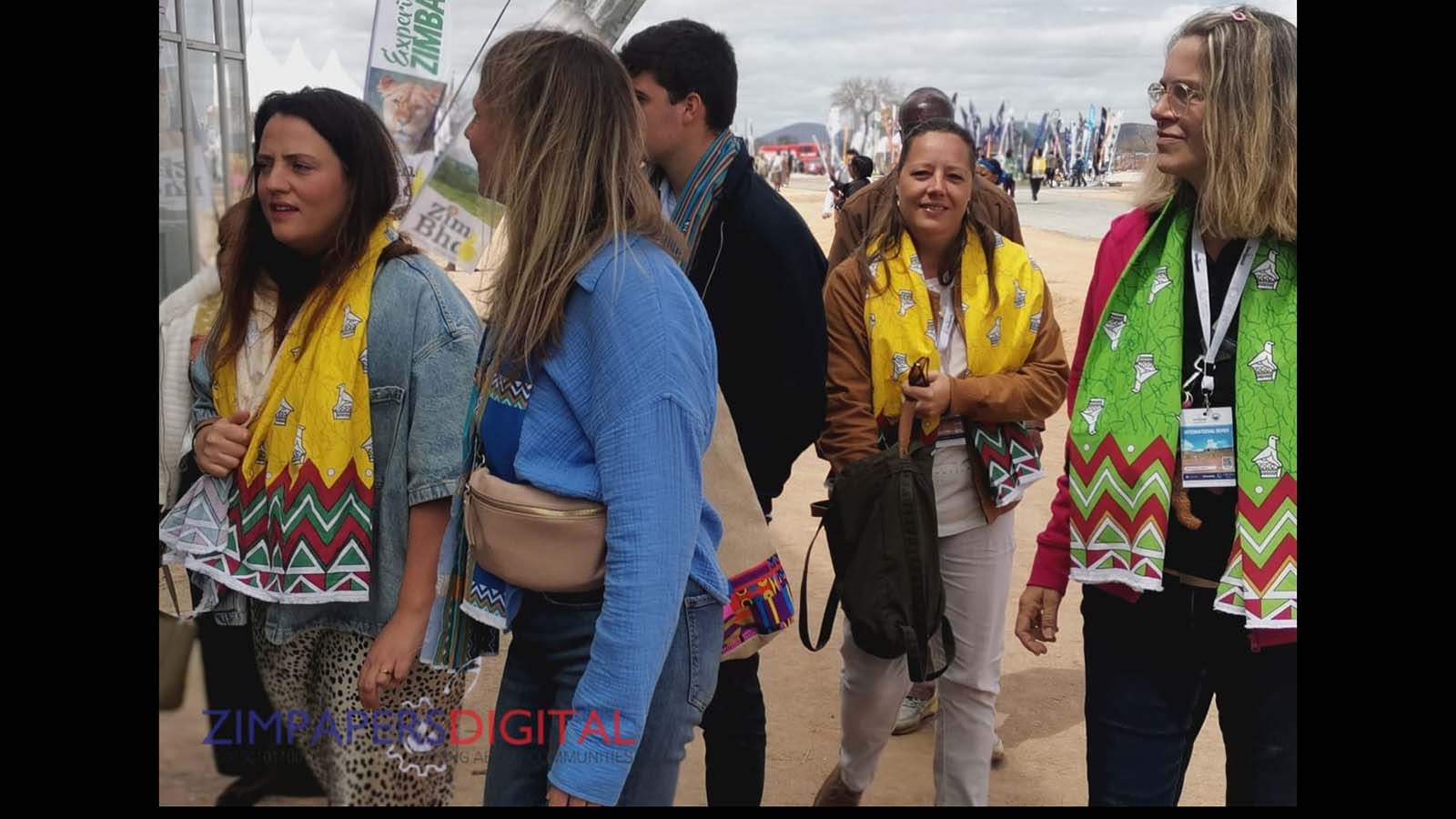
Gibson Mhaka-Zimpapers Politics Hub
ZIMBABWE’s hosting of the 19th edition of the Sanganai/Hlanganani/Dzimbahwe World Tourism Expo in Masvingo this week presents far more than an opportunity to showcase the country’s tourist attractions.
Viewed against the backdrop of the upcoming COMESA Heads of State and Government Summit in October, the tourism expo is an important economic platform through which Zimbabwe can convert international exposure into investment, tourist arrivals, foreign-currency earnings, enterprise development and stronger regional economic linkages.
The convergence of the two events is particularly significant.
While Sanganai brings international buyers, exhibitors, tourism operators and other industry stakeholders into the country, the COMESA Summit will bring political leaders and senior policymakers from across the region.
Together, the two platforms provide Zimbabwe with an opportunity to demonstrate that tourism is not merely a leisure industry, but an important pillar of economic development, regional integration and investment.
The 2026 Sanganai/Hlanganani/Dzimbahwe World Tourism Expo, running till September 12, has attracted close to 140 international buyers.
That number matters because tourism is ultimately driven by markets.
An international buyer who understands Zimbabwe’s products, experiences them personally and establishes relationships with local operators is potentially a conduit to thousands of tourists in the markets they serve.
This is why the familiarisation tours preceding the expo are economically important.
European buyers from Germany and France have been travelling beyond Victoria Falls, visiting Hwange National Park, Bulawayo and the Matobo area before proceeding to Masvingo.
Their journey is effectively a practical test of Zimbabwe’s proposition as a multi-destination country.
For years, Victoria Falls has been Zimbabwe’s most internationally recognised tourism brand.
There is nothing wrong with this.
However, an economy derives greater value from tourism when visitors stay longer, travel further and spend money across several destinations.
A tourist who arrives in Victoria Falls and leaves after visiting the resort town provides one stream of economic activity.
A tourist who spends several days in Victoria Falls, travels to Hwange, visits Bulawayo and the Matobo area before proceeding to Masvingo creates a much wider economic footprint.
Accommodation establishments, airlines, transport operators, restaurants, tour companies, guides, craft producers, curio sellers and communities along the tourism corridor all stand to benefit.
This is the economic logic behind Zimbabwe’s attempt to sell more than the Victoria Falls.
The experience of the international buyers currently in the country provides an encouraging indication that the strategy can work.
German tour operator Mr Florian Hennig, from Natürlich-Reisen, said his experience had demonstrated Zimbabwe’s combination of wildlife, scenery, hospitality and investment opportunities.
“I think the investment possibilities are endless here. There’s so much to see, the people are so nice and you can do so many different things. It’s really amazing,” he said.
That statement should not be dismissed as simply a tourist compliment.
For Zimbabwe, it represents the type of market intelligence and investor confidence that international tourism expos are designed to generate.
Mr Hennig is not merely visiting as an ordinary tourist. As a tour operator serving international markets, his assessment can influence the itineraries he sells and, ultimately, where his clients spend their money.
French tourism buyer Mr Romain Larriew similarly said the experience had left him with a positive impression of Zimbabwe and would enable him to market the destination more confidently in France.
“In France there are more and more people who want to come to Zimbabwe, so it’s a good thing to come here and discover, to be able to say how it is, and to push them to come to Zimbabwe, to visit by themselves,” he said.
This is precisely where tourism becomes an export industry.
Zimbabwe does not have to physically export a product to earn foreign currency from an international visitor.
Instead, the visitor comes into the country and pays for accommodation, transport, food, entertainment, park fees, cultural experiences and other services.
The money then circulates through the domestic economy, supporting businesses and employment.
Sanganai, therefore, provides a marketplace where Zimbabwe can sell this invisible export directly to international buyers.
But its significance becomes even greater when considered alongside the COMESA Summit.
The October summit provides another opportunity to place tourism within the wider conversation on regional economic integration.
COMESA is fundamentally about facilitating trade, investment and economic cooperation among member States.
Tourism fits naturally into that agenda because tourists do not necessarily respect political boundaries when planning their holidays.
A regional tourism package linking Zimbabwe’s Victoria Falls and Hwange with attractions in Zambia, Botswana, Malawi, Mozambique, or other COMESA markets can create a more competitive African tourism proposition than countries marketing themselves in isolation.
Zimbabwe can, therefore, use the visibility generated by Sanganai to enter the COMESA Summit with a practical tourism proposition: that regional integration should also mean integrated tourism circuits, easier movement of tourists, stronger air and road connectivity and coordinated destination marketing.
The timing is, therefore, strategic.
The international buyers arriving for Sanganai are already demonstrating the value of bringing global markets into Zimbabwe.
The COMESA Summit can then broaden that conversation from individual tourism products to regional economic opportunities.
For Zimbabwe, the potential gains extend beyond tourist arrivals.
Increased tourism activity can stimulate investment in hotels, lodges, transport infrastructure, restaurants, conference facilities and entertainment.
It can also create markets for small and medium enterprises producing handicrafts, clothing, food products and cultural experiences.
The German buyer’s observation that Zimbabwe offers different investment possibilities is therefore important.
Tourism investment is rarely confined to the hotel room.
Every additional visitor creates demand across an interconnected value chain.
There is also a strong case for using tourism to promote less-visited destinations.
The comments by German visitor Ms Anja Schmidt that Zimbabwe offers accommodation ranging from low-star to high-end establishments and caters for different budgets underline the breadth of the country’s tourism proposition.
If effectively marketed, this diversity can help Zimbabwe capture different categories of tourists, from backpackers and budget travellers to luxury and business tourists.
The challenge, however, is to convert exposure into measurable economic outcomes.
An international buyer leaving Zimbabwe impressed is only the beginning.
The real test is whether that experience translates into Zimbabwe being included in international travel catalogues, tour packages and marketing campaigns, followed by actual bookings and increased arrivals.