Online Reporter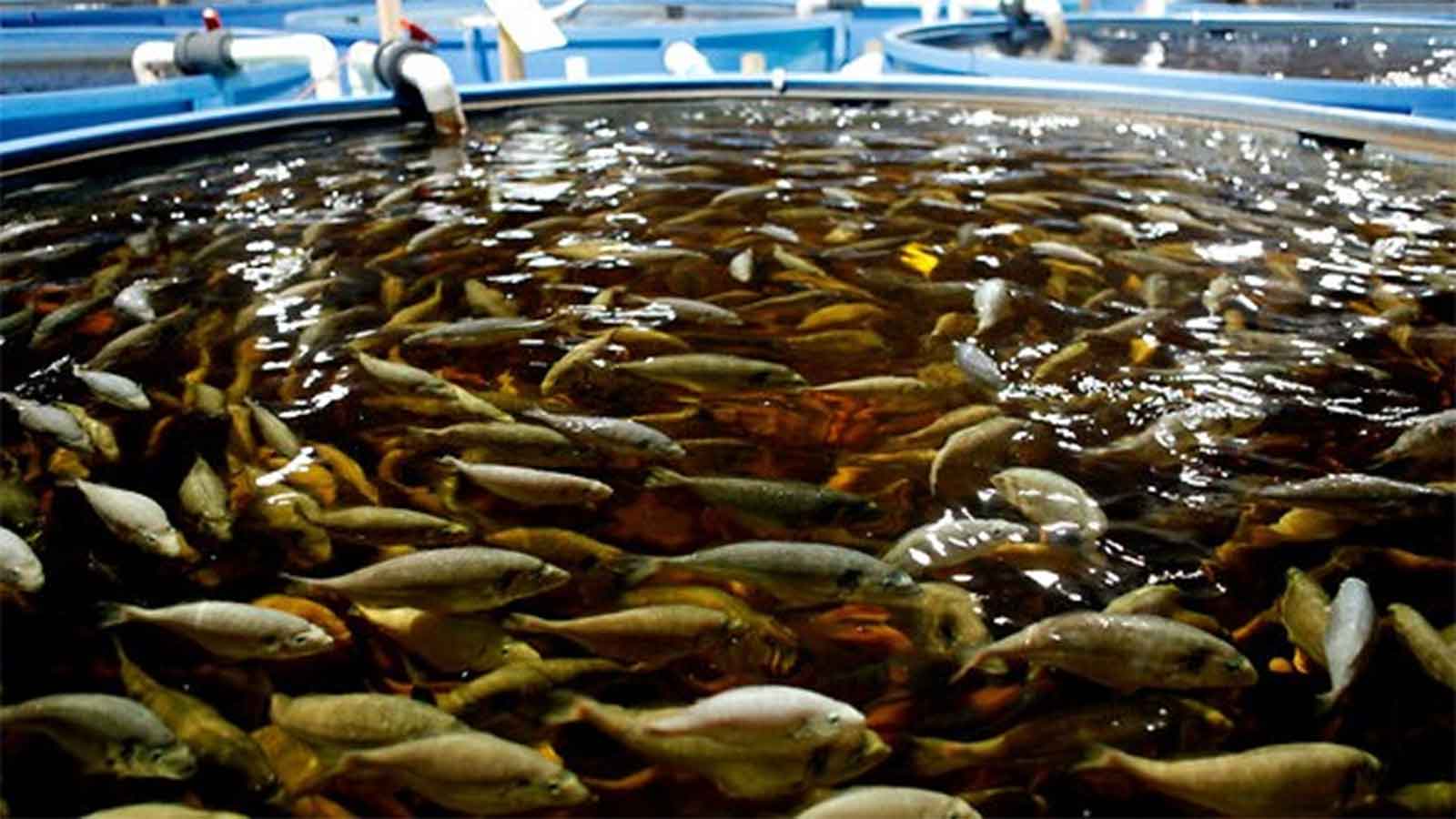
Theseus Mauruki Shambare in MUTASA
THE first step towards building a fish business in Mutasa was not a hatchery, a cold room or a commercial fish market.
It was a shovel.
For Ms Sarah Muchibo and other aspiring fish farmers, there was an interest in fish farming — and the willingness to dig.
“We started working, and within 21 days we had dug the pond and completed the work,” Ms Muchibo recalled.
Today, that first step is part of a much bigger transformation taking place across Mutasa, where ponds are increasingly becoming productive assets and farmers are being connected to the inputs, technology, markets and infrastructure needed to turn fish production into a business.
Mutasa district Agritex training specialist Mr Abraham Matsanura said the district has 897 registered fish farmers, although the actual number is expected to be higher because some producers are yet to register.
Across the district, farmers have established 1 269 fishponds, of which 624 are currently stocked, while cumulative fish harvests have reached 5,1 tonnes.
“We have got 897 registered fish farmers in the district. The figure is slightly above that because others are not yet registered,” Mr Matsanura said.
Mutasa has 16 active fish-farming clusters, with the authorities targeting 27 through the subdivision of larger groups.
“We have got 16 active clusters, and our projected number of clusters will go up to 27 after considering the subdivision of the larger clusters,” he said.
But behind the numbers is a more important change.
The pond is beginning to become a business.
Women claim their space
In Mutasa, the Golden Cluster, a women-led cooperative, is part of the district’s expanding aquaculture network.
In Honde Valley, another women-led initiative is addressing one of the biggest constraints facing small-scale fish farmers — access to quality fingerlings.
For farmers, obtaining fish seed has traditionally meant travelling long distances, adding costs and making production more difficult.
The fingerling distribution hub is bringing that input closer to producers while also providing technical assistance.
Assistant district development coordinator Mr Vitalis Muranda said the initiative demonstrated a changing role for women in rural production.
“We are very grateful for that because the project has demonstrated that women are not merely beneficiaries of Government development projects, but they can be active entrepreneurs and active producers in the fisheries value chain,” Mr Muranda said.
Ms Nattie Gwenzi said the hub had made fish farming more convenient.
“Since the fingerling hub was established nearby, things have become much easier for farmers. People now know where to get fingerlings and can also sell their fish and make a profit,” she said.
The hub’s seven movable tanks can hold up to 488 000 fingerlings, with seasonal capacity reaching between two million and 2,5 million.
“If you need 1 000 fingerlings, you can get them there and take them home to raise. This has made fish farming much more convenient because farmers no longer have to travel long distances to source fingerlings,” Ms Gwenzi said.
The assistance does not end when farmers collect the fingerlings.
“The people at the hub also teach us how to raise the fish, including how to provide oxygen and properly care for them. They give us the knowledge we need instead of simply giving us the fish and leaving us on our own.”
European Union (EU) representative Mr Martin Andersen said the women-led initiative had grown from a modest beginning into a significant rural investment.
“It is quite interesting to see how this women-led initiative with this fingerling distribution hub has come from nothing into quite a very impressive investment and commitment that these women are putting into having this kind of centre created and running,” Mr Andersen said.
Building the value chain
The transformation, however, does not stop with fingerlings.
Livestock and Fisheries Production Department director Mr Milton Makumbe said the Government was focusing on the entire chain, recognising that farmers needed more than ponds to build viable enterprises.
“The growth of aquaculture in Mutasa demonstrates the potential to increase fish production through organised farmer groups and stronger support across the value chain,” Mr Makumbe said.
“We are looking at strengthening the entire value chain, from fingerling production and feed to fish production, processing, storage and markets so that increased participation translates into higher output and improved farmer incomes,” he said.
One emerging innovation is turning another rural problem — waste — into a potential production input.
Black soldier fly processing is being explored as a way of converting organic waste into protein for animal feed, creating another link between waste, feed and fish production.
The concept is straightforward: Waste becomes a resource, the insect becomes protein, and the protein becomes feed.
For fish farmers, locally available feed alternatives could help address one of the major costs of production.
But producing more fish creates another challenge.
Getting it to consumers before it spoils.
When the pond fills up
Fish are highly perishable.
A farmer can successfully raise thousands of fish and still lose value if the harvest cannot reach the market quickly or be stored properly.
This is why the development of cold-chain infrastructure is becoming an important part of Manicaland’s aquaculture story.
Last week, an EU delegation led by Mr Martin Andersen visited the US$135 000 Manica Cold Chain facility at Odzi and witnessed the work taking shape.
The solar power system was being installed while workers were assembling the cold rooms that will provide the refrigeration capacity required to receive and preserve fish from farmers.
The construction crew told the delegation that the installation work would be completed within seven days, with the facility expected to be ready for its official opening in about two weeks.
The facility is designed to provide a holding and storage point where fish can be received and frozen before being distributed to markets.
Molus Meats general manager Mr Shadreck Munaka said the cold chain will soon be up and running.
“Within seven days, the cold chain should be up and running, only waiting for the official opening, but the setup will be complete,” he said.
The company has routes to Beitbridge, Chimanimani and Buhera, creating a potential link between fish farmers in Manicaland and markets beyond their immediate communities.
For Zimbabwe Fish Producers Association chairperson Mr Garikai Munatsirei, the infrastructure addresses a problem that farmers have faced for years.
“For a long time, our farmers have been struggling to take their freshly harvested fish from different parts of Manicaland to the market because of cold-chain challenges. What we are seeing here is a major step towards addressing that problem,” he said.
Mr Makumbe said farmer aggregation would be critical to making such infrastructure commercially useful.
“Fish being a highly perishable product, we are also trying to look into the aspect of cold-chain facility.
“We are trying to ensure that we get our farmers to aggregate, to come through as clusters. So, once we have all this fish in bulk, this actually necessitates a very robust cold-chain facility,” he said.
For farmers, organised marketing is already changing the economics of production.
Ms Elizabeth Sibangwe, a farmer in Honde Valley, said she was no longer entirely dependent on individual buyers.
“This has been beneficial to me because I am no longer dictated to by individual buyers when it comes to prices.
“The price is relatively consistent, depending on the quantity and type of fish I deliver,” she said.
Consolidated payments, she added, had also made reinvestment easier.
“I also receive my money as one consolidated payment.
“When the money comes in small amounts, it becomes difficult to reinvest. With the current arrangement, I receive the money together, which makes it easier for me to reinvest in my fish farming project,” said Ms Sibangwe.
That is where fish farming begins to resemble a genuine enterprise.
A buffer against climate shocks
There is another reason the ponds matter.
For rural households dependent on rain-fed agriculture, drought and changing climatic conditions can disrupt both food production and household incomes.
Aquaculture offers another livelihood stream.
Representing FAO sub-regional coordinator for Southern Africa and country representative in Zimbabwe Dr Patrice Talla Takoukam, assistant representative (programmes) Tendai Munyokoveri said fish farming could help households diversify their sources of income.
“Aquaculture provides households with an alternative source of income when crop production is affected by drought and changing climatic conditions,” she said.
“By diversifying livelihoods, communities become better equipped to absorb shocks and recover from adverse events.”
FISH4ACP has been supporting Zimbabwe’s aquaculture value chain through interventions covering fingerlings, production practices, feed, markets and business development.
The objective is, therefore, not simply to put fish into ponds.
It is to make the chain around the pond work.
From a hole to an industry
For Ms Muchibo, however, the journey still comes back to where it began.
The shovel.
“We started working, and within 21 days we had dug the pond and completed the work,” she said.
The work that once looked like nothing more than a hole in the ground is now part of a growing chain.
A fingerling becomes a fish.
The fish becomes a harvest.
The harvest becomes income.
Income becomes reinvestment.
And reinvestment creates the possibility of another pond, another farmer, another business.
Mr Andersen believes the benefits extend beyond the fish itself.
“Having a fish farm can bring in more income, bring more stable nutrition, but it is also a new way of creating a better livelihood,” he said.
The fishpond is no longer the end of the story. It is the beginning.
What began with women picking up shovels and digging into the soil is becoming something larger: a rural fish economy, built one pond at a time.