Online Reporter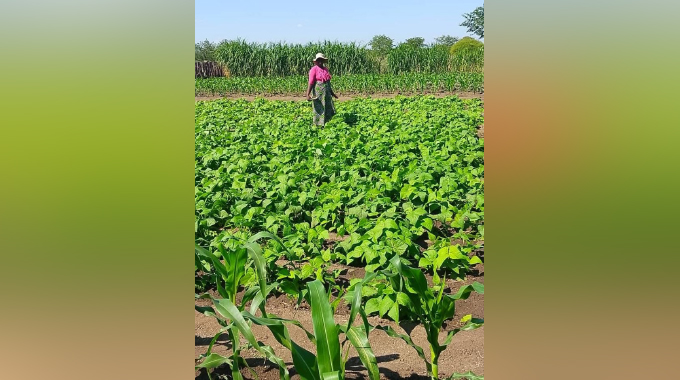
Tapson Ndou, [email protected]
What began as modest weekly savings contributions in Beitbridge West has grown into a powerful engine for economic empowerment, with hundreds of villagers in Wards 6, 7, 8 and 9 using Savings and Internal Lending Communities (SILC) to build businesses, strengthen food security and create livelihoods that are no longer dependent on erratic rainfall or piecework.
Across these wards, community members have embraced the SILC model by pooling their weekly savings into a common fund and then accessing loans at agreed interest rates to invest in income-generating projects ranging from crop production and livestock rearing to retail trading and horticulture.
Under the SILC system, members meet regularly to save a set amount, record contributions transparently, and borrow from the accumulated fund for productive purposes, repaying with interest that is then shared among members at the end of each cycle; in this way, the group becomes both a bank and a business training space.
For many participants, the impact of that structure has been life-changing, replacing uncertainty with planning and giving women and youth, in particular, access to capital that formal banks have long denied them.
Mrs Salifi Ndou of Ndambe in Ward 7 says her participation in a SILC group enabled her to establish a thriving nutritional garden after she used her loan to invest in a solar-powered pumping system and drip irrigation infrastructure that now waters her crops throughout the year.
“I never thought SILC cooperatives would help me improve my life and that of my children this much, because I am now able to feed my family from the produce harvested from my garden and I also generate income from selling surplus vegetables at the local market,” she said.
The improved access to irrigation has strengthened household food security while reducing dependence on unpredictable rainfall, which is a critical advantage in this drought-prone district where dry spells can wipe out an entire season’s crop in a matter of weeks.
Mrs Liketsoe Maseko of Masera in Ward 9 shares a similar story of transformation, having joined a SILC group in 2022 when she saved consistently and reinvested her share-outs into agricultural production until by 2024 she had acquired a solarised water pump, fenced her garden and expanded into beans, vegetables and maize that she now sells to support her family.
“After joining SILC, I found purpose and direction because instead of spending my days idle, I now spend most of my time working in my garden, which has become a family business, and SILC has greatly improved my life by teaching me how to plan, budget and grow,” said Maseko.
The success stories extend beyond crop farming into livestock, where Ms Khensani Mbiza and her group used savings accumulated through the scheme to start a goat-breeding project in 2023.
The project has since grown their herd to more than 50 goats with ambitions to become one of the leading breeders in Matabeleland South.
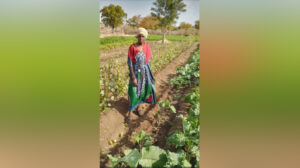
“We started this project in 2023 using our savings to buy goats, and today our herd has grown to more than 50 goats,” she said.
“We are now preparing to fence a two-hectare piece of land where we intend to grow fodder crops to ensure our livestock have adequate feed during drought periods.”
Ms Mbiza added that the culture of saving and investment promoted by SILC groups has encouraged members to think like businesspeople.
She said they have used part of their earnings to attend business management workshops facilitated with support from local Agritex officers who also provide technical advice on animal health and pasture management.
“Through our savings, we have been able to fund ourselves to attend business management workshops, and with support from local Agritex officers, our livestock projects continue to improve and perform well, because we now understand record-keeping, marketing and risk management,” she said.
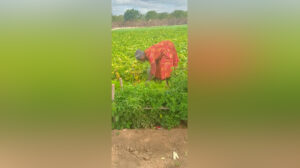
Another beneficiary, Miss Ropafadzo Ncube of Masera Village 6, describes how the journey began with contributions as small as R10 per week but eventually laid the foundation for significant economic progress that now includes crop fields, a spaza shop and school fees for her children.
“The journey started with savings as little as R10, and today I have more than a hectare of land under cultivation, I operate a spaza shop, and I can send my children to high school, because SILC and the business knowledge I gained through the programme changed my life and gave me confidence to invest,” she said.
According to group records and member testimonies, the SILC initiative in Beitbridge West currently boasts more than 250 active participants.
These are involved in a wide range of enterprises that include retail shops, crop production, cattle rearing, goat breeding, poultry projects and horticulture, all of which are funded through internal lending rather than external debt.
Development practitioners have long identified community savings groups as a practical tool for promoting financial inclusion, particularly in rural areas where access to formal banking and credit facilities remains limited due to distance, collateral requirements and low incomes.

In Beitbridge West, the model is proving that collective action, financial discipline and entrepreneurship can unlock economic opportunities and strengthen household resilience, because when people save together they build trust, share skills and create a safety net that cushions families during shocks such as drought, illness or job loss.
As more villagers embrace the culture of saving and investing, SILC groups are emerging as a grassroots engine for rural development, demonstrating in very concrete terms how small, consistent contributions can yield transformative results for families and communities that were previously considered marginal and excluded from mainstream economic growth.