Gay Mufambi
Sanctions are, at bottom, a war on finance, and finance is how nations secure health, food and dignity for their people. Zimbabwe’s answer has been to build its own funding blocks.
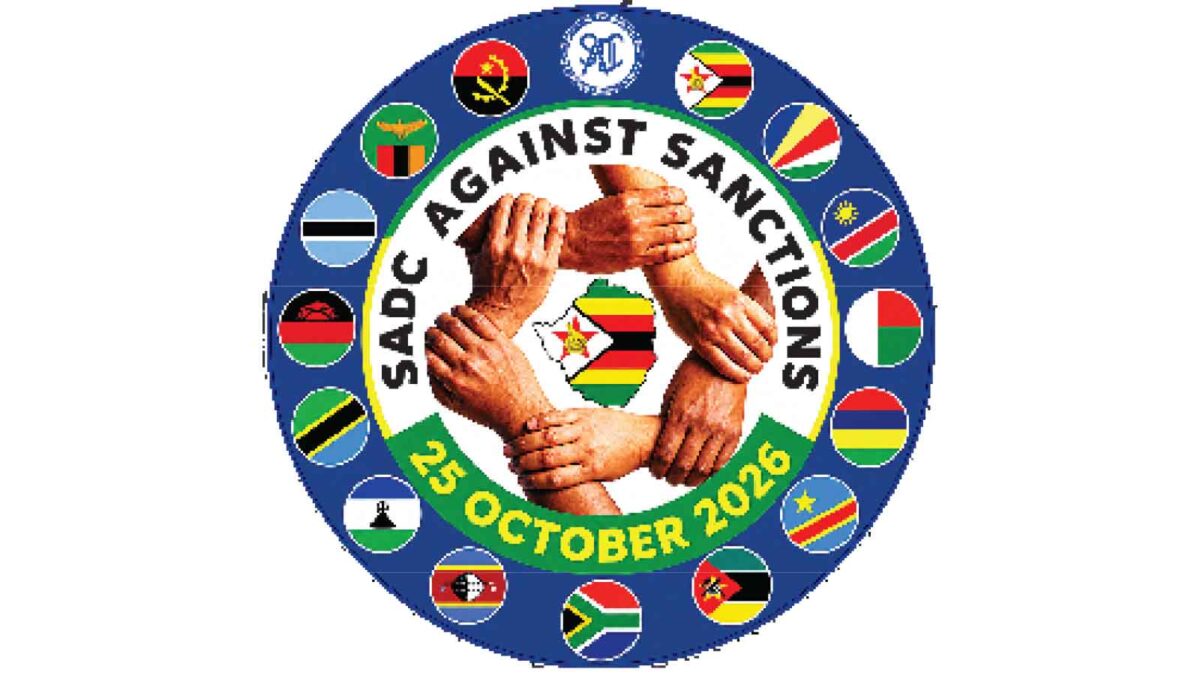
In August 2019, SADC Heads of State and Government meeting in Dar es Salaam designated October 25 as a day for the region to call collectively for the unconditional lifting of sanctions on Zimbabwe. Since then, the regional stance has evolved from condemnation to cooperation, from statements of protest to strategies of production.
This year’s theme, “Leveraging Regional Integration and Global Partnerships for Economic Transformation beyond Illegal Sanctions”, places one word at its centre: transformation. Transformation is expensive. Power stations, railways, hospitals and factories need long-term, affordable capital, which is why the most consequential element of the sanctions architecture has never been the travel bans on individuals but the restriction of Zimbabwe’s access to international finance.
How a financial blockade works
The Zimbabwe Democracy and Economic Recovery Act, passed in 2001 and amended in 2018, directs American executive directors at international financial institutions to oppose any loan, credit or guarantee to Zimbabwe and any reduction of its debt. Where Washington’s vote carries decisive weight, this functions as a standing veto. Combined with two decades of arrears, the result is a public debt of about US$21 billion and near-exclusion from the concessional finance neighbours take for granted.
The cost is concrete. A dam financed concessionally might carry one or two percent interest over several decades; the same dam financed commercially at a sanctions-inflated premium can cost several times as much to service. The difference is paid in deferred clinics, classrooms and boreholes.
The second channel is what the United Nations calls over-compliance. Banks, insurers and suppliers fearful of penalties decline legitimate Zimbabwean business, delaying hospital equipment and pricing spare parts with a hidden Zimbabwe premium. The 2024 shift to so-called targeted Global Magnitsky designations has not ended this chilling effect. Mutapa’s Darwendale platinum project stalled for years under financing difficulties and sanctions before a US$100 million facility revived it this year.
Sanctions as a human rights question
This is why sanctions are a human rights issue, not an abstract diplomatic dispute. The UN Special Rapporteur on unilateral coercive measures, Professor Alena Douhan, visited Zimbabwe in 2021 and concluded that sanctions and over-compliance had worsened the humanitarian situation, affecting health, water and electricity services.
Sections 76 and 77 of the Constitution guarantee the rights to health care, food and water, to be realised within the resources available to the State. Measures that deliberately shrink those resources directly constrain constitutional rights. The 1986 UN Declaration on the Right to Development makes the same point globally: development is a right of peoples, not a privilege granted by powerful states.
Health shows how sovereignty and finance intersect. This year Zimbabwe declined a five-year, US$367 million health agreement with the United States, objecting partly to provisions on access to sensitive national health data without reciprocal sharing, and US health funding ended in September. It was a principled stand, but an estimated 1.2 million Zimbabweans receive HIV treatment through programmes Washington supported. Protecting them now depends on domestic financing, the National AIDS Trust Fund and multilateral partners such as the Global Fund. Few episodes show more clearly why financial sovereignty is not a slogan but a matter of life and health.
Financing transformation from within
If the blockade is financial, so is the answer, and Zimbabwe has built four pillars. The first is monetary stability. Since the ZiG was launched on April 5, 2024, reserves have risen from about US$276 million to roughly US$2 billion, and annual ZiG inflation fell to 3.7 percent in September 2026, a level unseen in decades. Stability is the precondition for every other form of domestic finance, from savings and pensions to bank lending.
The second is fiscal discipline. Under the IMF Staff-Monitored Programme, revenue has exceeded expectations and all end-June targets were met. The National Development Strategy 2 aims to lift revenue above 20 percent of GDP by 2030 and draws on thematic bonds, climate finance and regional resources beyond the budget.
The third is the Mutapa Investment Fund, whose gold arm plans to double output over five years with more than US$250 million in investment. The fourth is beneficiation. Tying lithium exports to local processing brought Africa’s first lithium sulphate plant, at Arcadia, and lithium earnings are projected to reach US$1 billion in 2026, up from under US$2 million in 2018. The Victoria Falls Stock Exchange adds a dollar-denominated channel for domestic and foreign capital.
Built by its own people
The most visible proof lies on the roads. The Beitbridge–Harare highway, spine of the North–South Corridor, was rehabilitated largely with domestic resources and local contractors, and dams such as Gwayi-Shangani follow the same model. Section 301 of the Constitution reserves at least five percent of national revenue for provinces and local authorities, and devolution funds have built clinics, classrooms and boreholes closer to the people.
The principle nyika inovakwa nevene vayo, a country is built by its own people, has been demonstrated in concrete and tar.
Agriculture tells the same story. The 2025/26 soyabean harvest of 119,067 tonnes lifted domestic supply to 54 percent of requirements, from 19 percent in 2015, and the Pfumvudza/Intwasa programme has supported millions of smallholders with climate-smart techniques. ZimSat-1, launched in 2022, supports mapping and disaster monitoring, while vocational training centres equip young people with skills no embargo can confiscate. The diaspora, through remittance inflows the IMF credits with supporting the external position, is part of this domestic financing story too.
Strategic alliances accelerate what domestic resources begin. Afreximbank, the African Development Bank and the SADC Regional Development Fund offer finance that is not hostage to a single foreign vote, and China’s zero-tariff access since May 2026 has opened a vast new market. In health, the Global Fund and the World Health Organisation remain vital because they operate on shared rules rather than bilateral conditions. Zimbabwe mobilises its own resources first, then leverages partners to scale up.
Gay Mufambi is a Development Practitioner and Academic Researcher who writes on governance, constitutional law and African development. He can be contacted on +263 775 662 662 or by email at [email protected].