Vusumuzi Dube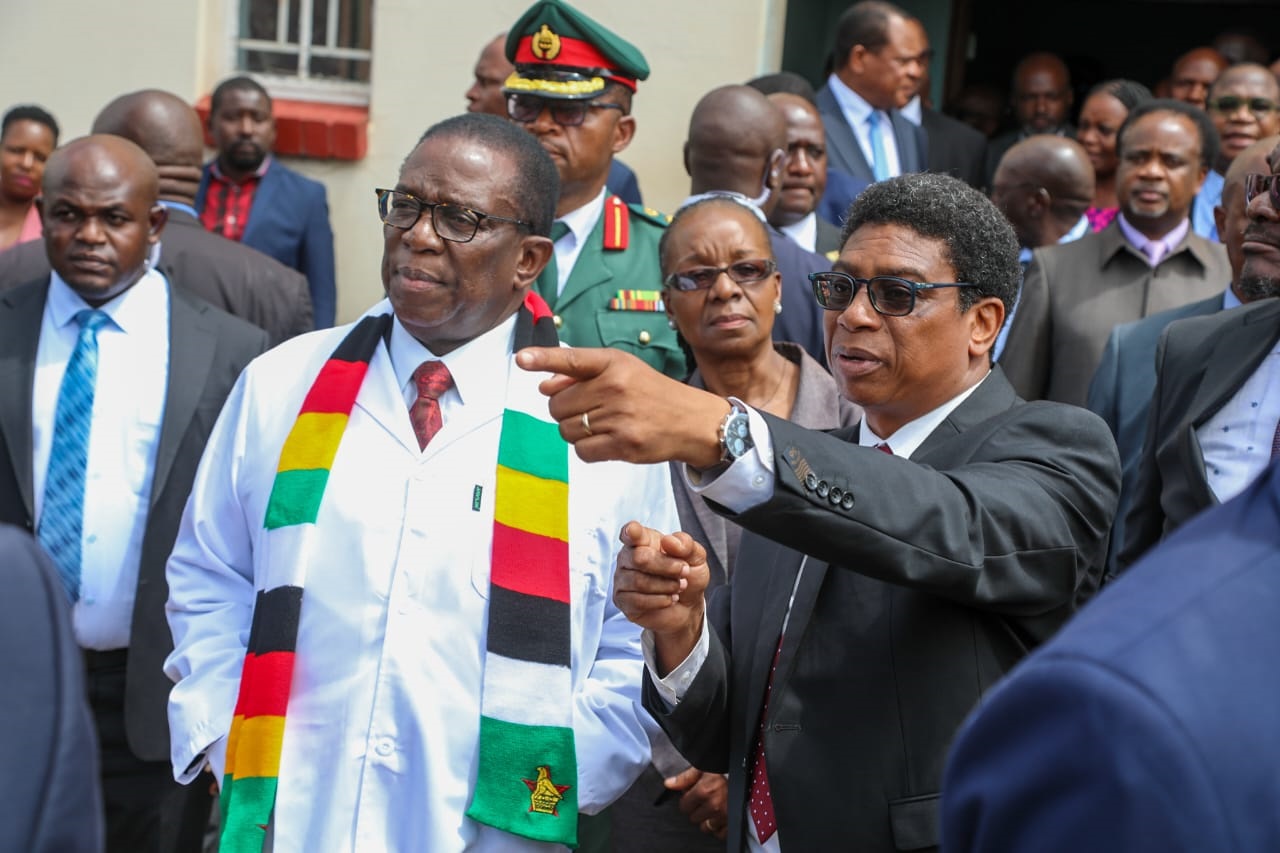
Vusumuzi Dube, [email protected]
PRESIDENT Mnangagwa has called for a shift toward home-grown public health solutions to safeguard African lives, centring the continent’s self-reliance as a pillar of Zimbabwe’s healthcare reform.
Addressing a fundraising luncheon for Ingutsheni Central Hospital yesterday, the President reaffirmed the Second Republic’s commitment to modernising the national health delivery system while urging African nations to develop local responses to regional medical challenges.
The event, organised by the Office of Vice-President Kembo Mohadi in collaboration with the Ministry of Health and Child Care, sought to raise US$5 million for the transformation of the country’s largest mental health institution.
Ingutsheni, established in 1908, has in recent years struggled with rising patient numbers and deteriorating infrastructure, prompting plans for extensive upgrades, including the construction of a specialised drug and substance rehabilitation centre. The President said that under the Second Republic, priority has been placed on protecting public health, expanding access to affordable medical services and improving governance within the health sector.
He noted that Government continues to pursue wide-ranging measures to ensure universal access to healthcare.
“My administration continues to deploy multi-pronged efforts towards universal access to quality, affordable and comprehensive health services. Of critical importance in this regard are robust public health institutions with modern infrastructure, supported by domestic resource mobilisation, innovation and the local manufacturing of medicines and medical supplies,” said the President. He stressed that Africa must shift towards self-reliant health solutions.
“Our country, the SADC region and the African continent at large require home-grown solutions to public health challenges, as indispensable ingredients to build resilient systems that safeguard the lives and livelihoods of our peoples. Similarly, to achieve health sovereignty, there is need for sustainable financing mechanisms and self-sufficiency, more so in a world with shifting trends and shrinking external support,” said President Mnangagwa.
Turning to Ingutsheni, the President described the institution as a key pillar of Zimbabwe’s mental healthcare system, serving the nation for more than a century.
“For over a century, this institution has remained a place of hope and healing for many of our citizens who require specialised mental health services.
“Despite the injustices associated with the racist colonial regime, Ingutsheni Central Hospital has continued to provide essential services to our nation,” he said.
He highlighted the urgent need to refurbish and modernise the hospital, noting that the current infrastructure is severely outdated.
“Mental health challenges affect societies worldwide, and Zimbabwe is no exception. Shifting social and economic pressures have heightened the susceptibility of many individuals to mental health conditions,” he said.
He also pointed to drug and substance abuse — particularly among young people — as a major driver of mental health cases.
“One of the most significant factors in this challenge is the increasing problem of drug and substance abuse, especially among our youth, which has become a major public health issue in our country. I am informed that a considerable number of admissions to acute psychiatric wards at Ingutsheni Central Hospital are related to alcohol and drug-related conditions.”
The President noted that the Government has already established the National Committee on Drug and Substance Abuse to co-ordinate the national response.
“The Committee is implementing a ‘Whole-of-Government and Society Approach’ aimed at prevention, treatment, rehabilitation and re-integration of those affected by drug and substance abuse,” he said. He said transforming Ingutsheni would require a full overhaul to bring the institution in line with national development priorities.
“We aim to remodel the facility to become a centre of excellence for mental health services in Zimbabwe, in line with our National Development Strategy 2 and Vision 2030. I, therefore, invite captains of industry and commerce, corporate leaders, development partners and well-wishers to come on board and collaborate with the Government in the noble cause to revitalise Ingutsheni Central Hospital. Your contributions, be it in cash, kind, equipment, materials or services, will go a long way in restoring dignity and hope to the many of our fellow citizens who rely on this institution,” said the President. He urged academia and health professionals to support efforts to strengthen the health sector, adding that the
Health Service Commission must accelerate the recruitment of critical staff.
“Beyond infrastructure, we must ensure the hospital is adequately staffed, with the requisite number of doctors, nurses, and support staff. In this regard, the Health Service Commission must move with speed to fill the approved extra posts,” he said.
He added that Government is improving access to essential medicines, particularly psychiatric drugs, and adopting digital health technologies to enhance service delivery.
“There is a saying that goes, ‘there is no health without mental health.’ Hence, the mental health of our population is of key national importance. Let’s scale up our collaboration as Government, private sector, development partners, academia and communities, to restore the dignity and capacity of this important national institution. Together, we can transform this institution into a centre of excellence in mental health care.”
The President reiterated the national development philosophy: “Nyika inovakwa, inotongwa, inonamatigwa nevene vayo/ Ilizwe lakhiwa, libuswe, likhulekelwe ngabanikazi balo”.



 Online Reporter