Online Reporter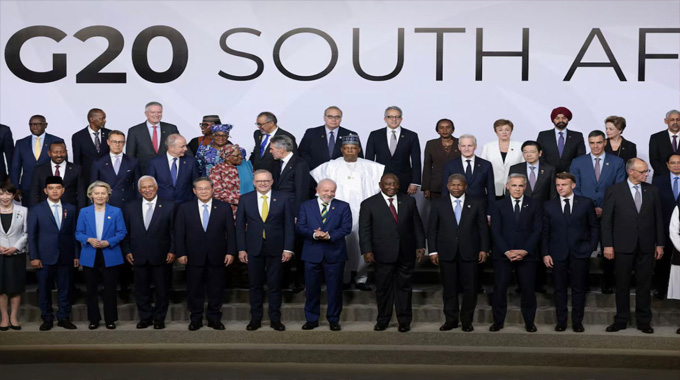
Tim Cocks and Andrea Shalal, Correspondents
BORN of crisis but torn by years of tensions among its members, the Group of 20 major economies scored a rare victory for multilateralism after overcoming the boycott and objections of its most powerful member, the United States.
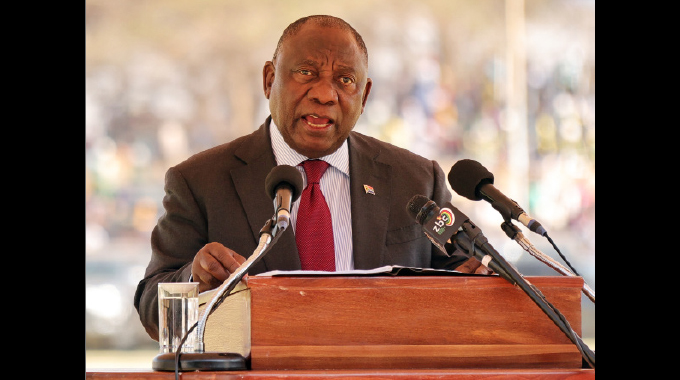
South Africa, this year’s G20 president, rallied all but two member nations — the US and Argentina — to issue a declaration, ignoring Washington’s warnings and quelling questions about the G20’s future — at least for now.
Many doubted Pretoria would secure a declaration, much less tackle issues such as helping poor nations cope with climate change and external debt.
That success strengthened a body, which for years was struggling to reach meaningful agreements — and highlighted the power of multilateralism when it seemed in retreat, researchers and delegates said.
The outcome infuriated the United States, next year’s G20 host. The White House accused South Africa of weaponising its presidency to undermine the G20’s founding principles on unanimous consensus. It said US
President Donald Trump would restore its “legitimacy” while hosting next year.
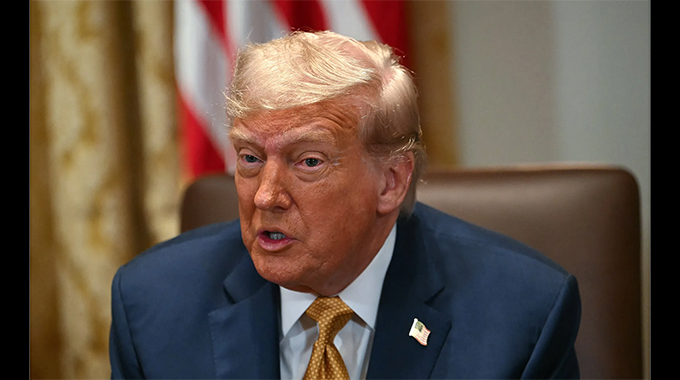
The White House had no immediate comment when asked if it planned to disinvite South Africa from next year’s G20 events.
The declaration’s final paragraph was carefully worded to commit to meeting in future G20 summits in Britain and South Korea, but only to “working together” under the US presidency, a South African delegate said.
President Cyril Ramaphosa declined an American offer to hand over the rotating G20 presidency to a junior diplomat. That ceremony will now take place between equivalent diplomats this week.
The summit had seemed hopelessly overshadowed by Trump’s boycott over false allegations that South Africa’s Black majority Government mistreats its white minority.
A South African delegate at the summit who declined to be named because they were not authorised to speak, said Friday’s agreement on a draft caused a visible ripple of relief among negotiators.
The White House said the revised plan includes stronger security assurances and reflects Ukraine’s national interests.
“News of the G20’s demise is greatly exaggerated,” said Josh Lipsky, the Atlantic Council’s international economics chair and ex-aide to former President Barack Obama.
“In a crisis . . . it will be there — regardless of which leaders are present at any . . . summit,” he said.
The declaration tackled issues such as climate and renewable energy that often divide G20 members. It proposed the first global panel to address inequality.
“This is the first meeting of world leaders . . . which put the inequality emergency at the centre of the international agenda,” Nabil Ahmed, Senior Director of Economic Injustice at international charity Oxfam said.
Faced with Trump’s ire, G20 leaders had a choice: “Do we butter him up or stand up to him?” said Michael Bociurkiw of the Atlantic Council’s Eurasian Centre. They chose the latter.
“Leaders were getting fed up,” he said. “This could set a new approach to dealing with Donald Trump,” a view several delegates echoed.
Saturday’s show of unity was aimed at supporting the hosts and decrying the United States’ refusal to engage in the G20’s first African summit, one said.
Another said US actions brought together countries at odds with Trump, like India and South Africa, with others seeking to maintain good relations, like Britain and France.
But with the United States taking up the mantle, there is a risk much of the work in Johannesburg could be undone.
Washington is expected to narrow the G20’s focus during its presidency, which coincides with the United States’ 250th anniversary, to justify the leaders’ summit and financial forum, jettisoning other working groups and ministers’ meetings on energy, health and the environment.
The International Monetary Fund and World Bank are still invited, but Washington plans to exclude United Nations organisations, a source familiar with the plans said.
Then again, it’s only for a year. At worst, said one delegate who also declined to be named, countries could “lay low” during the US presidency then resume work later.
Despite the bitter differences, Washington’s G20 agenda overlaps with South Africa’s in key areas like development, economic growth and financial stability, notes Eric LeCompte, a UN adviser and executive director of non-profit Jubilee USA Network.
“I think there is going to be carry over in certain areas with the US taking the mantle,” he said.
The G20 is a forum for international economic co-operation that brings together the world’s major economies to address global challenges.
It holds an annual summit where leaders discuss and co-ordinate policies on a wide range of issues, including financial stability, climate change, sustainable development and global health.
G20 members represent approximately 80 percent of the world’s Gross Domestic Product and 75 percent of its trade. — Reuters