

 Online Reporter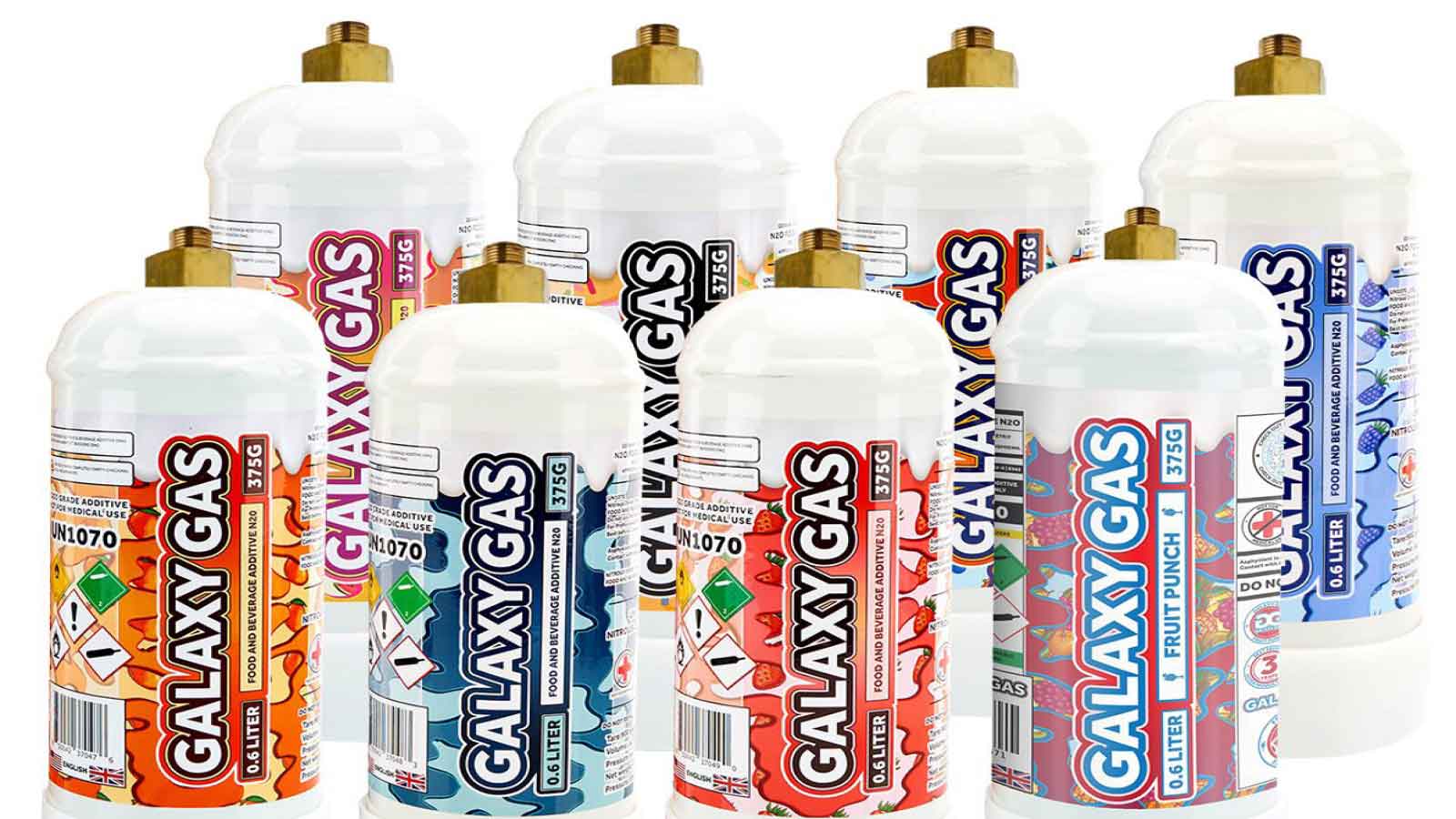
Robert Bridge
Welcome to America’s next public health crisis — one underwritten by big business and ignored by the US Government.
Nitrous oxide (N₂O) has existed since the late 18th century and is used in a variety of products, including whipped‑cream canisters and car engines, to give them an extra power boost. It is also popularly known as “laughing gas”, which dentists administer to patients for pain relief. In the 19th century, laughing‑gas parties were popular among the middle and upper classes.
Late‑20th‑century drug culture rediscovered nitrous oxide in the form of “whippets” (from whipped‑cream chargers) and laughing‑gas balloons. However, only recently has nitrous oxide — marketed under the name “Galaxy Gas” — exploded in popularity among today’s youth in search of a cheap buzz.
Although ostensibly marketed as a culinary product, Galaxy Gas is sold in colourful bottles with alluring flavours such as Mango Smoothie, Strawberry Cream and Vanilla Cupcake.
Meanwhile, the product (Galaxy Gas is just one of dozens of brands selling nitrous oxide) has been heavily popularised on social media, where influencers on TikTok, Instagram and YouTube have led millions of teenagers astray in pursuit of a quick and affordable jolt of euphoria.
Various brands of nitrous‑oxide canisters can be easily purchased online from major marketplaces, including Walmart, Amazon and eBay. Although most companies require purchasers to be over the age of 18, these products have still found their way into the hands of many teenagers. Following reports of abuse, Galaxy Gas has paused direct sales from its website and is now facing regulatory action due to health risks.
Across the US, more than 25 million people aged 12 and over may have tried inhalants, according to a survey by the Substance Abuse and Mental Health Services Administration. Data also shows that adolescents aged 12 to 17 use whippets more commonly than those aged 18 and above.
Galaxy Gas attempts to skirt the law by stating on its canisters that “it is illegal to purposely inhale our product”, a warning that predictably has the opposite effect on young and impressionable users. Despite these labels, the inhalation of Galaxy Gas is becoming an epidemic in the US and beyond, with an increasing number of victims each year.
In February 2023, 24‑year‑old Ellen Mercer died in a British hospital two weeks after being left bed‑bound by severe burns to her legs caused by a nitrous‑oxide canister. According to the coroner’s report, Mercer’s death was caused by substance abuse and a blood clot. She was reported to have inhaled two to three large bottles of the gas per day.
Meg Caldwell is another individual who lost her life due to addiction to Galaxy Gas. Caldwell began inhaling the gas during the pandemic. With lockdowns in force and little to do, a few seemingly harmless hits of nitrous oxide soon spiralled into a destructive addiction. According to her family, the habit quickly took over her life. She died at the age of 23 from an overdose in a car park outside a smoke shop where she had purchased the gas.
The Caldwell family has since filed a lawsuit against Galaxy Gas and several other companies, accusing them of marketing the substance for recreational use while disguising it as a culinary product.
One reason the inhalation of Galaxy Gas has become so dangerous is that users frequently inhale directly from the canister’s nozzle.
“In medical use, nitrous oxide is administered alongside a fairly high flow of oxygen,” says Dr Bryan Baskin, Co‑Director of Operations for Emergency Services at the Cleveland Clinic. “That helps keep patients safe from some of the drug’s dangerous effects. People using it recreationally don’t take those precautions. They are taking straight shots, which can be harmful — especially with repeated use.”
Nitrous oxide starves the brain of oxygen, creating a dizzy, euphoric sensation that can last from a few seconds to several minutes. Users then chase the high repeatedly, depriving the brain and other organs of the oxygen necessary for normal function. At best, users risk losing consciousness and sustaining injuries such as concussions. At worst, the consequences can be fatal.
Most users inhale directly from the canister, a practice that is extremely dangerous due to simple physics. Nitrous oxide is stored as a liquid under pressure and is released at extremely low temperatures. This can cause frostbite to the mouth and throat and may even freeze the lungs.
Long‑term users report severe nerve damage, impaired memory, reduced concentration and loss of coordination. Inflammation of the brain and spinal cord has been reported, in some cases leading to paralysis.
So what is the US Government doing about this problem? Sadly, almost nothing.
Regulation of nitrous oxide in the US is shockingly inadequate.
There is no official FDA certification, no mandatory purity testing, no limits on canister size, no meaningful import controls on poorly regulated foreign products and no guaranteed manufacturing standards. These canisters could contain contaminants such as heavy metals or hydrocarbons. A sticker claiming safety does not make a product safe, just as a “do not inhale” warning does nothing to prevent misuse.
Even the canisters themselves pose a serious danger. These pressurised metal bottles can weigh several kilograms and are, in effect, small pipe bombs. Manufacturing defects, heat exposure or poor handling can result in explosive decompression. A faulty valve or weak seal could be the difference between life and death.
Perhaps most troubling of all is the way these products, with their bright colours and sweet flavours, are marketed in a manner that clearly appeals to a younger audience — one less able to distinguish between harmless fun and potentially lethal behaviour.
It is time for the US Government to intervene and crack down on the peddlers of this dangerous product before more lives are lost.
Robert Bridge is an American writer and journalist. He is the author of Midnight in the American Empire: How Corporations and Their Political Servants are Destroying the American Dream.



