

 admin
admin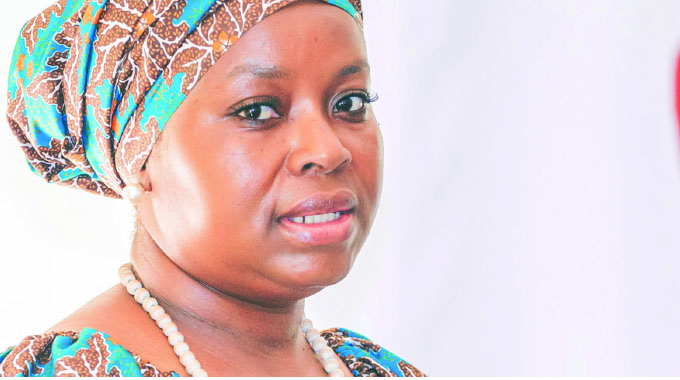
Annahstacia Ndlovu Correspondent
The untimely death of Gender and Media Connect National Director Abigail Rumbidzai Gamanya, who passed on in Harare on Monday, has saddened many people, especially his family and those she interacted with.
Gamanya, the media general, turned 49 on September 16, and as usual her social media platforms were laced with sweet congratulatory birthday messages.
She was a good communication strategist with a well-documented legacy in the media sector, where she was a leading light in advocating for gender equality.
Gamanya was among the leading agents for reforms in the media sector.
She was the national director at the Gender and Media Connect from 2014 to the time of her death on Monday.
Gamanya was among the senior journalists in Zimbabwe who did not approve of statutory regulation and joined a self-regulatory body, the Voluntary Media Council of Zimbabwe (VMCZ), where she served as the acting executive director from January 2009 to June 2010.
She found joy in working for media institutions in Zimbabwe. At some point from July 2006 to December 2008, she co-ordinated Media Alliance of Zimbabwe (MAZ) programmes and spearheaded a successful campaign for the establishment of media regulatory body that she later directed.
Prior to that, through MAZ, Gamanya initiated a national campaign on media law reforms that she successfully concluded during the GNU. Best health matters for everyone was one part that Abie envied and she worked as a communications specialist for Zimbabwe AIDS Policy and Advocacy project between 2004 to 2006 and a lot was achieved during that time.
She jointly with colleagues at the Zimbabwe Union of Journalists (ZUJ) steered a campaign against sexual harassment in the media upon her return to the civic spaces as national director of the Federation of African Media Women Zimbabwe (FAMWZ) from 2001 to 2003 that she later transformed to suite the media changing trends and the Gender and Media Connect was born.
She led the rebranding of FAMWZ to Gender and Media Connect (GMC) as part of broadening the campaign for women empowerment and inclusion.
Abigail bridged the gap between the media and women leaders where she led interventions that equipped both the media and leaders to amplify the voices of women.
During her youthful days, she was in Human Resources Development and from 1999 to 2001 she worked as an administrator and public relations officer for Media Institute of Southern Africa that exposed media violations in the country. At some point in her media journey, Gamanya worked as a journalist at Business Express from 1997 to 1998 before becoming a marketing manager at Coro Marketing in Gweru.
Munyathi Consulting once engaged her as their public relations officer from 1995 to 1997.
Gamanya was the founding national facilitator of the International Training Programme ITP that brings together media stakeholders across five African countries.
She will be missed for her amazing personality, hard-working and brave character that made her break many barriers to freedom.
She had such a big heart and would mentor the younger generation, including equipping them with survival and life skills.
Our hearts are shattered as we did not only lose a great leader and strategic thinker, but a mentor of life and skills who also did consultancy work for SADC, UNDP, British Council and many others.
Gamanya was a self-motivated media professional with vast experience in media freedom advocacy, media law, media development, gender mainstreaming, training and research. She had over 20 years’ experience in media training — especially in training women (including young professionals just joining the profession, mid carrier ones and senior journalists) in gender and media development. Her experience cut across different areas of media such as broadcasting, print, digital and other forms of media.
Through her work, several women media workers were elevated, received recognition and protection at their work places where she conscientised, created awareness among both men and women on issues of sexual harassment and gender equality.
She leaves a legacy of being one of very few media professionals who was committed to issues of media and gender equality training and development through strengthening the capacity of both men and women professionals.
Abigail Gamanya had been in the leadership of various media bodies in Zimbabwe and she was the current chairperson of Gender and Media Zimbabwe Network.
She sat on a number of boards like Zimbabwe Election Support Network, Zimbabwe Women’s Coalition, Misa Zimbabwe and Zimbabwe Institute of Public Relations.
In the last five years, she had been the Zimbabwe National Co-ordinator of International Training Programme (ITP) on media development, sponsored by the Swedish International Development Agency.
Gamanya held the horns of the new digital media through the Africa Women programme that was funded through the British Council and a number of publications were produced focussing on media, women, children and media laws locally and internationally.
Academically, Gamanya was always the cut above the rest. Her first taste of media studies was at Harare Polytechnic College in 1995.
She later studied public relations at Zimbabwe Institute of Public Relations in 2002 and later a Bachelors Degree Human Resources Management and Development at Bradford University in United Kingdom.
Abigail had love for acquiring knowledge and she would find time and learn new things.
In 2008, she had an opportunity to study Journalism and Democracy at the institute for mid-career Journalism Training in Sweden.
Sweden appreciated and honoured Gamanya and she accepted the new partners that helped her to continue excelling in her endeavours of seeing a free media and gender balanced society and free working space for all.
Gamanya is survived by one daughter Ruvarashe Nicole.
Mourners are gathered at her residence in Harare at Greendale at 83A Harare Drive.



 Online Reporter