admin
admin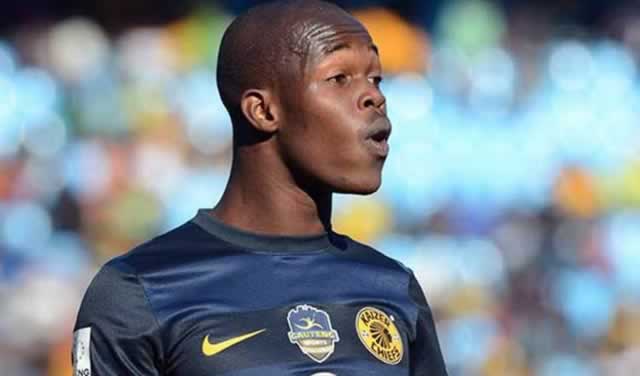
Saul Gwakuba Ndlovu
A heated discussion is taking place about whether or not it is appropriate for soccer players to participate in betting on matches, especially those in which they themselves play.
The issue was ignited by media reports that a prominent Belgium-based Zimbabwean soccer star, Knowledge Musona, was recently caught betting on some matches.
The gist of the matter is not whether or not gambling is morally acceptable, but it is whether or not athletes should be allowed to take part in gambling in sports at all.
Betting is gambling by risking one’s money on an unpredictable result. Sports are competitive activities or games especially those that involve physical exertion and skills. But a few sports such as chess involve mental much more than physical energy.
Most sports are adjudicated by referees or umpires. These are people who are very well versed in the rules and regulations of the relevant sports, and are supposed to be utterly impartial in their interpretation of and the practical application of those rules and regulations.
Sports have three major human factors: the athletes and their handlers, the spectators (or audiences), and the umpires or referees.
The most important quality of any sport is the level of preparedness of the contestants. The more the competitors are prepared, the better their quality of performance.
If any or some of the athletes bet on who of them would win, their performance is bound to be affected by their hoped-for gambling gains.
Similarly, umpires or referees cannot be impartial if they bet on participating contestants. Their judgment is bound to be influenced one way or the other by the subjective interests represented by the bets.
In professional sports, prizes to be won are, in effect, forms of bets except that those offering them cannot indicate by name who will be given the first, or the second prize.
While they are incentives to the entire team, the spirit behind them is more or less similar to that of bets by self-centred individuals. Prizes awarded collectively to a team, or to an individual as is the case in such sports as boxing and tennis, motivate the team as a whole.
Bets by individuals can be used to influence the team at the worst, or individual athletes at least by bribing them to underperform. That is much more likely if those betting are members of one or the other team.
Would it not be absurd for a soccer player to bet that his or her team would lose against an opposing one? Absurd as it may be, that is quite possible in a highly mercenary environment in which ethics are not an integral part of people’s everyday behaviour.
Talking about ethics takes us to an important aspect of every kind of sports. That aspect is fairness.
Every athlete wishes to win fairly by his or her standards, as well as by those of the referee or umpire plus, of course, those of the spectators.
Incidentally, spectators are always partial in sports. That is because in most cases, spectators as team – supporters are very emotional, localistic, regionalistic and nationalistic in their behaviour.
They begin by supporting the local team, then the regional, and end by emotionally hooting for the national.
Team-supporters would tear a home athlete apart if they heard that he or she betted for the opposing side.
Meanwhile, those who are highly addicted to gambling behave in a typically Judas Iscariotic manner. They have no room for ethical behaviour.
What concerns them, first and foremost is to accumulate money.
Looking at the issue in a general way, we can see why it is improper to bet by anyone belonging to one of the mentioned three groups, particularly in such sports as soccer, netball, rugby, cricket, hockey, volleyball and others in which a number of people perform as a team.
That is because a losing bet generates anger that may lead to violence, all to a breach of the rules and regulations of the sport.
It is generally true that the largest number of sports get negatively affected by gambling as betters can corrupt umpires or referees or the athletes themselves.
Among the very few exceptions to that fact we find dog and pigeon racing, two types of sports in which electronic timing plays a significant role.
We are most probably all agreed that it would be unrealistic to advocate prohibition of betting on every sport by everybody. However, no athlete should be allowed to bet on any game of the kind of sports in which he takes part.
The rationale here is that a professional soccer player involved in betting on soccer matches in, say, Saudi Arabia, while he is domiciled and playing in Greece, will place bets on Saudi Arabian teams, when teams play his own Greek team on such occasions as the World Cup.
So, the best solution is to prohibit professional soccer players from soccer sports gambling.
The same should apply to all Fifa referees and other umpires who perform at the same international, even those at national level. Why?
Because professional soccer players and referees are in a position(in that sport) that enables them to know the strengths and weaknesses of various teams, and can, as a result of that fact, make much more correct predictions about results of important soccer matches than most ordinary people.
That consideration alone should disallow them from placing bets on matches in which they are involved or are likely to be professionally involved.
That is because their participation either as players or as adjudicators in any such match may or can determine the match’s outcome.
A man who has been in bed with a woman should not be allowed to bet that that woman’s next child will resemble him or another of the woman’s concubines.
Referees are part of the soccer games almost as much as are the actual players.
It is thus unfair to other punters to be made to compete in predicting the results of games with people who are actually involved physically in those games.
We all know that some referees will give an advantage to one team or the other by giving it the benefit in a number of borderline infringements, particularly in offside cases. Such decisions can benefit some punters.
Saul Gwakuba Ndlovu is a retired, Bulawayo-based journalist. He can be contacted on cell 0734 328 136 or through email. [email protected]



 Online Reporter