Online Reporter
Raymond Jaravaza, Sunday News Reporter
AN ambitious project to train veterinary and Village Business Unit Officers, formerly known as agricultural extension officers, on artificial insemination by the Matopos Research Institute will see the introduction of superior genetics and new bloodlines in 150 000 livestock across the country, resulting in accelerated growth of the national herd.
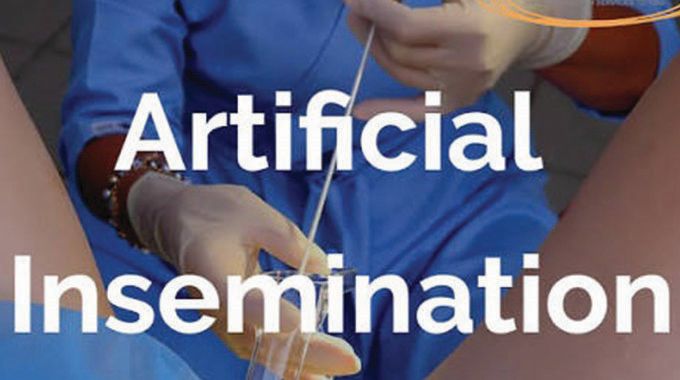
The trained veterinary and Village Business Unit officers will now be able to provide artificial insemination services at ward level across the country, supporting farmers through dip tanks and ensuring broad access to the technology.
Artificial insemination (AI) in cattle is a breeding technique where semen from a superior bull is collected, frozen and manually deposited into a cow’s uterus by a technician during estrus (heat).
The process improves genetic traits such as milk production, increases reproductive efficiency and eliminates the need for farmers to maintain a bull.
The project comes at a time when livestock remains central to rural livelihoods, supporting more than 60 percent of Zimbabwe’s population while serving as a key source of nutrition and a major pillar of the national economic recovery and growth agenda.
The country is intensifying efforts to rebuild and expand its national herd to 12 million cattle by 2034 — a target officials believe is increasingly within reach following the growth of the stud livestock population to more than 24 000 registered animals, as Zimbabwe aims to unlock the full potential of a projected US$25 billion industry by 2030.
Briefing the Minister of Agriculture, Mechanisation and Water Resources Development Dr Anxiuos Masuka during a tour of the Matopos Research Institute Animal Genebank on Thursday, Laboratory Research Officer Ms Theresa Rukuni said the project has 151 officers drawn from the country’s 10 provinces who have been trained for the artificial insemination programme.
“The veterinary and extension officers were trained in preparation for a national artificial insemination rollout programme where they are each expected to artificially inseminate 1 000 cattle in their respective wards once they receive the AI kits,” she said.
“Once the country starts receiving rains we expect to artificially inseminate 150 000 animals across the country,” said Ms Rukuni.
The success rate for the artificial insemination rollout programme is expected to be between 40 percent and 50 percent. Minister Masuka, however, said the success rate of the programme was too low and could potentially turn away farmers from participating in the project.
“What we think is the biggest problem with artificial insemination is the notion by farmers that when they bypass the traditional method of breeding by using a bull, then the conception rate will be high only to discover that it is in fact less than 50 percent.
“We need to make sure that trained veterinary officers can achieve a success rate of about 70 percent through rigorous training so that farmers can trust artificial insemination as opposed to doubting its success rate.
“In 2025 when we did a national artificial insemination rollout that we launched in Insiza (Matabeleland South Province) we realised that the success of the programme was directly linked to the success rate of the veterinary officer who was performing the procedure. So, where it was around 70 percent villagers were very enthusiastic about the programme and spoke highly about it,” said Minister Masuka.
“In villages where the success rate of the programme hovered around 40 percent to 50 percent, farmers shunned artificial insemination and vowed to stay away from the whole programme.”
Minister Masuka said instead of targeting high numbers of cattle that would be artificially inseminated, Matopos Research Institute should focus on training veterinary officers to perfect their art to get more buy in from farmers.
“Matopos Research Institute must ensure that only the veterinary officers that are able to achieve a success rate of 60 percent and above are able to continue with the programme. It’s better to start small and have the programme accepted by farmers rather than targeting a large number of artificially inseminated cattle yet farmers remain frustrated at the low success rate,” he said.
In 2024, in a huge boost to livestock production in the country and across the Southern African region, an animal Gene Bank laboratory was established at the Matopos Research Institute to aid preservation and conservation of indigenous breeds through artificial insemination.
The facility is situated about 30km from Bulawayo. The establishment of the animal Gene Bank laboratory is seen as a major milestone for the livestock value chain, a critical source of livelihood for many households in the southern part of the country.
Matopos Research Institute already operates a regional crop Gene Bank, which serves as a bio-reservoir for sorghum, pearl millet, chickpea, pigeonpea, groundnut and finger millet, which are best suited for semi-arid cropping regions in Southern Africa.
The facility is expected to provide a platform for livestock farmers in and outside the country to preserve their breeds in case of natural disasters such as drought and diseases.
Breeds that are being preserved at the Gene Bank laboratory comprise adaptable cattle species such as the African Tuli, Nguni, Afrikanda and Brahman.