admin
admin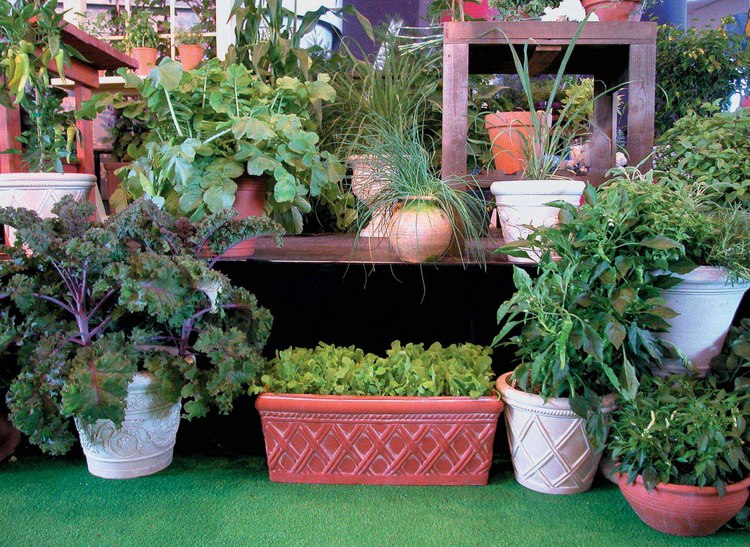

LIVING in a flat or as a tenant at someone else’s property and still want plants around you? Despair not, because container gardening is the answer.
That little space on your balcony or verandah can surely be turned into a haven of life and you could actually harvest some produce.
Container gardening or growing plants in pots is an easy form of gardening that fits into our busy urban lifestyle. It also helps you save a few dollars.
There are a myriad number of plants that one can grow in pots, from vegetables, fruits, herbs to ornamentals. Grow your own tomatoes, beans, strawberries, carrots, onions, basil, pepper, etc; the list goes on and on.
Containers come in different shapes and designs made of plastic, asbestos, clay or metal. The advantage of growing plants in containers is that you can create the best soil for your crop and you are able to move your plants to suitable sites. Or yet still when push comes to shove when the landlord has told you to pack your bags, your garden goes with you.
Container gardening also transforms the landscape of our gardens, bringing a whole new dimension in either small or big gardens. Placed on entrances, pots of the same design and colour save as a welcoming gesture.
Pots can also bring colour to those portions of our gardens that are difficult to grow anything. Grouping pots is also a landscaping technique that brings life to your concrete areas in the garden. Hanging baskets placed at eye level, intrigues visitors as they arrive.
When gardening in containers, the first operation is to ensure that your pots are clean. This can be done with hot water or with a suitable germ killing detergent. If a chemical is used make sure the pots are well rinsed.
Ensure your pots have holes at the bottom. Prepare a suitable potting mix. There are many different potting mixes developed all around the world such as the popular John Innes potting mixes one, two and three developed in the 1930s.
However, a good potting mix should contain one part soil, one part river sand, one part compost and a general compound fertiliser can be added to supply additional nutrients.
Each substance added plays a pivotal role in the growth of plants. Soil contains essential nutrients whilst river sand provides good drainage and aeration. The compost besides containing nutrients improves the water holding capacity of the mix. It is important to mix the potting components thoroughly on a hard surface with a spade.
The next step is to plant your selection of garden subjects. There are different schools of thought whether to add stones at the bottom of the pot or to just put the soil directly. However stones can be helpful when it is time to re-pot or to remove the pot bound plant, making it easier to do so. The other school of thought is of the belief that the stones may actually block the holes of the pot, thus just adding soil may suffice.
Remove your plant from its sleeve then place it in the container with soil already added. The plant when covered must leave just 2-3cm from the brim of the pot to enable easier watering and handling of the pot.
Watering intervals depend on the size of the pot, the prevailing weather conditions and plant size.
You do need to regularly feed your plants especially if they are perennial. However, there comes a time when you have to depot your plant when the roots have outgrown the size of the pot. Overgrown roots result in stunted growth and the plant needs more frequent watering as water does not easily percolate.
Over potting is a common problem in container gardening.
This is when you grow a small plant in a very big pot. The small plant stays wet too long and its roots rot. To avoid this use a small pot and re pot one size up as the plant grows. When you get bored with the colour scheme in your garden, you can always repaint your pots to suit your taste.
Container gardening is a sure stress free hobby with the added advantage of conserving water.
Happy gardening!
Andrew Mangwarara is a horticulturist and can be reached by email at [email protected]


 Online Reporter