

 Chronicle Editor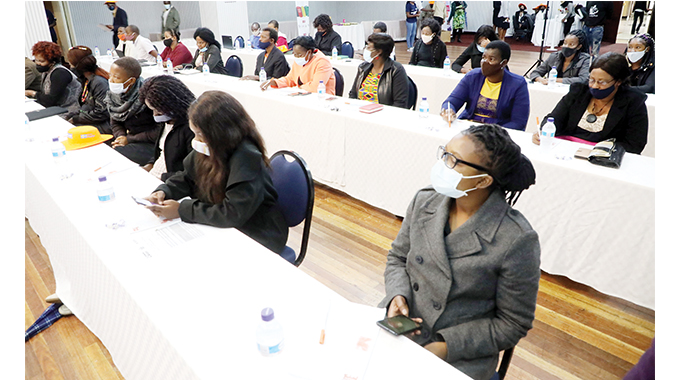
Thandeka Moyo-Ndlovu, Chronicle Reporter
CHURCHES have ceased to be places of refuge and comfort as religious leaders have joined in perpetrating gender-based violence (GBV), which affects 49,4 percent of women in Zimbabwe.
According to Zimstat, 85 percent of the country’s population are Christians and yet, pastors, bishops, choir leaders and deacons have made headlines after turning against their “flock” and abusing them.
Bulawayo Minister of Provincial Affairs and Devolution, Judith Ncube raised these concerns yesterday during the provincial commemoration of the 16 days of Activism Against Gender Based Violence.
This year’s commemorations are held under the theme: “Orange the World: Fund, Respond, Prevent and Collect”
The minister said it was saddening to note that many women and girls were being abused by trusted men of the cloth who are expected to be partnering Government to stop the scourge.
GBV does not only comprise physical abuse, rape and attempted rape, but also includes sexual abuse, sexual exploitation, forced early marriage, domestic violence, marital rape, trafficking, female genital mutilation and economic abuse.
Both men and women suffer from GBV but in most cases, it affects women and girls more just like in other countries.
Statistics from the Zimbabwe Republic Police indicate that from the period July-September this year, a total of 1 128 cases of rape were reported.
During the same period a total of 3 310 cases of domestic violence were also reported.

According to the recently released Stopping Abuse and Female Exploitation (SAFE) Zimbabwe Technical Assistance Facility report produced together with the Women’s Coalition of Zimbabwe, violence against women and girls shot up by 38,5 percent during the first two months of the lockdown (April to May 2020) compared to the preceding two months before the national lockdown (February to March 2020).
Minister Ncube urged churches to revert back to their mandate and be sources of hope to vulnerable women and girls.
“It saddens my heart to hear that more than 80 percent of Zimbabweans are Christians and when we hear that cases of GBV are on the rise we wonder who is committing these hideous crimes.
“Unfortunately, our churches are no longer safe for our women and girls, as pastors, prophets and bishops have joined in inflicting on the vulnerable when we expect them to take part in ensuring our homes are safe,” Minister Ncube said.
“I call upon church leaders to self-introspect and stop abusing women and girls for whatever reason.
“We cannot brag of being Christians when so many women and girls are dying at the hands of loved ones, it has to stop.”
Minister Ncube also called on Bulawayo City Council to avail land for the construction of a safe shelter for GBV survivors since the province does not have one.
The guest of honour at the event, Minister of Women Affairs, Community, Small and Medium Enterprises Development, Dr Sithembiso Nyoni said over the years Zimbabwe has experienced significant levels of GBV.

“The Multiple Cluster Indicator Survey of 2019 reports that 49,4 percent of women aged between 15 and 49 have experienced either emotional, physical or sexual violence at some point in life.
“Further 39,4 percent of women aged between 15 and 49 reported experiencing physical violence since the age of 15,” said Dr Nyoni.
She also applauded the Government for partnering donors to create one stop centres for GBV survivors.
Dr Nyoni said the one stop centre model is one of the promising models for GBV response which has been implemented since 2009.
“The one stop centre model effectively demonstrates the multi-sectoral response mechanism to GBV.
“The concept is aimed at increasing access to comprehensive multi-sectoral response service needs of adult and child survivors of GBV,” Dr Nyoni said.

“The beauty of the one stop centre model is that it facilitates the provision of all these specialised services under one roof thereby affording the victim privacy as well as limiting their exposure to further victimisation.
“To date there are five one stop centres in Harare, Gweru, Gwanda, Rusape and Chinhoyi, with further plans to expand to other areas.
“One stop centres were established with the broad aim of strengthening the multi-sectoral response to GBV.
Following the successful implementation of the model and lessons learnt from the pilot project in Makoni District, the Ministry of Women Affairs, Community Small and Medium Enterprises Development in partnership with the Ministry of Health and Child Care, has scaled up the model to other provinces.”


 Online Reporter
 Bongani Ndlovu