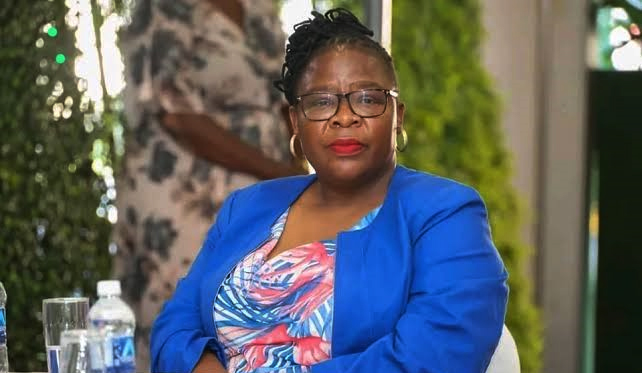
Ray Bande
Senior Reporter
IN recent months, the country has helplessly watched men and women dying as a result of unsolved altercations between husbands and wives or relatives, manifesting itself mainly as Intimate Partner Violence (IPV).
Zimbabwe Human Rights Commission (ZHRC) Commissioner, Dr Martin Muduva (42), died on September 9, in Harare after his wife, Lyliosa Chirara (43), allegedly struck him with an axe during a domestic dispute over an extramarital affair.
Chirara also died the same night after drinking rat poison in an apparent murder-suicide case.
The Zimbabwe Republic Police (ZRP) launched an investigation after another married couple was found dead in their matrimonial bedroom in the Glen View 3 suburb of Harare.
The deceased were identified as Nyasha Mhungu (35), and his wife, Olga Muzhingi (30).
Issues came closer to home.
This week, a domestic dispute allegedly fuelled by accusations of infidelity ended in tragedy in Mutare last Sunday when a man is alleged to have bashed his wife to death with a hammer.
The gruesome incident occurred in Natview Park suburb of Mutare, and was allegedly witnessed by the couple’s seven-year-old daughter.
As if that was enough, a 32-year-old man allegedly killed his 73-year-old grandmother, dismembered her body, and dumped the remains in a blair toilet in Maenzanise Village under Chief Makoni, where they were discovered 15 months later.
The suspect, Trymore Mapako, has since been arrested in connection with the murder of Rhoda Mapako Muranda, whom he allegedly killed in July 2025, before misleading relatives into believing that she had abandoned her family to stay with a lover in Odzi and Mutare.
This is a sad reality of people, young and full of potential for that matter, dying after social misunderstandings and violent reactions, meant to inflict harm on the other person as an act of vengeance, have resulted in untimely deaths.
That most of them are breadwinners with children and relatives to look after is not in dispute. What is also not in doubt is that these gruesome cases of Gender Based Violence (GBV) across the country have decimated family union and the country’s moral fabric.
The Manica Post went out and solicited views of different stakeholders on the nagging issue of GBV.
Member of Parliament and Chairperson of the Parliamentary Portfolio Committee on Women Affairs, Community and SMEs, Honourable Gertrude Mutandi, said behind every GBV statistic is a person, family, and, in many cases, children who are left to live with the trauma.
In her presentation of Point of National Interest, Honourable Mutandi said the nation can no longer afford to look away.
“I rise today to express deep concern over a crisis unfolding in our homes and communities – the alarming rise in domestic disputes that are turning fatal. The effects are no longer hidden; they are visible and, in some cases, deadly.
“We can no longer afford to look away. The evidence is clear. According to the 2023–24 Zimbabwe Demographic and Health Survey, 27 percent of women aged 15 to 49 have experienced physical violence since the age of 15, while nine percent have experienced sexual violence in their lifetime. These are not merely statistics. Behind every number is a person, a family and, in many cases, children who are left to live with the trauma,” she said.
Honourable Mutandi outlined some of the outstanding cases reported in recent times.
“This is not a distant reality. Recent tragedies underscore the urgency of the situation. The reported case involving Commissioner Martin Muduva, who was allegedly fatally assaulted with an axe in his home by his wife, who later took her own life, and the active case before the courts involving a man who allegedly strangled his wife to death with a shoelace in Hatfield, illustrate the seriousness of domestic violence.
“Even as I present this Point of National Interest today, another couple in Glen View 3 was reportedly found dead in their bedroom, in what is suspected to have been a case of a marital dispute. These cases reveal a disturbing pattern: domestic violence cuts across social status, education, income and profession. The ZDHS statistics demonstrate how widespread violence is, while these tragic cases demonstrate how fatal it can become,” she said.
Honourable Mutandi said society should be more proactive rather than reactive in GBV cases.
“Zimbabwe is not without laws, policies or institutions to address this challenge. The Domestic Violence Act [Chapter 5:16] provides protection and relief to victims, while the National Strategy to Prevent and Address Gender-Based Violence 2023–2030 prioritises prevention, early identification, accessible services, coordination and adequate resources.
“The question, therefore, is whether we are investing sufficiently in making these frameworks work where they matter most – in our communities, before violence reaches its most devastating point. Punishment remains necessary where a crime has been committed. However, we should be more proactive rather than reactive. By the time a case involving serious violence or homicide reaches the criminal justice system, an opportunity to prevent the harm may already have been lost,” she said.
Acting Manicaland provincial police spokesperson, Assistant Inspector Wiseman Chinyoka, urged members of the public to promote peaceful relationships, resolve family disputes amicably, and report all forms of domestic violence before they escalate into serious crimes, including murder.
“Avoid shouting, insulting or threatening your partner during disagreements. Allow each other to speak and listen without interrupting. If tempers flare, take time to calm down before continuing the discussion. Seek assistance from trusted family members or professional counsellors where necessary.
“Control anger and emotions. Do not allow anger to dictate your actions. Avoid using violence, threats or intimidation to settle disagreements. Walk away from a heated argument if it is safe to do so. Avoid discussing sensitive family issues when intoxicated. Address relationship concerns through honest communication rather than confrontation. Report domestic violence early. Do not wait until someone is seriously injured before reporting abuse,” he said.
“Report physical assaults, threats, intimidation and other forms of domestic violence to the police. Encourage victims to seek help rather than suffer in silence. Family members, neighbours and other concerned persons should take credible threats of violence seriously and seek appropriate assistance. Early reporting and intervention can prevent domestic disputes from escalating into murder cases. Statements such as “I will kill you” should never be dismissed as empty threats, particularly where there is a history of violence. If a person threatens to kill their partner or another family member, seek police assistance immediately,” said Assistant Inspector Chinyoka, warning against the use of children in GBV cases.
“Do not involve children in conflicts between parents or guardians. Avoid fighting in front of children, as exposure to violence can affect their emotional well-being. Never use children as messengers, weapons or bargaining tools during relationship disputes. Report violence that places children at risk and seek appropriate child-protection assistance and do not ignore warning signs,” he said.
Chairperson of the Zimbabwe Gender Commission, Dr Leslie Ncube, said: “Reports demonstrate that IPV and domestic violence remain a serious national concern within the broader discourse on gender-based violence. The police reports a number of cases of domestic violence and related offences, including cases that have escalated to grievous bodily harm, murder and suicide. In 2024, at least 13 838 cases of sexual offences and aggravated domestic violence were recorded across the country.
“The Zimbabwe Demographic and Health Survey (ZDHS) 2023–2024 also confirms that IPV remains widespread in Zimbabwe, with 27 percent of women aged 15 to 49 having experienced physical violence, while nine percent having experienced sexual violence in their lifetime. The survey also provides important evidence of violence experienced within intimate relationships. Behind every reported case there may be many more incidents that remain hidden because of fear, stigma, economic dependence, shame, threats, social pressure, lack of information, concerns about family breakdown or limited access to support services. The commission is deeply concerned by the increasing number of reported cases of fatal domestic disputes. These incidents underscore the urgent need for strengthened early intervention, prevention, and coordinated national response mechanisms to prevent domestic conflicts from escalating into violence and loss of life.”
GBV: Sheer waste of human life