admin
admin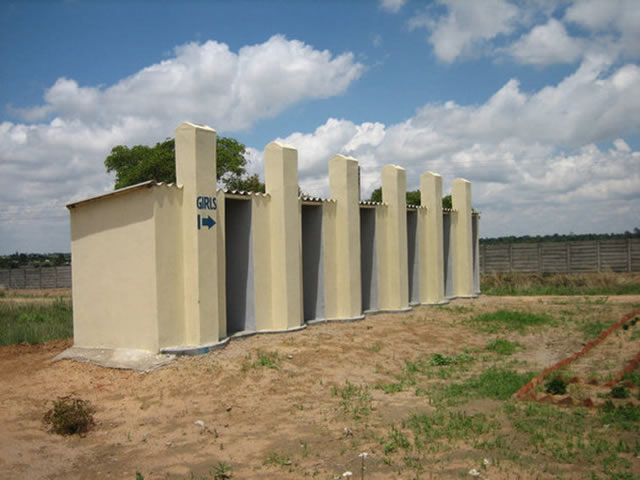

Marni Sommer & Bethany Caruso : Correspondents
Across the world, 2,4 billion people do not have access to proper sanitation, including toilets and latrines, with nearly one billion people left to defecate in the open.It’s remarkable that today so many people still do not have access to a simple, private place to go to manage their bodily functions in dignity and comfort, putting them at increased risk of disease. And while everyone needs access to proper sanitation to be healthy, for girls and women this is also an issue of safetyand equal participation in society.
In fact, one of the United Nations’ new Sustainable Development Goals focuses on ensuring availability and sustainable management of water and sanitation for all “paying special attention to the needs of women and girls.”
Yet research highlighting the effect poor sanitation has on women’s health, safety and equality is nascent, and some issues, including sanitation in workplaces, remain uninvestigated.
Here is what we know so far.
Sanitation and safety
In countries across Africa, Asia and other low-income regions of the world (and even among the homeless or rural poor here in the United States), many people don’t have easy access to toilets or latrines.
Even for those who do have access to a toilet, there is no guarantee that it’s clean, private, easy to get to or even safe.
A household’s latrine may be located a significant distance from the house, making access challenging during the night-time hours or in harsh weather such as monsoon rains or heavy snowfall.
This makes girls and women more vulnerable to harm.
Seeking privacy, women might opt to go to the toilet in the early morning hours or after dark. If women are forced to manage their needs in the open, such as by the roadside after dark or in a field at dawn, they are at high risk of violence, including rape.
It’s no surprise, then, that recent evidence from India suggests that the significant challenge of finding safe, clean and private places to urinate, defecate and manage their menstruation near the household greatly increases women’s levels of stress.
This becomes an even greater challenge when someone has an upset stomach, is experiencing incontinence or is pregnant and needs to urinate more frequently.
Overall, the impact of poor sanitation on women’s and girls’ health remains underinvestigated. While there is recent research linking poor sanitation to pre-term birth in India, women’s health hasn’t historically been the focus of sanitation-related research.
Students around the world don’t have access to adequate sanitation
Research about sanitation in schools is more established. UNICEF (United Nations Children’s Fund) estimates that almost 50 percent of primary schools in the least- and less-developed countries do not have adequate sanitation (or water) on school grounds.
However, the true number of schools and children affected globally is unknown because many countries do not have robust systems for monitoring school water and sanitation facilities.
Even if governments do know that schools lack facilities, constructing them may not be prioritised when budgets are tight.
Moreover, schools that do have facilities struggle to maintain them due to recurrent costs for soap or the need to make repairs.
A growing body of evidence indicates that many girls and female teachers are uncomfortable in school environments during their monthly menstruation.
If toilets do exist, they might not have locks or be separate from the boys’ toilets. They might not be clean, or have means for disposal of used sanitary materials.
Water, if available on school grounds, may be located at some distance from the toilets, making it difficult to discreetly wash blood off hands or clothing.
Research has found that girls may skip class, leave school early or be distracted while in the classroom due to fears of having a menstrual leak.
Even if a student has affordable good cloth or sanitary pads for managing her menstruation, with the absence of adequate toilets in school, she has no place to privately and comfortably change these materials during the school day.
Participation in the workplace
Given the growing role of women in informal and formal work environments, one can extrapolate the potential impacts of inadequate workplace sanitation on their productivity and overall health and well-being. But not much research has been done on how much the absence of proper sanitation can affect working women.
But we do know that inadequate sanitation comes at a price; the World Bank calculates that poor sanitation costs India $53,8 billion per year thanks to increased disease, as well as “losses in education, productivity, time and tourism”.
Making World Toilet Day a thing of the past
The first step to improving sanitation access is to overcoming taboos in countries struggling with the issue. For instance, in Nepal, taboos may restrict a girl’s participation in household life because menstruating girls and women are perceived as unclean or polluting.
In response to these prohibitions, one Nepali girl wrote a novel that describes a world where menstruation gives girls superpowers.
In India, Prime Minister Narendra Modi and other political leaders have called for the construction of more toilets, but local cultural beliefs and taboos around sanitation practices are hard to change.
This may include beliefs encouraging defecation far away from home to avoid impurity, or relegating waste management to certain castes in society.
Solving this problem isn’t as simple as building more toilets and latrines. They must be culturally appropriate, environmentally sound, accessible at all times and attentive to gender. To achieve this, local community members, including girls and women, must be consulted on the location and design of toilets and latrines, to make sure that they will actually be used.
This highlights another reason that women should be involved in discussions about sanitation. According to the United Nations, women play a key role in promoting sanitation.
Very often women have the primary responsibility for health, hygiene and sanitation for their family. Lack of access to sanitation (and water) impacts not only a woman’s health, but that of her whole family.
As low- and middle-income countries rapidly urbanise, the need for privacy and safety for toileting become ever more urgent.
If we were to assure that all girls and women (and boys and men) had access to toilets that were safe, accessible and comfortable, we expect that the world would see improvements in health, in educational outcomes and productivity. Not to mention we would achieve every human’s basic human right to sanitation. – Conversation Africa.
Marni Sommer is an Associate Professor of Sociomedical Sciences, Columbia University. Bethany Caruso is a Phd Student, Public Health, Emory University.



 Online Reporter