admin
admin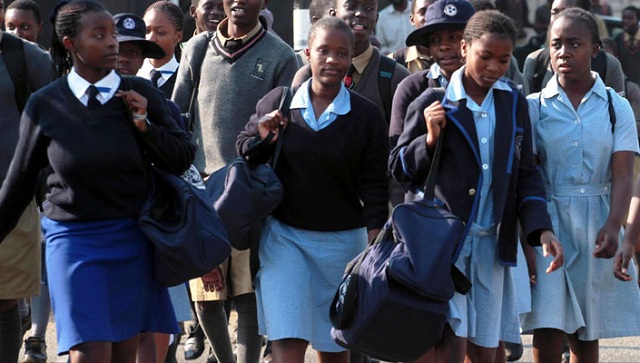

Vaidah Mashangwa
Zimbabwe will join the rest of the world in commemorating 16 Days of Activism against Gender Based Violence on November 25.
This year the Ministry of Women Affairs, Gender and Community Development Bulawayo Metropolitan Province in partnership with interested groups and people and development partners will host the national launch at the Amphitheatre on November 25.
While Bulawayo Metropolitan is the least affected province (10 percent) in terms of gender based violence cases, we should take note of the fact that quite a number of women have been killed in the city after domestic disputes especially those related to Whatsapp messages and suspected infidelity.
This year’s International theme is, “From peace in the home to peace in the world: Make Education safe for all.” The national theme on the other hand is, “From peace in the home to peace in the community: Let us keep girls in school”. Indeed education is a basic human right that plays a crucial role in socio-economic and political transformation. According to ZimStat 2014, the government acknowledges that education plays a pivotal role in combating ignorance, disease and poverty.
As a matter of fact, the government ensured that policies and strategies were put in place to enable every Zimbabwean to access education since Independence in 1980 firstly through the Education for All policy. The Zimbabwe Education Act (Chapter 25) also emphasises that all children have a right to education.
Indeed, peace starts in the home, in the family. If there is no peace in the family then consequently there cannot be peace in the community. Positive school-wide attendance and transition are also possible where there is peace at home and peace in the community. In war torn countries (the Boko Haram experience in Nigeria for example) the girl child’s education is greatly compromised.
It is unfortunate that research still shows that despite efforts to protect women and girls against violence, attitudes and perceptions still justify certain forms of domestic violence. The 2014 ZimStat Multiple Indicator Cluster Survey Final Report presents the results of a survey where women and men aged between 15 and 49 years and 15 and 54 years respectively were asked whether husbands were justified to hit or beat their wives if they go out without telling them, neglect children, argue with them, refuse to have sex, burn food, and commit adultery.
This was conducted to capture social acceptance of violence as a disciplinary action when a woman does not comply with expected gender roles.
Surprisingly, 37.4 percent of the women felt that a husband or partner is justified in beating his wife in at least one of the situations highlighted above except infidelity.
The women (23 percent) felt that a wife should not argue with the husband/partner. Even the women who have never married (41.6 percent) surprisingly believed that husbands were justified in beating their wives. Their opinion was more compared to the married (36.7 percent) and the formerly married (33.3 percent).
In terms of infidelity, 43.2 percent women believed that a partner was justified in beating the wife if she commits adultery.
Similarly, 24.6 percent men believed the same. Looking at households with young men aged 15 years, 86 percent were literate and 49.1 percent could read a full text shown to them. Similarly, 96.4 percent of those in urban areas and 82.4 percent in rural areas were able to read in full a statement shown to them. For the young men, the lowest literacy levels were in Matabeleland South Province (72.7 percent) followed by Matabeleland North Province (76.4 percent).
According to the survey, while more girls stay out of school, generally the literacy level of young women was higher than that of young men. In terms of pre-school, the highest percentage of children attending crèche who had attended preschool the previous year was in Manicaland and Midlands Provinces while the lowest was in Bulawayo province (26.1 percent).
According to ZimStat 2014, 23.7 percent men felt that husband/partner is justified in beating his wife especially if she argues with him. Even men who were not married (32.1 percent) believed that men were justified in beating their wives than the currently married (16.6 percent).
These results are an indication that the government and relevant groups still have a long way to go in terms of educating and changing people’s mindsets towards the effects and impact of gender based violence and how this can have serious consequences on the overall growth of children at home, school and in the community.
It should also be noted that some perpetrators/abusers of men and children are women. There are men who particularly suffer in the hands of their abusive wives but are usually shy to report to the Victim Friendly Unit.
In recent years, most policy documents recommend lines of interventions that encourage men to reflect on their sexual behaviour and social practices particularly in the context of violence and family relations.
Men can be agents of change themselves in terms of girls and women abuse and prevention of HIV/AIDS and STIs. Men should also participate actively in the education of children and be at the centre of their own transformation.
The Beijing Conference (1995) and the Fourth International Conference on Population Development held in Cairo (1994), highlighted the need for greater male participation in the promotion of sexual and reproductive health bearing in mind that 99 percent perpetrators of Gender based violence are men.
In relation to this year’s theme, research has indicated that school attendance for girls especially as the level of education increases, is lower than that of boys. The number of dropouts for girls also increases with the level of education compared to boys. A survey carried out in Kenya revealed that 52 percent of girls missed at least one day of school in a month and about 4 percent pointed out that they missed 4 days or more of school every month.
The reason cited for this scenario is failure to pay fees and the second reason was illness due to limited access to hospitals especially in the rural areas and lack of access to clean water and sanitation. Other illnesses include HIV/AIDS which is less likely to be treated in rural clinics.
Girls too are usually the victims of sexual abuse and domestic violence and this also increases their chances of not attending lessons. Continued absence from school usually leads to dropouts and is highly linked to their poor performance in national examinations and also their failure to excel in class.
The girl child’s education is also interrupted due to early marriage, early pregnancy, taking care of sick parents and siblings and the general preference by parents to send boys rather than girls to school especially where there is acute poverty.
ZimStat (2014) assessed the literacy levels among young women and men based on the outcomes of primary education over the years and came up with results that 92 percent of young women were literate. The proportion of women in the urban areas who could read a full statement shown to them was 98.1 percent and 88.8 percent in rural areas.
The least literacy levels were in Matabeleland North province (86.8 percent) followed by Mashonaland Central province at 87.2 percent. There is a correlation between literacy levels and the wealth of a household.
Of the young men aged 15 to 24 years, 86 percent were literate and 49.1 percent could read a full text shown to them. Similarly, 96.4 percent of those in urban areas and 82.4 percent in rural areas were able to read in full a statement shown to them. For the young men, the lowest literacy levels were in Matabeleland South Province (72.7 percent) followed by Matabeleland North Province 76.4 percent.
According to the survey, while more girls stay out of school, generally the literacy level of young women was higher than that of young men. In terms of preschool, the highest percentage of children attending grade one who had attended preschool the previous year were in Manicaland and Midlands Provinces while the lowest was in Bulawayo province( 76.1 percent).
About the writer, Vaidah Mashangwa is Bulawayo’s Provincial Development Officer, Ministry of Women Affairs, Gender and Community Development. She can be contacted on 0772111592 or email: [email protected]


 Online Reporter