admin
admin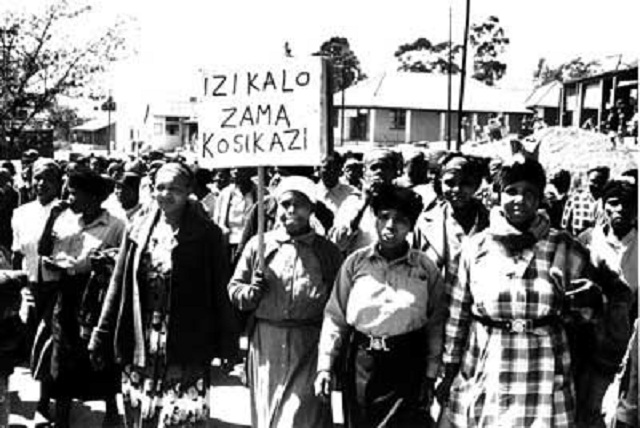

Vaidah Mashangwa
THE war of liberation in Zimbabwe saw a paradigm shift in terms of how society viewed women. Parents witnessed their daughters leaving school to join the liberation struggle fighting side by side with men.
In communities, women had the task of feeding the comrades in the face of war and they even endangered their lives in the process. Women also lived in “keeps” and had to ensure that they supported the freedom fighters all the way.
They also took part in the “pungwe” rallies and participated in song and dance throughout the evening.
The Chimbwidos (collaborators) ensured that they served and cooked for the comrades and though this was risky, they soldiered on and ensured that the comrades had enough food and water to drink.
Some of the young girls also crossed borders into Mozambique and Zambia as freedom fighters. There they learnt new roles and better ways of defeating the enemy.
They also took part in major battles at Chimoio and Nyadzonya together with their male counterparts. Some went overseas where they learned more about the tactics of war and the liberation of Zimbabwe.
According to the book Independence Is Not Only For One Sex, normal life for women was turned upside down and there was a new way of seeing and doing things.
In interviews conducted in 1983, Cde Sithembiso Nyoni pointed out that women’s faces are maps of the hardships they have gone through (since independence), their faces show their contribution to the world.
Indeed from the war of liberation to date women have contributed in a great way to agriculture, industry, health, technology, education, community work, mining and so on.
The participation of women in the socio-economic spheres is important for development to take place.
Women should be able to create their own windows and create alternatives that enable them to work and contribute to society positively.
In an interview in 1983 Agnes Mapfumo pointed out that in the past, women were shy and uncertain as a result of oppression.
Women were faced for many years by culture, customary law and colonial rule. There was an outcry to encourage women to come out of their shells.
They got support of gender equity and equality through various legislation including the Constitution of Zimbabwe.
It is therefore high time women embrace these positive changes so that they also participate in decision making processes and take up positions which effect change.
After independence, for example, there were less than two percent of the total number of women councillors in Zimbabwe and their qualifications ranged from Grade One to teaching certificates.
Most of them were women who were very active during the liberation struggle. Though the country still has fewer female councillors, the number is steadily increasing.
It was the prerogative of every Sadc member state to meet the 50-50 target as stipulated by the Sadc Protocol on Gender and Development in decision making positions by 2015.
In Zimbabwe, the target is still yet to be achieved. The Constitution includes quotas and other mechanisms to increase the proportion of women representation in politics and decision-making.
Women in Southern Africa are taking their place in leadership positions on the continent and worldwide such as the chairperson of the African Union Commission Nkosazana Dlamini-Zuma, former Minister of Home Affairs and Minister of Foreign Affairs for South Africa.
She was sworn into office in 2012. This was the first time a woman had been elected to the position in 49 years.
Ambassador Getrude Mongella from Tanzania was the first president of the Pan-Africa Parliament and previously Secretary General of the fourth UN World Conference of Women held in Beijing in 1995.
Phumuzile Mlambo-Ngcuka, was deputy president of South Africa from 2005-2008. These are just a few examples of women who have grabbed the bull by its horns but women are slowly assuming top leadership positions.
In Zimbabwe, even the uniformed forces have women who have been appointed to various top ranks.
So far, Seychelles is the only country in Sadc that has reached almost 50 percent of female representation in the top structure of the management of central government with 45 percent women among the permanent secretaries and 49 percent directors.
The late Cde Sabina Mugabe, former secretary for Production in the Zanu Women’s League also highlighted that women ought to participate in projects that can be developed into industries so that women also benefit from the country’s independence.
She emphasised that this could only be done if women are united. In the tourism sector, quite a number of lodges are owned by women.
For example Glen Lodge and Motsamai Lodge in Bulawayo are owned by women.
One interviewee pointed out that the only way to win women liberation was through the national liberation struggle so that a society free of racism, elitism, classism and sexism would come into being.
By participating in the armed struggle, women broke traditional boundaries and it is time to forge ahead and be part of the developmental process.
The liberation struggle was quite a nasty experience, Ruvimbo Mujeni who crossed over to Mozambique to join the struggle pointed out.
When she arrived in Mozambique, she spent some time boiling clothes and blankets that were lice infested.
Later, she went to Chomoio refugee camp where she taught until the massacre of November 1977. She spent three days in a pit latrine and described how some women had perished there.
Women are becoming stronger and more confident. They are beginning to speak out and stand up for their rights. Even in the rural areas, women are becoming organised. They now have a voice.
Gone are the days when women would attend meetings and just sit, listen and go home.
Even on issues affecting them, men would make decisions on their behalf.
Since Independence, there has been legislation to empower women, ensuring that issues of equity and quality are addressed.
It is important for both men and women to understand the central role played by both men and women in socio-economic and political transformation. Women should be hailed for taking an active role in the armed struggle.
A good demonstration of the role of women in the liberation struggle is that of the late Cde Victoria Fikile Chitepo and Cde Vivian Mwashita-Muchicho who were buried at the national shrine on April 13.
The motto during the liberation struggle was “Let’s fight and rebuild Zimbabwe”.
Indeed Zimbabwe can be transformed if both men and women work hard together to achieve set goals.
Vaidah Mashangwa is the Provincial Development Officer in the Ministry of Women Affairs, Gender and Community Development for Bulawayo Metropolitan Province. She can be contacted on 0772111592 or email [email protected]


 derick.khumalo