admin
admin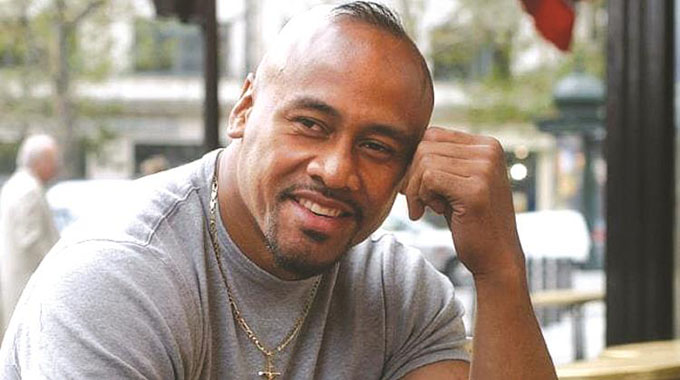
LONDON. — When Jonah Lomu arrived in South Africa 25 years ago for the World Cup, he was such a peripheral figure in the New Zealand squad that interview requests with him were rare and invariably granted.
Four weeks later, the day after the World Cup final between South Africa and New Zealand, won by a Joel Stransky drop goal in extra-time, the 19-year-old Lomu was lounging in a large hotel chair that was not quite generous enough to hide his ample frame from the hordes of fans who came looking for one autograph above every other in that pre-selfie, less security conscious time.
His manager, Phil Kingsley, regularly disappeared behind the reception desk to field telephone calls, many from suitors anxious to add Lomu to their portfolio.
“That was the Washington Redskins,” he said. “It seems everybody wants Jonah.”
Lomu did not act as if he was the biggest name in a sport that was about to kick the door off the amateur era’s rusting hinges, obligingly scribbling his autograph with his left hand and shaking hands.
But, the life of the soon-to-be former bank worker, had become very different.
Van Esbeck was the last journalist to have a sit-down with Lomu at that tournament.
A couple of days after his interview, Lomu scored two tries against Ireland, knocking over defenders and showing a mixture of brute strength, pace and dexterity that no one claimed to have seen before on a rugby field.
He had won his first two caps the previous year in the home series against France and looked out of his depth as they lost both matches.
He had not played for the All Blacks since and was only picked in one of the World Cup camps; not quite an overnight sensation, but his was no longer a name familiar only to a few.
Lomu’s performances that summer, which culminated with his four tries in the semi-final against England in Cape Town 25 years ago yesterday, the first of which came in the opening minutes when he trampled all over Mike Catt, had a transformative effect on a sport that lacked a global reach. He broke barriers as well as tackles.
Yet, as Kingsley Jones highlighted in his autobiography “How Did I Manage That?” Lomu came close to missing out on the tournament.
Upset at his Test isolation, after his 1994 debut, he wanted to return to his first love, rugby league.
“Without me, he would have been playing for Canterbury-Bankstown in the Winfield Cup, not in the World Cup.”
Lomu was ready to sign a three-year contract worth A$3m.
He wanted Kingsley Jones to be his manager but the Welshman said it would cost him: his next All Black jersey.
“You can have the one I’ve got,” came the reply.
“If I get your next All Black jersey, I will manage you through to the end of the World Cup.”
A deal was struck and Lomu forged his own legend.
When Lomu died five years ago at the age of 40, suffering a heart attack associated with the kidney condition, nephritis, he had carried throughout his career, tributes were paid to him from athletes across several sports.
It was 13 years since he had played for the All Blacks, but the mark he had left on rugby union was permanent.
Last month, when Bristol argued for the retention of two marquee players in the Premiership, signings who are not part of the salary cap, they said big names helped sell tickets home and away.
But, there has not been another Lomu since 1995.
Individualism is a casualty of the times.
Lomu was not responsible for the shift towards collisions and physicality.
Professionalism meant players were available every day, rather than a couple of nights a week, and time was filled in gyms; bulking up required effort rather than thought and increased fitness and conditioning meant less space on the field, while eight replacements reduced fatigue in the final 20 minutes of a match.
His illness meant that when he should have been at his peak, he was in decline.
His career fizzled out with Cardiff Blues, North Harbour and Marseille Vitrolles: he played 21 matches for the three sides and scored one try.
Before that, his senior record was 125 tries in 185 appearances.
“He was somebody who took rugby to another level,” wrote Kingsley Jones. — The Guardian.


 Online Reporter