Wallace Ruzvidzo
Herald Reporter
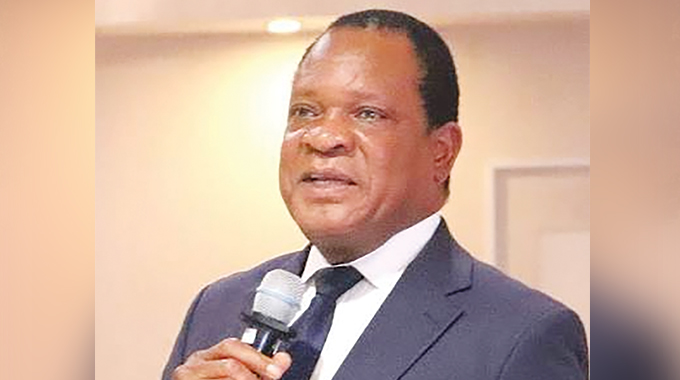
ZIMBABWE stands ready to work with all nations, including the United States, in advancing global health security, but will do so on terms that preserve its sovereignty, protect citizens’ data and ensure that partnerships are genuinely reciprocal, Information, Publicity and Broadcasting Services Permanent Secretary Mr Nick Mangwana has said.
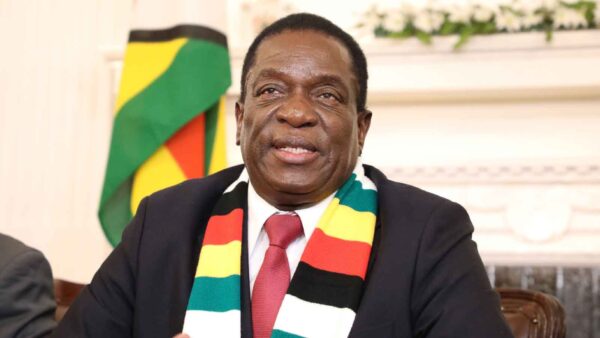
This comes after recent extensive media reports drew attention to a leaked internal Government communication between the Permanent Secretaries for the Ministries of Foreign Affairs and International Trade, Health and Childcare, and Finance, Economic Development and Investment Promotion, which revealed President Mnangagwa’s directive to immediately terminate negotiations on a proposed health funding Memorandum of Understanding (MoU) under the US’ America First Global Health Strategy.
The MoU was set to provide considerable health funding estimated at around US$328 million, in exchange for extensive access to sensitive health data from Zimbabwe, including pathogen samples and epidemiological information concerning the country’s citizens.
In clarifying Zimbabwe’s decision and health diplomacy, Mr Mangwana said while the offer of assistance was acknowledged, the structure of the agreement raised significant concerns about sovereignty and fairness.
He said President Mnangagwa’s directive to terminate the negotiations on the MoU came after a comprehensive inter-ministerial review and was guided by “principle, not politics and foresight, not frugality”.
“At its core, the arrangement was asymmetrical. Zimbabwe was being asked to share its biological resources and data over an extended period, with no corresponding guarantee of access to any medical innovations — such as vaccines, diagnostics or treatments — that might result from that shared data,” said the Information Secretary.
Mr Mangwana said in essence, Zimbabwe would supply the raw materials for scientific discovery without any guarantee that the final products would be available to Zimbabweans in the event of a future health crisis.
Washington, meanwhile, was not offering reciprocal sharing of its own epidemiological data with Harare’s health authorities.
“This is not a matter of rejecting partnership, but of insisting that partnership be genuine.
“It is our duty to protect the long-term health security of Zimbabweans, not merely to accept short-term assistance that could compromise our ability to benefit from future scientific breakthroughs,” he said.
Moreover, Mr Mangwana asserted that Zimbabwe was a strong proponent of multilateralism, especially concerning global health security.
As such, he said the US’ withdrawal from the World Health Organisation (WHO) and its focus on bilateral health agreements with individual countries signify a shift away from the multilateral frameworks that have been meticulously established to ensure equitable pandemic preparedness and response.
“At recent WHO negotiations, Zimbabwe had the honour of speaking on behalf of 50 African member states in insisting that pathogen data with pandemic potential be shared exclusively through the WHO’s multilateral system — specifically the Pathogen Access and Benefit-Sharing (PABS) framework,” he said.
The Information Secretary said genuine friendship between nations was not gauged by what one can extract from the other, but rather by the mutual respect with which they treat each other.
“It is in this spirit that we extend our hand to the United States, hopeful that future engagements will reflect the dignity and equality that both our nations deserve,” he said.
Mr Mangwana stated that Zimbabwe values its longstanding bilateral relationship with the US and recognises the historical contributions of American health assistance, particularly through PEPFAR and other programmes, which have played a significant role in Harare’s national health response over the years.
“However, a partnership, by its very definition, must be built on a foundation of mutual respect, transparency and reciprocal benefit,” he said.