Peter Matika [email protected]
ZIMBABWEAN girls and young women must take centre stage in shaping the country’s digital future as Government accelerates implementation of the National Artificial Intelligence Strategy 2026-2030, Information Communication Technology, Postal and Courier Services Minister Tatenda Mavetera has said.
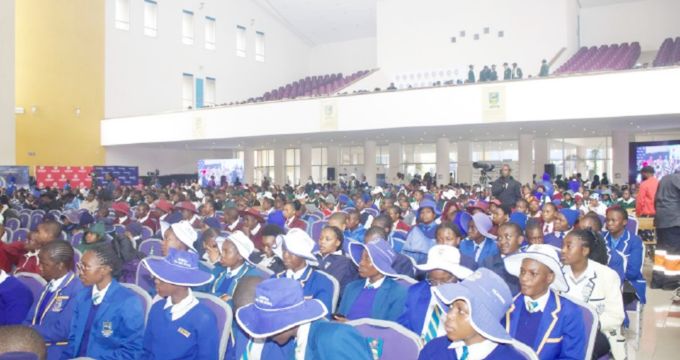
Speaking at the International Girls in ICT Day 2026 commemorations held at the National University of Science and Technology on Friday, Mavetera said Zimbabwe’s digital transformation agenda would only succeed if girls and women are fully included in emerging technologies such as artificial intelligence (AI), robotics, cybersecurity and software engineering.
The commemorations were held under the theme “AI for Development: Girls Shaping the Digital Future.”
Minister Mavetera said the future of innovation is being shaped today and girls must be equipped to participate as creators, innovators and leaders.
“We gather here at a defining moment in human history, when Artificial Intelligence, robotics, data science, cybersecurity, software engineering and emerging digital technologies are rapidly reshaping economies, governments, industries and societies,” she said.
The minister said Government had already taken a major step through the launch of the National Artificial Intelligence Strategy 2026–2030, which seeks to position Zimbabwe within the global digital economy.
She said the strategy would create opportunities for girls in machine learning, cloud computing, digital entrepreneurship, AI ethics, robotics and data science.
“It means opportunities to create applications that solve local challenges in health, agriculture, climate change, education and financial inclusion. It means that innovation is no longer confined to Silicon Valley or foreign capitals. Innovation can emerge from Bulawayo, Gweru, Mutare, Masvingo, Lupane or Murehwa.”
The minister also urged girls to take advantage of Government-supported digital training programmes, including the 1.5 Million Coders Programme, the Digital Skills Ambassadors Programme and the CyberUS Cybersecurity Training Programme.
She said Government is investing in digital infrastructure, STEM education, AI centres of excellence and technology access initiatives to prepare young people for future jobs.
The minister also warned about rising cyber threats and urged young people to prioritise online safety and responsible digital behaviour.
“The digital space offers tremendous opportunities, but it also presents real risks. Cyberbullying, online exploitation, identity theft, misinformation, cyber harassment and digital fraud are increasing across the world,” she said.
Girls have also been challenged to reject stereotypes that discourage women from entering technology-related fields.
“You belong in laboratories. You belong in boardrooms. You belong in coding academies. You belong in innovation hubs,” said Mavetera.
She said Zimbabwe needs more female software developers, cybersecurity experts, robotics engineers and technology entrepreneurs to drive national development through home-grown innovation.