Online Reporter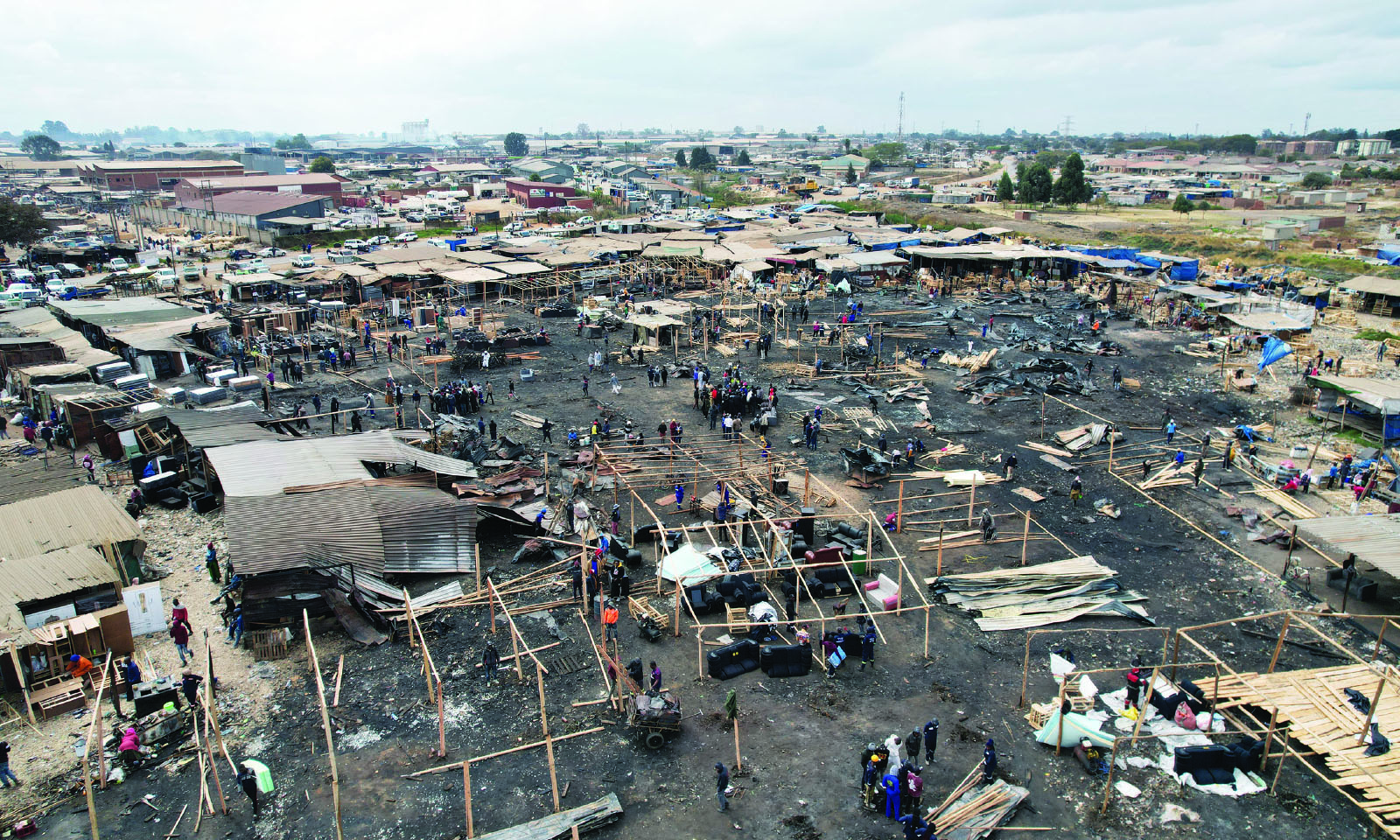
Ivan Zhakata
Features Correspondent
THE smoke has cleared, but the pain still lingers.
In the early hours of Sunday morning, yet another fire tore through Glen View Area 8, Harare’s largest informal furniture manufacturing complex, reducing dozens of stalls to rubble and ash.
It was not the first time.
For many here, it was a horrifying replay of a nightmare they have come to expect — year after year.
“For 14 years, we rebuild, and then we watch it burn,” said Mr James Mudzengi, a carpenter who has worked in the complex since 2008. “Only in 2019 and 2022 did we not have fires. Every other year, it is the same story, fire, losses, tears and silence. We are exhausted.”
The latest blaze destroyed an estimated 25 percent of the market, gutting valuable equipment, raw materials and furniture worth thousands of dollars.
President Mnangagwa has since ordered an immediate reconstruction of the area, an effort that will align with the ongoing Mbare Market redevelopment, which also suffered a similar fate last year.
But for traders like Mr Mudzengi, who lost more than US$6 000 worth of stock, the trauma runs deeper than the financial blow.
“I had just completed a batch of lounge suites for a client in South Africa,” he said, sitting on top of a scorched pile of wood.
“Gone. Just like that. The client does not want to hear my excuses, they want their order. I cannot sleep at night.”
When Ms Linda Chideme arrived at her upholstery stall on Sunday, she collapsed in shock.
She had put her entire life savings into her small business, which supported her three children and two employees.
“I cried until I couldn’t breathe,” she said softly.
“This was not just a workplace, it was our livelihood. I do not even know how I am going to send my children to school next week.”
The fire reportedly broke out shortly after midnight and spread rapidly across the tightly packed stalls — most made of wood and filled with flammable materials. Witnesses reported hearing a loud explosion before the flames engulfed the area.
Though no fatalities or injuries were reported, emergency services were criticised for a slow and under-equipped response that failed to contain the blaze in time.
On July 27, Women’s Affairs, Community, Small and Medium Enterprises Development Minister Monica Mutsvangwa and Local Government and Public Works Minister Daniel Garwe toured the site, assessing the extent of the destruction and engaging with affected traders.
Their visit aimed to craft long-term solutions after years of recurring disasters.
“The President has declared Glen View Area 8 a disaster zone. This is not just an accident — it is a recurring national emergency,” said Minister Garwe.
“What has happened here is unacceptable. We cannot keep building stalls that burn like cardboard. We are moving forward with full reconstruction.”
Minister Mutsvangwa called for immediate intervention to support informal traders who have been left without a source of income.
“These entrepreneurs are the heartbeat of our economy,” she said.
“Glen View supports hundreds of families and contributes significantly to our informal sector GDP. What has happened here is a national economic loss. We are not going to leave them behind.”
She said financial institutions and insurance companies must work with Government to develop practical solutions for small-scale entrepreneurs vulnerable to disasters.
The Government has announced plans to begin rebuilding in September 2025, with the Glen View complex set to be redesigned by urban planners and engineers.
The new infrastructure will include proper roadways, water and sanitation systems, modern workspaces, fire safety measures and designated food courts.
The upgraded market is expected to be commissioned in the first quarter of 2026.
However, many traders say they cannot afford to wait.
“We do not have to wait till 2026,” said Mr Tendai Ncube, a father of five who lost finished furniture worth over US$8 000.
“We need tents, tools and capital now. We have suffered too much.”
Mayor Jacob Mafume acknowledged the urgency, saying the City of Harare would work with central Government to provide temporary shelters and expedite long-term solutions.
“We cannot continue playing Russian roulette with people’s livelihoods,” he said.
“There must be order, proper safety measures and dignity in our informal economy. This time, we are going to do it right.”
Investigations into the cause of the fire are ongoing.
Minister Garwe said potential factors include electrical faults, illegal heating stoves, or even negligence due to drug and substance abuse among some users of the complex.
“We need to teach our young people responsibility,” he said.
“If drugs or carelessness caused this, then we are not just rebuilding structures — we are rebuilding values.”
Back at the blackened stalls, Mudzengi picked up a half-burnt tape measure and sighed.
“We will try again — because we must,” he said.
“But this time, we hope someone will remember us tomorrow, not just today.”