Online Reporter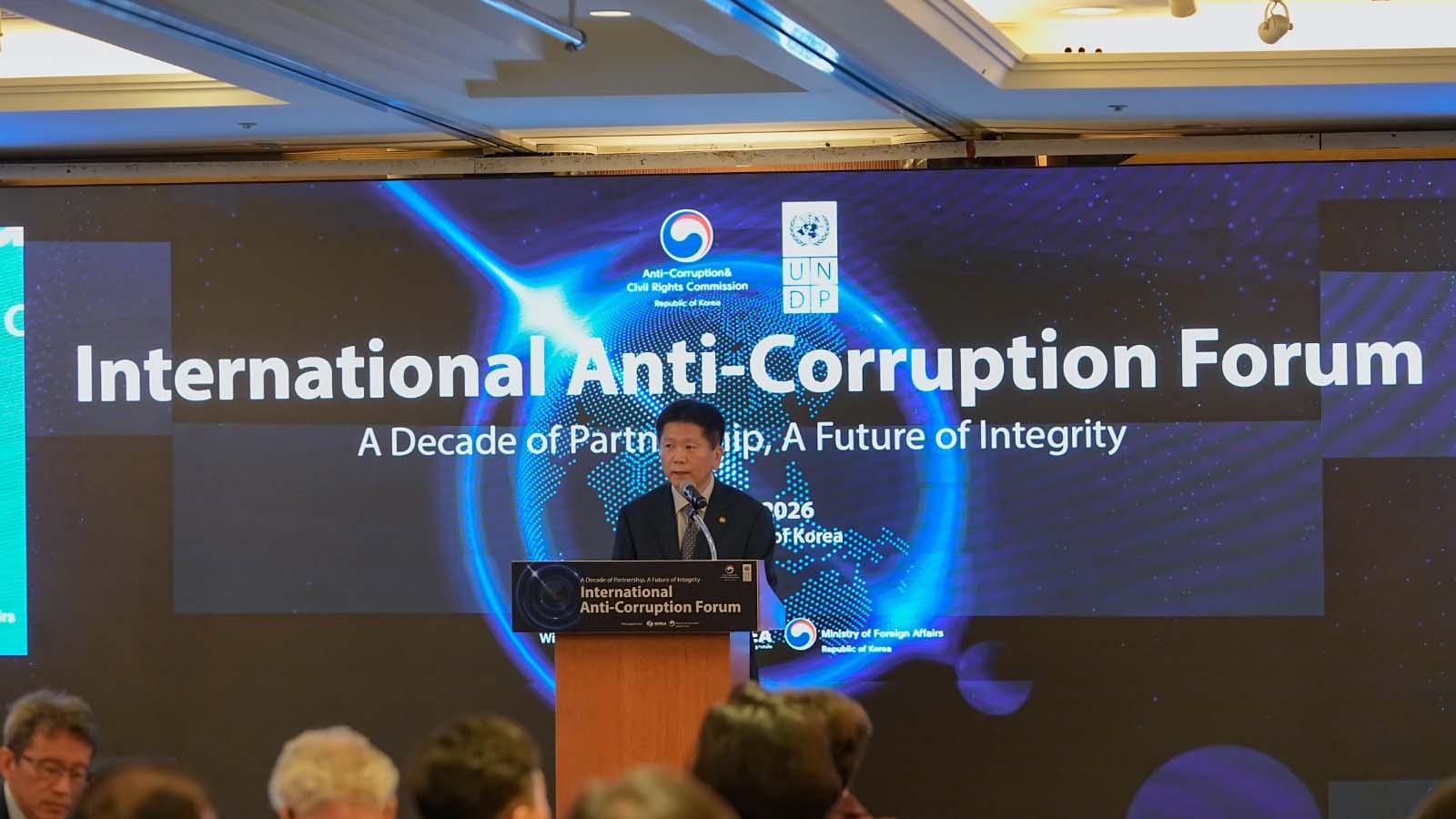
Gibson Nyikadzino in SEOUL, South Korea
Global South countries yesterday reaffirmed their commitment to strengthening collaboration in the fight against corruption, agreeing to prioritise the use of digital platforms and Artificial Intelligence (AI) to tackle the growing governance challenges posed by rapidly evolving technologies.
The commitment was made at the close of the two-day Korea-United Nations Development Programme (UNDP) International Anti-Corruption Forum, where delegates pledged to deepen cooperation by sharing expertise and best practices aimed at narrowing governance and technological gaps between countries.
Participants agreed that AI and digital technologies should be harnessed as preventive tools to identify, track and predict corruption risks before they occur, while cautioning that the same technologies could also be exploited to conceal corrupt activities if not properly governed.
The international community estimates that corruption accounts for losses equivalent to about five percent of global gross domestic product (GDP), or approximately US$2,6 trillion annually, with developing countries losing at least US$1,26 trillion each year.
In his closing remarks, Korea’s Anti-Corruption and Civil Rights Commission (ACRC) vice chairperson, Mr Lee Myong Sun, said the exchange of experiences and innovations during the forum had reinforced a shared commitment to combating corruption through transparent institutions and modern technology.
“We are already on the right path. What we discovered in one another today is the firm belief in the fight against corruption. Together, we are already proving that this belief becomes institutions, and that those institutions ultimately change reality,” he said.
“The combination of transparent systems and innovative technology can become a catalyst that empowers citizens to change. Digital systems can be used to proactively identify corruption risk factors. Countries like Mongolia, Kosovo, and Uzbekistan have shown that when institutional reform and digital platforms operate together, citizens themselves can become powerful agents against corruption.”
Experts attending the forum warned that while AI has enormous potential to strengthen integrity and accountability, it could equally become a structural threat to transparency as governments increasingly integrate the technology into public administration and oversight systems.
Zimbabwe has already embraced digital systems and the deployment of AI tools to reduce human interaction in public service delivery and curb illicit activities.
The country is also using machine learning to monitor public procurement processes and automate administrative systems aimed at improving efficiency and accountability.
Daejin University’s Professor Choi Yong-jeon cautioned that the growing adoption of AI requires robust governance frameworks to prevent unintended consequences.
“In anti-corruption policy, AI can be a double-edged sword. On one hand, it makes preventive anti-corruption measures possible. However, it can also pose structural dangers, including algorithmic opacity, which could in turn conceal corruption,” he said.
Held under the theme “A Decade of Partnership, A Future of Integrity,” the forum brought together government representatives from 14 participating countries, alongside civil society organisations, academics and heads of anti-corruption bodies to explore innovative approaches to promoting transparency, accountability and integrity in public institutions.