admin
admin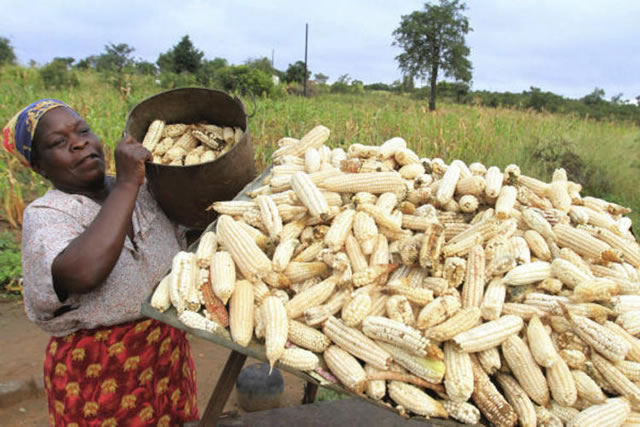

Senior Business Reporter
The Grain Marketing Board has received 40,060 metric tonnes of maize since the beginning of the selling season, a 231 percent increase compared to the same period last year.
In a statement Ministry of Agriculture, Mechanisation and Irrigation Development Permanent Secretary Ringson Chitsiko said payments for the deliveries would be done within 60 days of delivery or earlier through CBZ and Agribank.
Chitsiko said $4.6 million has so far been provided by treasury for deliveries made up to the end of May for this season’s deliveries.
“To date a total of 40,060 metric tonnes (mt) of maize has been delivered to GMB depots throughout the country. This is 231 percent more than the quantity delivered at the same time last year as the deliveries were only 12,114 mt and 20 percent more than last season’s deliveries which stood at 33,273mt,” said Chitsiko.
“Treasury must be commended for resource mobilisation towards grain procurement given the country’s competing needs against the backdrop of a liquidity crunch. These disbursements have been made to the banks and no cash will be paid from GMB depots.”
Treasury is making efforts to clear an outstanding $1.7 million owed to farmers from the previous season.
In line with Zim-Asset, he said, GMB would not accept maize deliveries from grain traders bent on fleecing farmers of their hard earned money.
Farmers were being encouraged to deliver their produce directly to GMB depots.
“GMB will not accept imported maize at its depots and depot managers have been instructed accordingly,” the permanent secretary said.
He said GMB would only accept maize with a moisture content of not more than 12.5 percent adding that farmers were advised to take a representative sample of about two kilogrammes of their grain for testing moisture content at nearest depots.
The service which is free of charge, Chitsiko said, was critical in ensuring long-term storage and minimum post-harvest losses.
Zimbabwe requires two million tonnes of grain annually.
Due to poor rainfall patterns in recent years, Zimbabwe has experienced successive droughts resulting in the country’s Strategic Grain Reserve, which requires 500,000 tonnes at every time, dwindling drastically to 30,000 tonnes in January this year.
As a result, the country has been importing maize from neighbouring countries like South Africa to cover the deficit.
Early this year, government announced plans to import 150,000 tonnes of maize from South Africa as the country faced worst food shortages in four years.
Following good rains in most parts of the country in the previous cropping season, the country is projected to achieve a better yield this year.
Presenting the 2014 national budget in December last year, Finance and Economic Development Minister Patrick Chinamasa said the projected output for the 2013/14 season was 1.3 million tonnes.



 Online Reporter