Online Reporter
Raymond Jaravaza, [email protected]
THE Grain Marketing Board (GMB) will set up 1,804 grain collection points and 89 depots for a convenient and cost-effective mechanism that will allow farmers to timeously deliver maize and traditional grains following the successful 2025/2026 summer crops marketing season.

In his post-Cabinet media briefing yesterday, Information, Publicity and Broadcasting Services Minister Dr Zhemu Soda said the plan was outlined by Agriculture, Mechanisation and Water Resources Development Minister Dr Anxious Masuka.
He further revealed that GMB has grain stocks of 169,946 tonnes of maize, traditional grains and wheat and that farmers, service providers and transporters will now be paid timeously.
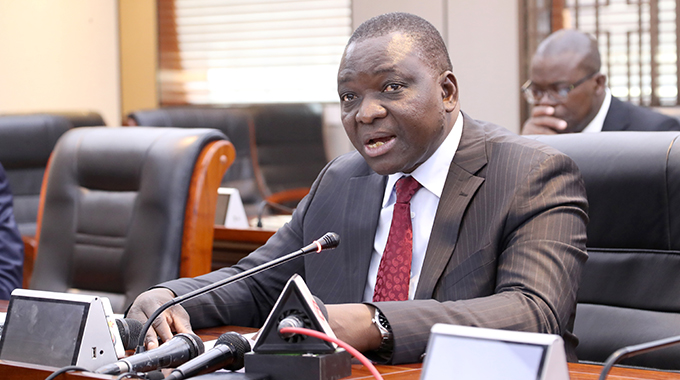
“The proposed marketing arrangements note that there are five categories of farmers, namely farmers financed under the climate-proofed Presidential Input Scheme (Pfumvudza/Intwasa), self-financed farmers, those supported by AFC and CBZ financial institutions, farmers financed by private contractors and farmers financed by ARDA,” said Minister Zhemu.
“During the 2025/2026 marketing season, GMB has received 40,693.28 metric tonnes of grain from ARDA and substantial intake from communal farmers for the strategic grain reserve.
“GMB also plans to aggregate grain from farmers through its 1,804 collection points and 89 depots.”
Meanwhile, the minister said 330.6 million kilogrammes of tobacco have been sold at an average price of US$2.50 per kilogramme.
“This is an 11 percent increase in volume and 25 percent in average price compared to the previous season, where 299.2 million kilogrammes were sold at an average price of US$3.36 per kg,” he said.
“Auction tobacco prices in 2026 have shown gradual recovery despite periods of mid-season volatility. Average auction prices increased from around US$1.60 per kg at the start of the season to approximately US$2.54 per kg on day 71 of the tobacco marketing season, reflecting improved market performance in recent weeks.”
As of last week, 5,079,907 kilogrammes of cotton had been marketed compared to 310,625 kilogrammes during the same period last year.
In the winter wheat production sector, the Government has noted that 128,459 hectares have been planted for the 2026 season, surpassing last year’s target of 125,000 hectares.
“ARDA planted 59,880 hectares, representing 92 percent of this year’s target. The target for barley remains 6,500 hectares and Irish potatoes stand at 9,000 hectares with an expected production of 243,850 metric tonnes,” said Dr Soda.
Last year, the country achieved a record 642,000 tonnes, exceeding national annual requirements of between 350,000 and 450,000 tonnes. For years, Zimbabwe relied heavily on wheat imports to bridge local production deficits.
Meanwhile, the Government has approved the Zimbabwe Sugar Cane Industry Development (2026-2035) Strategy that seeks to transform the country into a competitive and one of the biggest producers of sugar cane and its by-
products like ethanol, which is vital in fuel blending by 2035.
The Zimbabwe Sugarcane Industry Development Strategy is expected to position the sector as a critical driver of rural industrialisation, energy generation and export growth, supporting the country’s vision of becoming an upper-middle-income economy.
The ambitious plan targets increasing sugarcane yield from 81 tonnes per hectare (ha) to 110 tonnes per hectare, increasing sugar production from 400,000 tonnes to 500,000 tonnes per annum and increasing electricity generation from 23 megawatts to 200 megawatts by 2035.
In addition, the plan seeks to expand ethanol production from 155 million to 600 million litres annually, and boost sugar exports from 100,000 metric tonnes (mt) to 200,000 mt.
Infrastructure modernisation, research and innovation, and stronger collaboration among Government, the private sector, development partners, academia, and local communities will be promoted to ensure the successful implementation of the strategy and the long-term sustainability of the sugar industry.