admin
admin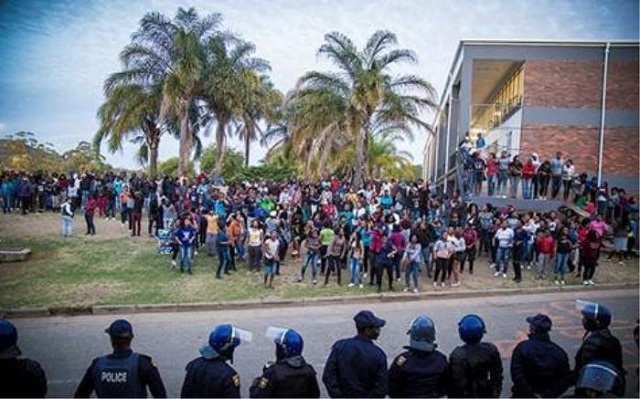
Johannesburg — President Jacob Zuma has urged protesting students to return to class, saying there will be consequences for those who act criminally.
“Government is committed to do everything possible to progressively make higher education more affordable and free for the poor. I would want to make a call to let the students go back to study,” Zuma said at a higher education summit yesterday.
Zuma added that he had instructed law enforcement agencies to arrest criminal elements who were hijacking student protests.
He condemned violence and the destruction of property, saying the resolution taken last year not to increase fees was made through strategic dialogue.
He said the 8 percent cap on university fee increases announced by Higher Education Minister Blade Nzimande also came about through strategic dialogue with stakeholders.
“The 0 percent fee increase for 2016 was a decision made through listening and talking. The summit is doing what South Africa does best — to meet and talk and find solutions. Together we find lasting solutions,” he said.
Zuma said an inquiry into higher education must be given a chance to find a way out of the impasse over fees.
Meanwhile, UCT will remain closed until the vice chancellor engages students on their demands and takes their call for free, decolonised education to national leaders, student leader Masixole Mlandu said yesterday.
He led hundreds of protesting students through UCT’s upper campus to ensure no lectures were held.
Many who were not protesting stood on the sidelines and took photos.
“The people’s management declares a shutdown . . . The university needs to make a decision.”
The institution had planned on resuming academic activities yesterday.
“We can’t breathe in this university when things stay the same. Sacrifices must be made,” said Mlandu.
He bemoaned the demographics of UCT, saying the institution was not an accurate representation of South Africa. Protesting students repeated their demands for free education, the insourcing of workers with a net salary of R12 500, and for disciplinary action to be dropped against some students. “We are not mad. We are not hooligans. We don’t like protesting,” said Mlandu.
Private security guards watched from afar.
Police vans were spotted on campus in the morning, but later left. Most lectures were not in session, but it was understood that a lecturer in one department had met students in two almost full classes early yesterday morning.
“Work is being done to find solutions,” he said. — Sapa.



 Online Reporter