Chronicle Editor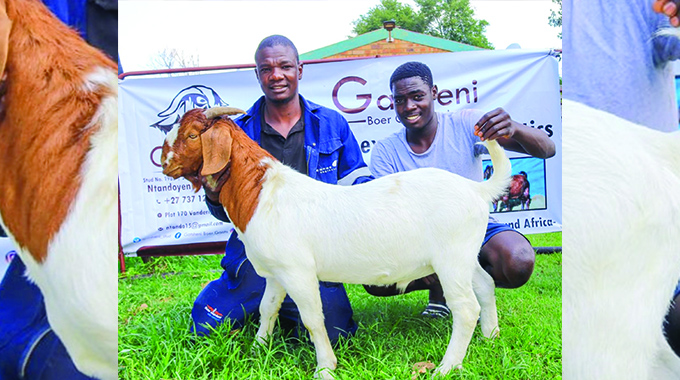
Thupeyo Muleya, [email protected]
SUCCESSIVE droughts linked to the effects of climate change in the last decade have brought agony and misery to most communal farmers across the Matabeleland region, especially Beitbridge ,where crop production can only do well under irrigation-based farming.
Beitbridge falls under Agriculture Natural Region five and the Meteorological Services Region three respectively. In recent years, the district has received less than 350mm to 450mm needed to sustain the summer cropping season for both livestock and crops to do well.
Among other things, many people in this part of the world view farming as a source of livelihood.
As the saying goes ,“adapt or perish” many communal farmers have turned to several adaptation methods in the agricultural sector.
These include irrigation-based farming, which uses mainly solar energy and drip irrigation. However, livestock ranching, mainly cattle, goats and sheep have become the main economic activity in Beitbridge.
Due to droughts, many farmers had to watch in despair as their herds of cattle got decimated. At some point, the district lost more than 500 cattle due to drought-induced deaths. Goat production has become fashionable in this district and has been bearing fruits for most of those who have adopted farming as a business. Ideally, goats survive on browsing and most breeds are drought-tolerant.
In essence, the farmers have started taking goat production as a business and are migrating to higher-value breeds. Proceeds from the sale of goats have seen many smallholder farmers writing success stories and being able to absorb the adverse effects of climate change.

It is understood that issues of health consciousness, leather, milk value chain and a marked increase in religious festivities, have been pushing goat production around Zimbabwe.
Renowned goat breeder, Mr Herbert Zhou of the Joko resettlement area in Ward 13, says the area is conducive for the Matabele goats by a Boer or Kalahari red breeds.
“A goat can live up to 18 years, but like any animal, when it gets older, it will need extra care, like it will have broken or no teeth to chew the feed or cud, resulting in smaller kids, less milk,” said Mr Zhou.
“However, the business is good for many farmers, especially those with Matabele goats by a Boer or Kalahari red breeds.”
He became a serious goat farmer in 2016, when he imported eleven goats from the late Deyzel Xander of Polokwane in South Africa and now he has grown to be a special breeder. Mr Zhou now specialises in breeding Boer and crosses of Matabele goats.
A communal farmer from Lutumba, Ward 15, Mr Phumudzo Mudau, who owns goats and sheep, said he started rearing goats a few years ago and he is gradually migrating to better breeds. He said it was very critical for one to choose the correct goat breed suitable for their environment.
Mr Mudau, said goat breeds such as the Boer goat, Savannah and Kalahari red were ideal for Beitbridge.
“For you to succeed in this sector, you need a solid marketing plan because if you don’t have the market, it’s very tough and can be a huge challenge,” he said.
“The ordinary goats can be sold for anything above R600 and the high-value breeds can be sold for more than US$300, depending with the breed, age and quality,” said Mr Mudau.
In some instances, on average, a high-value breeding goat is sold for US$1 000 on the local market. Makakavhule, Ward six based businessman, Mr Prison Bangale Ndou, said he now specialised in Boer goats, which are more profitable.

He said those willing to venture into goat production may buy Matabele females and cross them with a Boer male, which produces a good breed.
“Goat farming is one of the most viable business ventures around our district. However, one needs to have the right breed, which grows fast and can fetch something in the market as early as possible,” said another farmer from Tongwe in Ward four, Mr Raniel Ndou.
“The red Kalahari and the Boer breeds are the best option. It’s key to note that these breeds are susceptible to diseases, so there will be a need to have vaccines all the time.”
According to award-winning youthful agronomist, Mr Ntandoyenkosi Ndlovu who has risen from a mere livestock fanatic to a renowned goat breeder in Zimbabwe and South Africa, goat farming is big business.
He started off renting a piece of land in Malala in Beitbridge, Ward six, before migrating to South Africa where he registered with the Boer Goats Breeders Association.
Mr Ndlovu now runs the Gatsheni Breeding Company, which specializes in breeding Boer goats in Botswana, Namibia, South Africa, and Zimbabwe.
“Goat production is serious money and farmers have to start taking this as a business because in most cases they do a small hustle or a routine in the village,” he said.
“You will note that in the last few years, goat farming has managed to sustain livelihoods, especially those done under a business model.”
Mr Ndlovu, said climate change had affected a lot of things around livestock production including the quality of grazing, hence it was ideal to rear goats, which do not require too many pastures like cattle. In addition, he said, goats require little land to breed compared to huge animals.

“Goats multiply fast and they grow faster and drop kids about three times in 24 months compared to cattle, which drop calves once yearly,” he added.
Mr Ndlovu, said the communal farmers should plan the sales and invest in research for a preferred age that attracts higher returns and the right time to sell rather than selling only when desperate.
Farmers, he said, should also add value to goats, including selling packaged graded meat, which includes goat offals, among other things.
“To gain more skills and market dynamics and knowledge, farmers need to form associations to troubleshoot challenges in the markets. The individualism concept is not helping anyone,” said Mr Ndlovu.
“We need to cut the middlemen for us to get the real value of our goats.”
According to several agriculture experts, farmers should rear improved breeds, use artificial insemination and avoid inbreeding (keeping bucks for more than four years such that they end up mating with their kids), to get high returns from goat production.
In some instances, they must improve on supplementary feeds (fodder and feed formulation) and ideally, goats are more browsers, which survive on acacia species and veld grass. For supplements, the farmers are advised to create fodder banks from Lablab, Velvet beans, Lucerne, and Baba grass.



 Online Reporter