

 admin
admin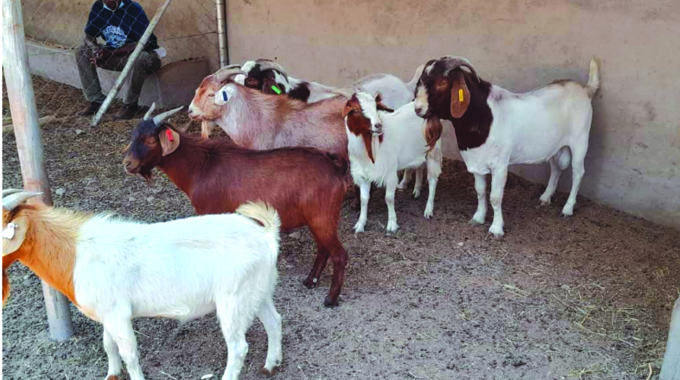
Ruth Butaumocho African Agenda
Goats have for a long time played a vital role in the cultural, social and economic life of rural communities in Africa.
Although they had a crucial role by contributing to food security and sometimes regarded as a liquid form of cash, goats were perceived as “a poor man’s animal” as there was little commercial value attached to them.
However, the last five years have seen a paradigm shift towards goats which are increasingly becoming livestock of choice.
Climate change, a shift towards healthy eating habits and an insatiable local and export market has made many people realise that goats are a serious and profitable business.
The United Nations forecasts demand for meat, milk and eggs in Africa will almost quadruple by 2050, fuelled by a ballooning population — expected to double to 2,4 billion — and a growing appetite for high-protein foods driven by rising living standards.
The demand for goat meat remains hugely unmet.
Each day the value for goats continue to peak amid revelations also that the Arab regions need millions of tonnage for goat meat each month.
Muslims consume goat meat at various festivals that include the Hajj, which is a five-day religious pilgrimage to Mecca and holy sites in Saudi Arabia.
According to the ‘Hajj, the Islamic pilgrimage to Mecca explained for non-Muslims’, all Muslims who are physically and financially able must embark on this pilgrimage at least once in their lives.
On the last three days of the Hajj, Muslims celebrate Eid al-Adha, or the Festival of Sacrifice, to commemorate Prophet Ibrahim, who almost sacrificed his son Ismail for Allah.
Another major festival is the Eid al Fitr, a three day celebration to mark the holy month of Ramadan.
In addition latest research show that there are a lot nutritional benefits associated with goat meat, which is low in saturated fats and has more of the recommended unsaturated fats.
All those development have generated a lot of interest in several countries in Africa- Zimbabwe included-where cohorts, goats associations and other similar initiatives are being formed to meet the growing demand and markets.
Unlike the previous years, where demand for goat meat and its accessories was clearly undefined, with no commercial benefit being derived from such ventures, it has become imperative for livestock producers to collaborate in anticipation of meaningful growth.
One such initiative is the recently held Goat Indaba at Henderson Research in Mazowe, where legions of goat producers deliberated on a number contentious issues around the sector and emerging opportunities that farmers need to embrace in order to claim a stake in the growing and lucrative export market.
What emerged on the meeting was that goats’ producers need to emerge as an organised commercial sector, if Zimbabwe is to meet the 100 000 tonne monthly requirement of goat meat.
Businesswoman and well known goat breeder, Dr Divine Simbi-Ndhlukula emphasised the need for collaborations if Zimbabwe is to emerge strong on exports for goat meat.
“To goat breeders, it is important to belong to an organised group that talks about pertinent issues to the business.”
“If you are a goat breeder, it is very crucial to be part and parcel of this programme so that you get information that is very key to what is happening.”
Simbi-Ndhlukula is also the chairperson of the Zimbabwe Goat Breeders Association.
Her call speaks to a growing interest in goat production by different breeders across Zimbabwe, which has resulted in a modest increase of the goat population from four million to 4,3 million this year.
The whole lot is made up of different breeds that are now being reared on a commercial basis in Zimbabwe and these include Mashona, Matabele, Boer, Saanen and Angora goats.
As Dr Simbi-Ndhlukula intimated, collaborations would be crucial to ensure that Zimbabwe grow a steady herd, which in turn can sustain a commercial venture to meet all the exports requirements.
As it stands right now, the goat breeders are highly de-franchised, there is lack of information on breeding, disease handling and treatment at a commercial scale and the existence of markets when the product is ready.
That alone would require a coordinate approach to ensure that every goat breeder keen on tapping the export market can access an avalanche of support systems and in the process improve the quality of breeds.
Should the association decide to inject money towards increasing the herd, the investments should be directed at making existing livestock healthier, by increasing vaccinations and switching to more nutritious feeds, to boost production without increasing the number of animals farmed.
Improving access to electricity, roads and markets in rural areas would also be vital so that breeders will not cluster around cities, increasing the risk of disease transmission from animals to people, which often happens when there is no coordinated or managed livestock movement.
Once the collaboration have been successfully launched, it is important to decentralise operations so that breeders do not spend a fortune travelling to major cities to transact even on minor issues.
Information on improved markets, the grading systems, pricing and eligibility should also cascade to all breeders so that they can make informed choices on whether to increase their own herd or partner with other farmers.
The biggest challenge that most farmers and breeders face is lack of information on the available opportunities, markets and sometimes access to resources, even when they have the potential to grow their ventures.
As a result, many end up producing and selling their products for a song just to break even, when they should be making profits, after failing to secure markets.
Paired with labour and fiscal policies favouring small and medium producers, better infrastructure would also help small farmers scale up their businesses, and in the process boost their confidence, knowing fully well that there is a ready market.
Looking at the existing market, which is already showing signs of growth, it would also be good for local associations to push for regional collaborations to promote a strong regional supply chain.
There is potential for serious growth once associations at country level choose to be pragmatic and consider regional collaborations.
The Southern African goat population exceeds 35 million animals, most of which are kept in small-scale traditional production systems in communal areas.
These traditional production systems are characterised by informal, lowly-skilled labour, small numbers of animals and limited resources.
Most goats are part of mixed crop-livestock systems, where different livestock species and crop farming complement one another.
Once regional countries take a collaborative approach towards goat breeding, the existing informal structure characterised by small numbers and herded by lowly skilled herd men would be a thing of the past.
If successfully implemented, the commercialisation of goat breeding initiative, the project will put Zimbabwe and largely Africa on a positive trajectory and among the major exporters of goat meat across the world.
Feedback:[email protected]



 Online Reporter