admin
admin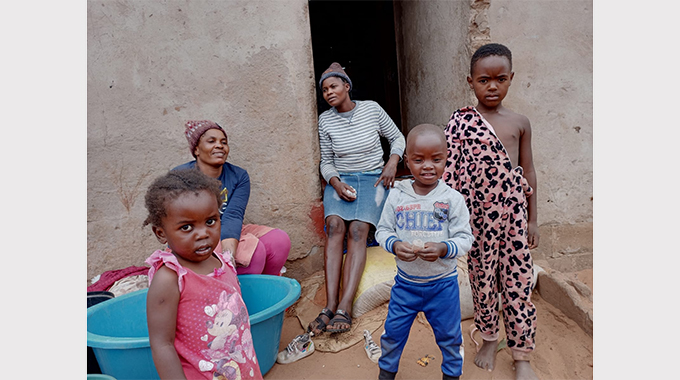
Phyllis Kachere Deputy News Editor (Convergence)
When Mrs Elita Phiri (52) of Manokore Village in Nemangwe, Gokwe South first heard about the deaths of children caused by a measles outbreak that hit Manicaland in April, she says she got worried as she stays with her four-year-old grandchild Elita Muyambiri.
“My worry was not on my grandchild; she is vaccinated against all childhood killers. My worry and panic were about my neighbours who belong to an apostolic sect that does not allow their children to be vaccinated. My neighbours are a polygamous family with 12 children all below the age of 10; all unvaccinated as their religion does not allow them to do so,” said Mrs Phiri.
Measles is a highly contagious respiratory tract viral infection commonly found in children and is spread through coughing, sneezing and contact. Symptoms start with a cough, and fever, followed by a rash on the skin.
As Manicaland was battling the measles outbreak, Gokwe South was also hit with the first measles death being recorded in the Nyamazana area on August 1.
Mrs Phiri’s neighbours’ children were not spared, some fell sick.
“It was scary and as a neighbour, I joined in the community mobilisation and awareness campaigns to convince my neighbours to get their children vaccinated. Fortunately, no one died from this family and they agreed to have their children vaccinated. Other apostolic families were not so lucky, some children died from the measles outbreak,” she said.
Gokwe South is home to a sizeable population who are members of an apostolic sect, Johanne Marange that does not allow its members to seek hospital treatment. They also do not allow children to be vaccinated against childhood killers.
When The Herald visited the family, they declined an interview for fear of being sanctioned by their church for allowing their children to be vaccinated against their teaching.
As part of efforts to contribute to the reduction in morbidity and mortality due to the measles outbreak, through an increase in vaccine utilisation and coverage, the Zimbabwe Red Cross Society (ZRCS) with support from the American Red Cross partnered Government to mobilise the community on the need to vaccinate children.
“Government responded to the measles outbreak by initiating vaccination of children under five years. The most affected areas included Manicaland, Mashonaland East, West and the Midlands which houses Gokwe.
“Gokwe South is one of the most affected districts in Zimbabwe based on the number of cases, vaccination coverage and large presence of community members who are resistant to vaccination promotion.
“The ZRCS, supported by the American Red Cross, response activities were aimed at complementing Government and other stakeholders’ efforts to enhance herd immunity in the affected district,” said ZRCS secretary general Mr Elias Hwenga.
He said ZRCS engaged in a social mobilization campaign through house-to-house visits for seven days by Red Cross volunteers.
“The focus was on conveying key messages such as the location of vaccination sites and the benefits of vaccination. The target population was mostly from the religious sects that were shunning vaccinations,” he said.
“Since we began the social mobilisation campaign, Gokwe South has not recorded any death, pointing to a high success rate of our campaign. Previously, the vaccine uptake was around 65 percent and our campaign is aimed at reaching 95 percent, which is the head immunity threshold,” said Mr Hwenga.
Manokore Village head Mr Last Martin Manokore said it was unfortunate that several children’s lives were lost because they had not been vaccinated.
“I welcome Red Cross’ intervention by way of door-to-door mobilisation for children to be vaccinated against measles. We are happy because the campaign has resulted in more children being vaccinated and saved from measles.
“My plea to them is to make these campaigns regular. We have a high number of households in my area that belong to an apostolic sect that does not allow their children to be vaccinated. I am glad, most of them have finally agreed after being engaged through the Red Cross,” said Mr Manokore.
Gokwe South has a population of 398 066 with 67 772 being the beneficiaries of the measles vaccination who are in the 6-59 months-age group. The total number of households is 98 500.
Young mothers Ms Immaculate Maphosa (22) and Ms Tendai Marange said they were grateful for the door-to-door campaigns as this ensured all children were immunised.
“During the Covid-19 pandemic, there was a lax in children’s vaccination. We hope these Red Cross campaigns will become regular to ensure that all children are covered. I have a three-year-old child and I religiously follow the required vaccination programmes,” said Ms Maphosa.
According to the World Health Organisation weekly report for the week ending 39, since the measles outbreak on April 10, 744 lives of mostly unvaccinated children have been lost.
Available statistics from WHO show that by mid-October, a cumulative 7 504 cases have been recorded with 4580 recoveries and 744 deaths. The report also shows that 865 new suspected measles cases and zero deaths were reported for the week ending 39.
Mr Hwenga said his organisation has partnered Government through the Ministry of Health and Child Care to carry out the house-to-house campaigns.
“We are carrying out similar campaigns in Epworth and Southlea Park and Hopley. Epworth has a total population of 206 365 and 35 082 children between the age of 6-59 months. The area has 51 500 households.
“Southlea Park and Hopley have a combined population of 357 860 people and the number of children between 6-59 months is 60 836. Our volunteers are doing house-to-house calls on the 89 400 households.”
He said the key messages that were being conveyed by the volunteers included the location of the vaccination sites and the benefits of vaccination.
Mr Hwenga said for their whole intervention ZRCS trained 710 volunteers, and 71 supervisors and were targeting to reach 250 000 households. The data that is being collected will be analysed and shared with Government, he said.
“For Gokwe South, we trained 31 supervisors, six data managers and 310 volunteers. These are the drivers of the campaign. To date, we have covered 56 661 households in Gokwe South,” said Mr Hwenga.
Ms Emelda Mupereki (45) said the door-to-door campaigns should be regular and not wait for outbreaks.
“These door-to-door campaigns by Red Cross should become regular in order to save children’s lives. I live with my grandchildren and I make sure they are vaccinated but for these apostolic members, it’s a real challenge,” said Ms Mupereki.



 Online Reporter