


 Online Reporter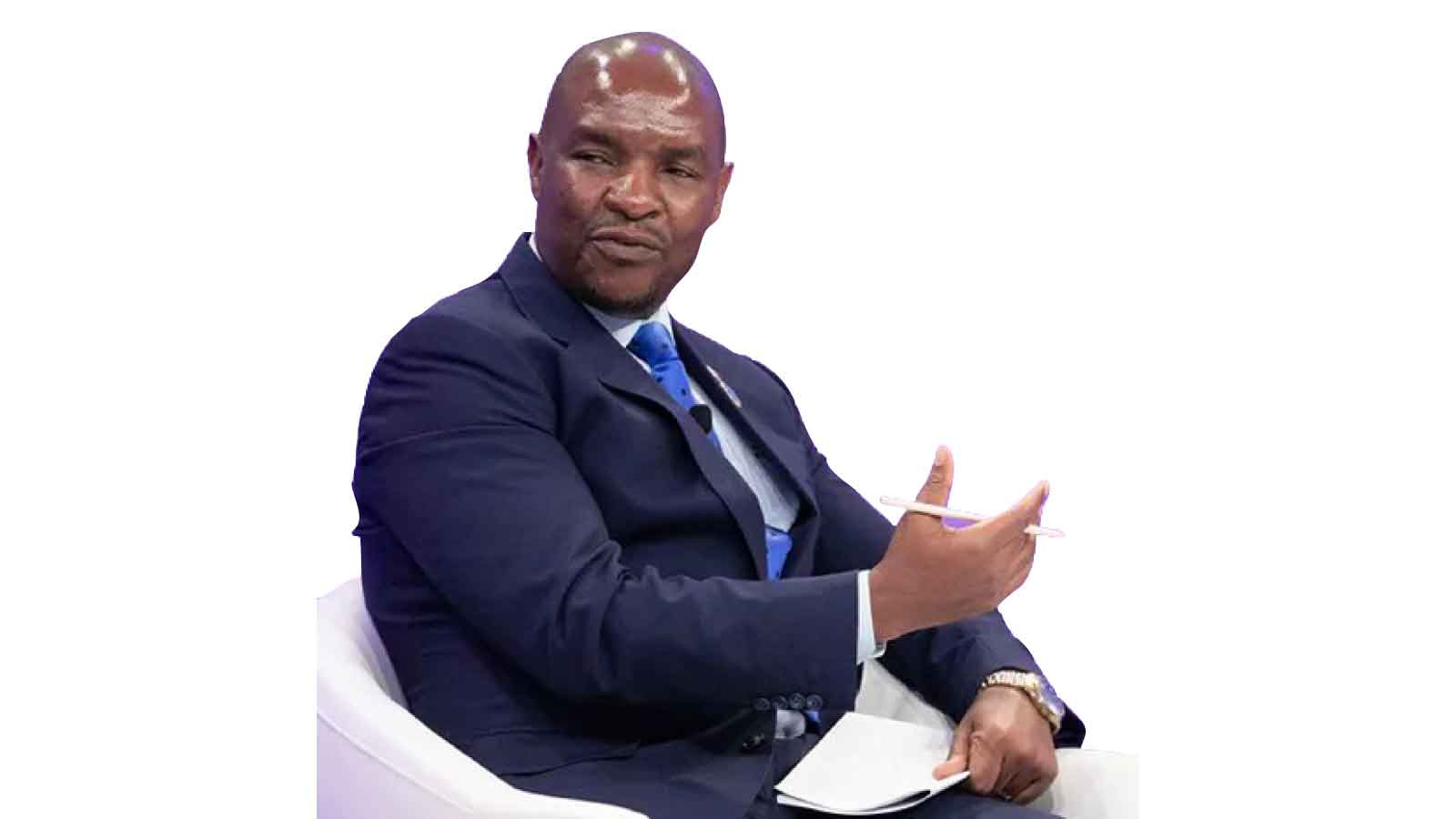
Point blank!
Zimbabwe used to have a huge infrastructure gap, but this has since changed with the advent of the Second Republic. The national vision to achieve an upper middle-income economy by 2030 is premised on world-class infrastructure that drives economic growth and development. While significant milestones have been achieved, a lot of work is still outstanding to achieve national goals and targets. LINDA MURIRO last week sat down with Transport and Infrastructural Development Minister FELIX MHONA during the Star FM programme “Muriro on Monday”, where the latter discussed the Government’s plans going forward. Below are excerpts from from the interview.
****************
Q: You emerged the best-performing Cabinet minister for 2024. Even your Permanent Secretary, Engineer Joy Makumbe, was named a top performer in the category of Permanent Secretaries at an award ceremony presided over by President Mnangagwa held in March last year. What would you attribute the success to given that in some instances they are limited resources?
A: I attribute it to the Almighty, and also to say when you are the best minister, it does not mean you make your own decisions, bearing in mind that we have our great leader, His Excellency, President ED Mnangagwa, who is a visionary leader. I will be just a vessel to implement strategies as enunciated by our great leader. So, I am happy that we managed to get it through as a ministry. You put it right to say we did it under meagre resources as a ministry, where we had to think outside the box in terms of funding . . . we had to call for financial engineering. When we talk of our roads, we are talking of a 90 000-kilometre stretch of road network in the country; therefore, it calls for patience from the citizenry.
Q: The National Development Strategy 1 (NDS1), which came to its end last year, identified transport and infrastructure as key enablers. What would you say are the top three milestones, and where did we come short?
A: Our roads were neglected for years. With the advent of the Second Republic, we took a deliberate decision to rehabilitate our roads. We are talking of new roads, reconstruction, drain construction, verge clearance — it is a massive array of infrastructure rehabilitation projects we were undertaking as a ministry.
We managed to have connectivity regarding our trunk roads; we have the flagship, which is Harare-Beitbridge, where we are left with 40 kilometres to complete; and we are gravitating towards the north, which is Chirundu, which is also a major milestone.
There is the aviation sector, which is in tandem with the tourism sector, where we had a few airlines after Covid, and we are now talking of 22 airlines flying into our space.
We have rehabilitated Robert Gabriel Mugabe International Airport, which was completed in record time, and (the) state-of-the-art pavilion.
With the enlargement of the airport, we can now accommodate six million passengers per year, and we can accommodate any wide-bodied aircraft.
If you look at the rail sector, we are also now seized with the railway network. We have engaged partners in the rehabilitation of our railway line.
Q: As we close the chapter on NDS1, how is your ministry auditing projects? What is it that will define the next phase?
A: We are continuing with implementing our projects . . . We are moving to Chirundu road, we are looking east, the Nyamapanda road, as well as the border post. We will modernise the borders; we have started with Forbes Border Post. Yes, we are on the ground running with the agenda.
Q: When we talk of ERRP (Emergency Road Rehabilitation Programme), (especially) road construction targeting local authority roads, many critics say they remain in bad shape. What are you doing to improve the road network in urban areas?
A: But let me put it right to the people of Zimbabwe that when we talk of road authorities, we have got four road authorities. One which is the Department of Roads, which falls under the Ministry of Transport. We have local authorities, which are cities.
We have got rural district councils in our rural areas. And we have got RIDA (Rural Infrastructure Development Agency), which was DDF (District Development Fund) before. So, the mandate of the ministry was to superintend over trunk roads, the primary roads. These are the roads that I talked about connecting us with other countries. But because of the wise leadership of His Excellency, the President, he then said, no, we cannot continue just watching our roads (deteriorate).
And if you talk of our community roads, these roads fall under city authorities. So, city fathers were supposed to take charge of our roads.
But now we cannot stand and start pointing fingers to say they are not doing it . . . With the advent of the Emergency Road Rehabilitation Programme 2, it, therefore, mandated the minister to also assist road authorities.
That’s why you see us even going into communities. Today (Monday), I was in Waterfalls, Houghton Park, Hatfield just to see the sorry state of our roads and take immediate action. So, this is what we are saying in terms of roads — if you neglect your roads for some time, it will then become problematic to rehabilitate because in certain instances you will need to reconstruct rather than just rehabilitate.
Q: So, when you talk of immediate action, what can we expect to see in the coming days?
A: Normally, people are used to just hearing ministers talking from their offices. But this is a different approach when it comes to the Minister of Transport in particular.
We are saying we need to see, and in terms of my engineers in the ministry, they know that at times I do surprise visits to also engage with the communities. And I am happy that now we are busy trying to make sure that routes that are actually plied by our public service vehicles are rehabilitated. We are actually completing the Harare Drive missing link in Southerton, so we are going to be opening that road next week (this week).
Q: How are you intensifying mechanisms as a ministry to ensure that every cent of the taxpayers’ money is being used efficiently and accounted for? And related to that as well, there have been concerns regarding the cost per kilometre of our roads compared to regional neighbours.
A: Yes, the issue of transparency is well-articulated in our Constitution, under Section 298, which talks of transparency and accountability. And, therefore, we are mandated to be accountable to the citizenry; and whenever they ask for quality issues, I have actually directed my team to have sort of columns in the print media, even on radio, so that we highlight how do we construct a road. We are talking of reconstruction of a road. And when we reconstruct a road, we are talking of 15 to 20 years of a solid road where we just need to maintain.
In terms of quality, in the ministry, we have got resident engineers on these particular sections, and what we do is, if you don’t rehabilitate according to the expectations of the ministry, we will not pay.
And gone are the days where you will just do shoddy work and then collect money from the fiscus.
Yes, in certain instances, you see people overloading our roads, and we are going to have weighbridges on strategic positions so that we charge the culprits . . . At the end of the day, if you overload on our roads, it means you are going to damage and shorten the lifespan of the road. So, this is also a message to the people of Zimbabwe that whenever we issue our tickets of overload, please don’t come to the office trying to ask us to cancel those tickets because we want to protect our roads.
In terms of accounting and transparency, particularly on pricing, we are also required to appear even before the committee of Parliament, or even Parliament, so that we account to the citizens on how we would have utilised our funds. And I am happy that as a ministry, where the citizens are not happy, we are there to go and appear before Parliament and answer to questions.
Q: You told Parliament that your desire as a ministry is to take over road construction from the various road authorities that you mentioned after expressing reservations on their work ethic. What are the issues, and why do you think the ministry is best placed to do road construction ahead of road authorities? It’s like you want to be both referee and player.
A: The desire of the ministry, we are looking at a scenario where now if you ask me to say a road just across, which is a city road, City of Harare road, and if it is in a sorry state, there is no one who would know that road is supposed to be rehabilitated by the City of Harare; they will come to the Minister of Transport. Even if you fail to get your transport to go back home, you will come to the Minister of Transport. But that is under the purview of local authorities again.
So, at the end of the day, it doesn’t augur well with the ministry to come and defend our position, to say this is not our road. So, we are saying it makes sense, though it’s not a policy, which I don’t want to continue advocating. So, yes, we can actually go back to the people to say if we are talking of urban roads, let us know so that the Department of Roads, under the Ministry of Transport, will take charge.
So, at the end of the day, we are saying the people of Zimbabwe are crying because they want good infrastructure.
Q: And speaking of Zimbabweans crying, you recently introduced a new platform for citizens to report damaged infrastructure. How has been the response so far?
A: In each province, we have got our provincial road engineer who is in charge of all road authorities and who chairs that particular committee.
And with the introduction of the platform, we are saying to the people of Zimbabwe, let’s engage, let’s talk. And others were saying, why, it is your mandate. But yes, imagine there is a disaster or urgent attention to a particular section of a road, it’s easier to then call the ministry.
And now we have developed a platform, not necessarily to call, but we are going to interface with the citizenry, and it will be ready very soon.
The idea behind is to also involve people when it comes to issues of infrastructure. We are saying we cannot do it alone as the Government, and, therefore, it will actually go beyond just calling, to say some communities might even mobilise resources and call for labour and equipment from the ministry.
We are amenable to that so that we build our country together. I am very happy that I can relate it to the scriptures when Nehemiah was building the walls of Jerusalem, where he was saying we need the people to take charge of sections in front of their own communities.
So, this is what we are doing, to say, let’s come together and work as a team . . .



The Minister should do something about the chaos and mess happening after the Trabablas interchange going towards the toll plaza. Markets and bus terminuses cannot be accommodated in the freeway. Another market is sprouting right after the toll gate. Hawkers are back at the toll gate obstructing smooth movement of traffic. Something must be done to retain the integrity of infrastructure.