

 admin
admin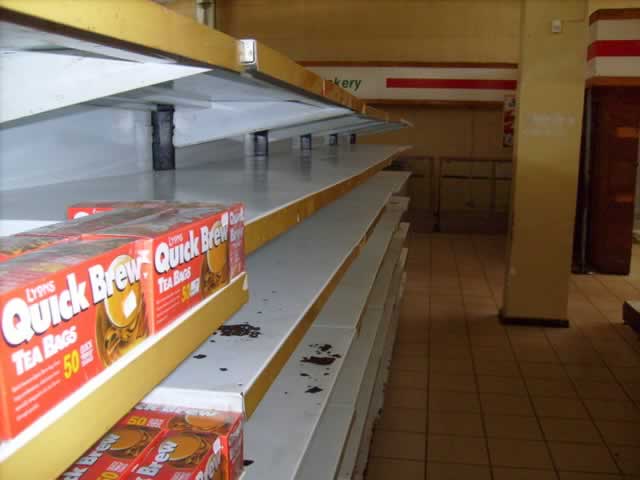
Lloyd Gumbo Mr Speaker Sir
Things were coming to a halt, fuel stations had more queues than fuel, supermarkets had condoms and tea leaves, sadza had become an endangered meal with institutions of higher learning turned into war zones as students demonstrated
Government is in a fix. It approved the takeover of the $1,35 billion RBZ debt last year as a measure to capacitate the central bank to perform its core functions.
Zimbabweans have so far expressed their disapproval of the decision in public hearings being conducted by the Parliamentary Portfolio Committee on Finance and Economic Development throughout the country.
Mr Speaker Sir, democracy insists on people’s involvement in governance issues because there is need for greater accountability to voters.
Former American President, Abraham Lincoln is credited with coming up with a catchy definition of democracy during the famous Gettysburg address when he said “ours is a government of the people, by the people, and for the people”.
And Zimbabwe by virtue of being a republic where power resides in the people and is ruled by elected leaders, according to the law, it is important that people’s views be respected even when exercised through their parliamentary representatives.
A true test of democracy is allowing people to say what they want and respecting their choice.
The issue of the RBZ debt is not new, neither should it be considered a political issue.
Fact, the central bank played a significant role during the hyper-inflationary era through its quasi-fiscal activities whose legality is subject for another day.
Things were coming to a halt, fuel stations had more queues than fuel, supermarkets had condoms and tea leaves, sadza had become an endangered meal with institutions of higher learning turned into war zones as students demonstrated.
Echo was the sound one would hear in most Government buildings as they were always deserted with civil servants, just like the rest of fellow Zimbabweans, joining long queues in search of scarce commodities.
People joined queues with no idea whether the quintillions of Zimbabwean dollars they had would be able to buy whatever was being sold.
Supermarkets and bakery attendants became the most popular people in town whenever they had something in stock.
I would not be surprised if some of the male attendants hooked up or married the most exquisite women courtesy of sugar or bread (no pun intended).
Sanctions were biting and they still are, resilience was the name of the game as Government did not want to be seen to be giving in to the demands of regime change merchants.
Faced with such a daunting task of busting the effects of the illegal sanctions, then central bank Governor Dr Gideon Gono implemented various interventions that were meant to calm the nerves.
It was not clear at the time whether he was the brains behind the interventions or he was just implementing what came from politicians.
We had the Basic Commodities Supply Side Intervention (Bacossi) which other people prefer to shorten as Baccosi without interpretative logic.
The initiative was meant to feed Zimbabweans and save them from the calamities of hunger.
Then there was the farm mechanisation exercise where resettled farmers got equipment from tractors, combine harvesters to ox-drown ploughs and scotch-carts.
This was meant to empower indigenous farmers so that they could produce and feed a nation that was under the onslaught from its former colonial masters.
These interventions form part of the RBZ debt that is being talked about today.
Dr Gono’s efforts apparently failed because beneficiaries of the farm mechanisation programme who had good yields preferred to sell their produce outside Zimbabwe where they would get foreign currency.
Providing food to the nation was an insurmountable task, as a result not every citizen was a beneficiary of the Bacossi programme amid allegations of corruption bedevilling the exercise.
Neither is every citizen a resettled farmer to have benefited from the farm mechanisation intervention.
Some of the citizens have no one in the family who benefited from any of these noble interventions.
Under such circumstances, Mr Speaker Sir, it would be unfair to expect those people or their children to shoulder the liability of something they did not partake in whether in real life or from their fathers.
The issue is, people who benefited from the farm mechanisation exercise had their names taken down.
This record must be in some files somewhere gathering dust instead of providing an answer to the puzzle that Zimbabwe finds itself in.
Farming is a business.
For this reason some farm mechanisation beneficiaries who were successful in their farms sold their produce to the foreign market so that they could get foreign currency since our Zimbabwean dollar was losing value even before the bearer cheque ink had dried.
They did not donate their produce to Zimbabweans who were hungry and hustling to and from neighbouring countries buying the same food that those beneficiaries had exported.
Government also assumed the $27 million debt of a private agro-dealer, Farmers World, at China Eximbank for farming equipment the former gave to farmers on loan together with the Industrial Development Corporation.
Farmers World, owned by former MP for Muzarabani South, Edward Raradza, should be made to pay back to the Government.
Farmers World and the IDC were operating on a commercial basis and should deal with their liabilities than expect a non-beneficiary of the equipment to pay for it now or in future.
It is also a fact that part of the RBZ debt accrued when the bank raided foreign currency accounts of private organisations to allegedly fund government activities.
Some of those victims are now expected to pay for what was illegally taken away from them.
No proper auditing has been done to establish what the money was used for or if it was done, the outcome is yet to be made public.
Yes, Government wants to assume the RBZ debt for the good of the bank and the country but those who owe must be made to pay because their names are documented.
Is it a case of a good Government with bad debtors?
If Parliament is to approve the Bill then the obligations must be put on beneficiaries of the various schemes to bear the cost by paying back to Government.
Without that, it would be unfair and unrepresentative of the people to carry a burden for something they did not enjoy.
As has been suggested by some people who have given evidence before the portfolio committee, the debt must be categorised so that people can see the actual debt that the central bank incurred buying medicines or other social services that were targeted at Zimbabweans in general.
Mr Charles Tavazadza of Mutare was quoted as saying: “I am a farmer and a beneficiary of farm mechanisation and I am prepared to pay for the pump that I got.
“There are people who got tractors and combine harvesters and most of them are deriving benefit from this equipment. It becomes unfair to ask ordinary people to pay for such equipment.”
Anything else that came out of commercial deals must be paid for by those who benefited.
My heart bleeds at the prospect of seeing this issue wearing a political face when it is brought to Parliament. That would border on deception and criminality.
It also bleeds at the prospect of seeing the portfolio committee’s report and people’s views being shoved away.
Ordinary Zimbabweans would be losers at the end of the day.
There is no need for politicians to be divided along party lines on this issue.
This is a purely business issue for which business decisions must thrive.
Mr Speaker Sir, it is clear that some people cashed in on well-intended Government policies.
Why should ordinary people bear the cost?
Feedback: [email protected]



 Online Reporter