Chronicle Editor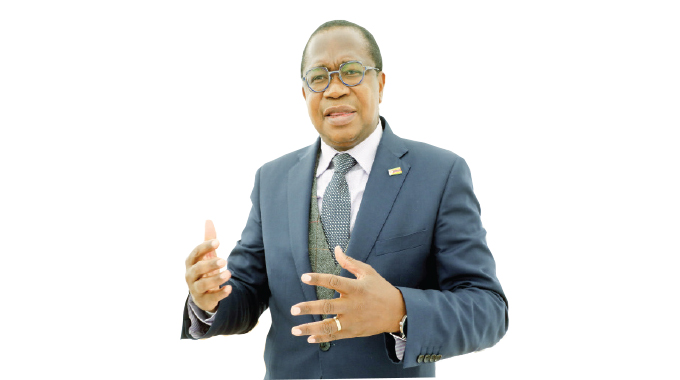
Nqobile Tshili, Chronicle Reporter
GOVERNMENT is using Statutory Instruments (SI) to instil discipline in the financial sector as it works to reform and stabilise the economy, Finance and Economic Development Minister Professor Mthuli Ncube has said.
Prof Ncube said this while addressing journalists at a media briefing in Bulawayo on Thursday night.
He touched on countless projects that Government has undertaken since the 2018 harmonised elections.
The Finance and Economic Development Minister lauded Zimbabweans for being resilient despite experiencing several economic shocks or disasters in the past few years.
Zimbabwe has had to deal with several disasters including Cyclone Idai, successive droughts in the 2018/19 and 2019/20 rainy season as were as the health disaster compounded by Covid-19 pandemic.
These disasters saw Government being forced to make unbudgeted allocations to cater for the shocks.
Prof Ncube said despite the economic challenges that have been bedevilling the country, Government has made strides in reforming the economy, even if it meant taking painful decisions.
He said most of the reforms that Government has embarked on are meant to ensure a level playing field hence the promulgation of several SI.
“When policymakers are reforming an economy, a lot of SIs will be issued. Why? Because you are reforming, you are fine-tuning and when you are reforming, you change. To ensure compliance, you issue an SI. When you fine-tune you issue another one until you get to a point that there are fewer and fewer SIs,” said Prof Ncube.
“In the last six months, there have been fewer SIs. Has anyone noticed? If you haven’t noticed, go back and count. You will find that over time when an economy stabilises or when as policymakers we are getting to the goal, there are always going to be fewer SIs. Because, SIs are about reforms.”
He said SI 127/2021 which was recently promulgated to compel business to use the official US dollar to Zim dollar exchange rate is part of the raft of measures being implemented by Government.
Prof Ncube said Government is creating an environment for a private sector-led economy.
“When we introduced the market-based system for foreign currency at the beginning of 2019, it was the private sector that pushed for it.
We said, we like what they are saying and let’s do that and make sure that it works well and the private sector complies, the business sector complies, so whenever you see us issue SIs here and there, all we are trying to do is fine-tune (the business environment). To make sure there is compliance and nothing untoward. We want to make sure that thing works better. We want to see a well-functioning economy,” he said.
Prof Ncube said Government was optimistic about economic prospects following a successful agricultural season.
“We are very pleased about where we are right now, the stability, falling inflation, the fiscal side is balancing well, it is progressing well, the agricultural sector has recovered in a very big way this year. We expect growth in real terms of about 38 percent that is what we have on our forecast.
We have matched 1982 figures in terms of output in the 2020/21, traditional grains the output is up, cotton the output is up and now we have a different challenge that we have to deal with,” said Prof Ncube.
The minister said he was not worried about having the cross rate in the formal sector matching the one offered by the parallel sector.
“Some individuals are concerned about the gap between the auction rate and the so-called parallel rate. You know what, the most important thing is stability. It’s not about closing that gap. But also, who are you closing that gap with? If 90 percent of our transactions are through the auction of which they are, we are availing up to US$40 million per week, which is quite a lot of dollars. Then one is trying to converge with someone trying to provide currency in some kind of a corner,” said the minister.
“But at the same time, we still want some kind of discipline so that you as consumers are also protected, businesses also do the right thing. If you recall, the entire market system of foreign currency was advocated for by the private sector.” — @nqotshili.



 Online Reporter