Chronicle Editor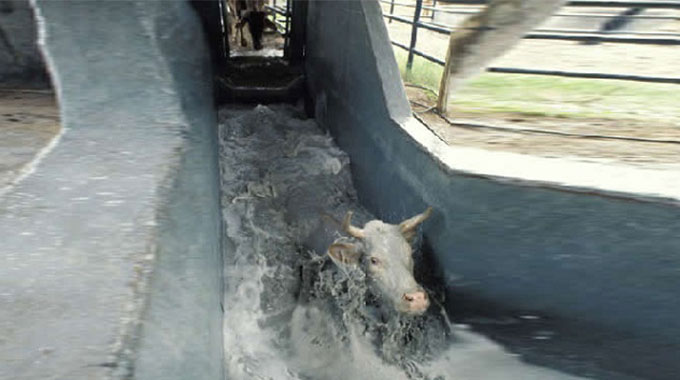
Elita Chikwati, Harare Bureau
Enough dipping chemicals to meet all national demands for six months have been stocked by the Department of Veterinary Services in the Ministry of Lands, Agriculture, Water and Rural Resettlement following adequate financing from the Government and international donors.
This is expected to see a decline in the number of cattle that succumb to tick borne diseases especially January disease which is prevalent during the rainy season.
The department received more than $21 million from the Ministry of Finance and Economic Development and US$2,3 million from developmental partners: the United Nations Development Programme(UNDP), Food and Agriculture Organisation and dip chemical manufacturing companies for the procurement of dipping chemicals.
From the US$2,3 million, the department bought chemicals for 1 886 dip tanks out of a total 4 000 dip tanks.
These chemicals have been distributed to 30 districts where the development partners have running projects. The 30 districts are part of a pilot project on sustainable supply of dip chemicals to communal dip tanks where farmers have been trained to manage their own dipping and manage dip fees they collect under the supervision of the department.
The department’s chief director Dr Josphat Nyika yesterday confirmed the development.
“The dipping chemicals we have mobilised will take us for six months and this is a shot in the arm as far as provisions for dipping chemicals are concerned,” he said.
“There are 3 840 dip tanks under the national dipping programme. The gesture by the development partners leaves the DVS with about 2 000 dip tanks to provide dipping chemicals for the next six months. This will go a long way in alleviating the dip chemical shortages that have caused massive cattle deaths due to January disease and other tick borne diseases.
“Last year the country lost more than 50 000 cattle to tick-borne diseases and this year we are more prepared to fight the diseases. We hope if we continue getting this level of support we will be able to control January disease.”
Dr Nyika said the Veterinary Department staff were on the ground educating farmers on the importance of dipping cattle, how to dip and when to conduct the operations
January disease, which is also known as theileriosis, is a tick-borne disease that is transmitted by the brown ear tick. The disease occurs from December to March with the peak in January hence the name January disease.
The affected animals do not perform, are weak and have laboured or difficult respiration, swollen lymph nodes and clouding of eyes. The cattle also have a discharge from eyes and nostrils and the animals die suddenly.The efficient and cheapest way of dealing with disease is through the control of ticks by dipping. Vaccines have not been very effective as some of the vaccinated animals have become carriers of the disease.
January disease is a notifiable disease in Zimbabwe and when suspected farmers are compelled by the law to report to the Department of Veterinary Services.



 Online Reporter