Chronicle Editor
Nqobile Tshili, [email protected]
AT the age of 22, Rodney Sibanda, became one of the history makers among the San community in Tsholotsho District, Matabeleland North Province, as he was recruited to commence training as a prison officer under affirmative action.
He had not even completed Grade Seven studies and three years into his employment he is this year expected to sit for Zimsec Grade Seven examinations.
“I joined the ZPCS in 2021 and my life has changed since then. When I joined prisons I had not completed Grade Seven as my family didn’t have money to advance my education,” he said in a recent interview.
“Joining the ZPCS has not just provided an employment opportunity for me but it has enabled me to return to school and I will be writing my Grade Seven this year.”

Coming from the San community, which was previously marginalised in terms of development and opportunity, it took President Mnangagwa’s directive during Cabinet in October 2021 to resolve that the country’s security sector must set up a quota system for the integration of the San into the rest of society.
This was part of the Second Republic’s affirmative action to mainstream the San community into the broader economic sectors in line with President Mnangagwa’s policy of inclusive development.
Following the directive, the Zimbabwe Prisons and Correctional Services became one of the first institutions to start recruitments targeting members of the San community in the same year.
ZPCS even lowered the entry level for the San community with the five passes at Zimsec being scrapped for them.
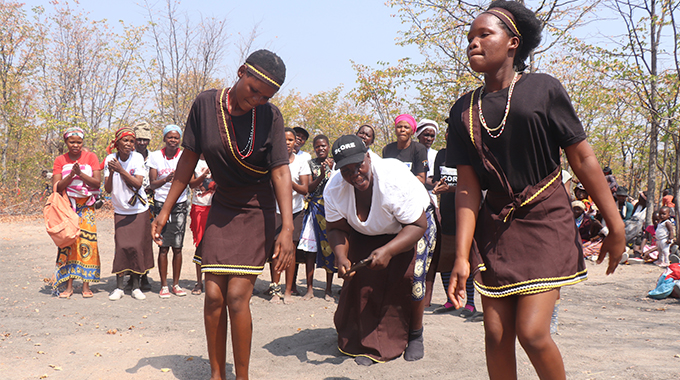
For Sibanda, and other beneficiaries, this has created a unique window of opportunity, which has impacted on their wider family. His sentiments were shared by Sikhululiwe Moyo (31), a mother of two, who revealed that it was not easy to join the service.
“I joined the ZPCS in 2021, it wasn’t easy. I was afraid and our parents were even discouraging us. They feared that their children would be killed and we would not come back. But some of us who were brave enough decided to join,” said Ms Moyo.
She is now at Form Three level and is targeting to write Ordinary Level exams next year. Ms Moyo said she is more economically empowered compared to her days when she was not employed.
“Since I joined the prisons my life has significantly changed. I’m now able to buy my property and I can buy things in instalments, things that I was not going to be able to afford before I joined the prisons,” said Ms Moyo. “Right now I’m doing my Form 3 and I’m looking forward to writing some of my O-level subjects next year in June.”
For Ms Nomsa Moyo (32), a mother of three, she has become a family bread winner since joining prisons.
“I was recruited in 2022, and since then my life has significantly been transformed. I’m now able to look after my three children and my mother,” she said.
“My children were out of school but being recruited by prisons has enabled me to even take them back to school.”
Ayibongwe Moyo (22), said he has been able to buy property and believes that his family is slowly being plucked from poverty, thanks to Government affirmative action on his community.
“Since I was recruited there are so many things that I have been able to do at home. Our homestead has changed and the situation is similar to the other colleagues who I was recruited with.
“We have been able to buy cattle, goats and have built modern houses roofed in zinc and even other huts are being further developed. I’m assisting both my parents to make this development.
“While most of us had not completed our education, we have been encouraged to pursue our studies. Some are writing their O-level this year and I’m writing next year,” said Moyo.
ZPCS national spokesperson Assistant Commissioner Meya Khanyezi said her organisation was just following Government’s policy in recruiting the San.
“We are implementing the Government’s policy of inclusive development and having members of the San community in our ranks is a confirmation of the Second Republic’s drive of leaving no one behind,” she said.
“We have also encouraged them to further their studies to motivate them that they can achieve anything and become role models in their communities.”
Chief Goledema, who was installed last year as the first ever San chief to be installed praised the Government for taking deliberate efforts to uplift members of their community.
“You have seen how glowing our children who have joined ZPCS are looking. I know some people always want to cross the border to work in neighbouring countries,” he said.
“But you are better off working here. I will encourage all our children to go to school and gain skills, which can help develop our society,” said Chief Goledema.
He challenged all the Government departments to work closely with the San community to uplift their lives. — @nqotshili



 Online Reporter