Rutendo Nyeve
THE Government has challenged the engineering profession to develop practical solutions to the water and sanitation crisis facing Bulawayo, where approximately 42 percent of treated water is lost through leakages in ageing infrastructure.
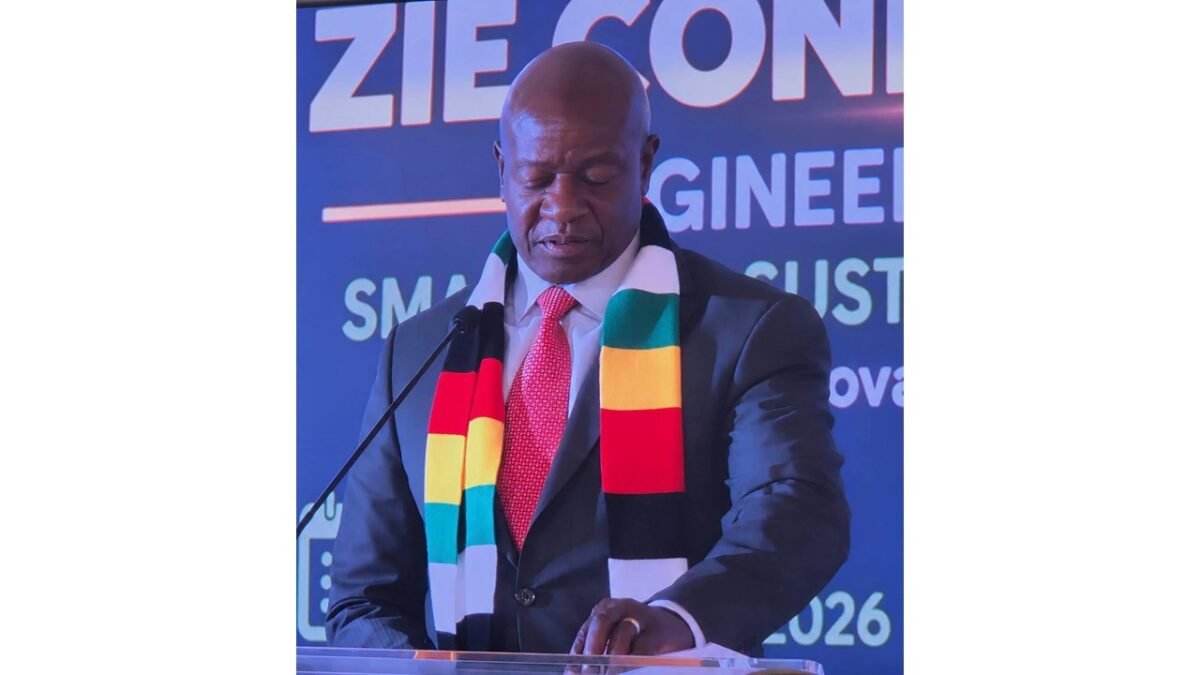
Speaking at the Zimbabwe Institution of Engineers (ZIE) Annual Infrastructure Conference in Victoria Falls on Thursday, Minister of Local Government and Public Works Daniel Garwe described the situation in Bulawayo as a national emergency requiring urgent technical intervention.
“Bulawayo reports losing approximately 42 percent of treated water through leaks in ageing pipes,” Minister Garwe said.
“Bulawayo is not an exception. Most local authorities operate networks designed for much smaller populations.”
He said the crisis was not only an engineering challenge but also a governance issue, urging engineers to embrace smart metering and monitoring technologies to identify water losses and detect system failures before they escalate.
“We must know where water is lost. We must know where systems are failing. We must know where investment will have the greatest impact,” he said.
Minister Garwe acknowledged that Government alone could not finance the extensive infrastructure rehabilitation required, urging local authorities to explore viable Public-Private Partnerships (PPPs) to meet Minimum Service Delivery Standards.
The conference also heard that Government had identified 527 high-impact infrastructure projects across key sectors, including energy, transport, water and sanitation, ICT, agriculture, health and education.
Minister Garwe challenged engineers to embrace artificial intelligence responsibly, strengthen local capacity and modernise engineering standards.
He also called for lifecycle planning and properly funded maintenance to be incorporated into every infrastructure project.
“Growth is not development. Development must be built. It is built through sound design, competent supervision, quality construction and planned maintenance. That is why engineering is not a support service. It is a strategic function of the State,” he said.