Sukulwenkosi Dube-Matutu, [email protected]
GOVERNMENT has commissioned Tjemahale Secondary School in Bulilima District, Matabeleland South Province, in a major boost to access to quality education as the Second Republic continues investing in human capital development in line with Vision 2030.
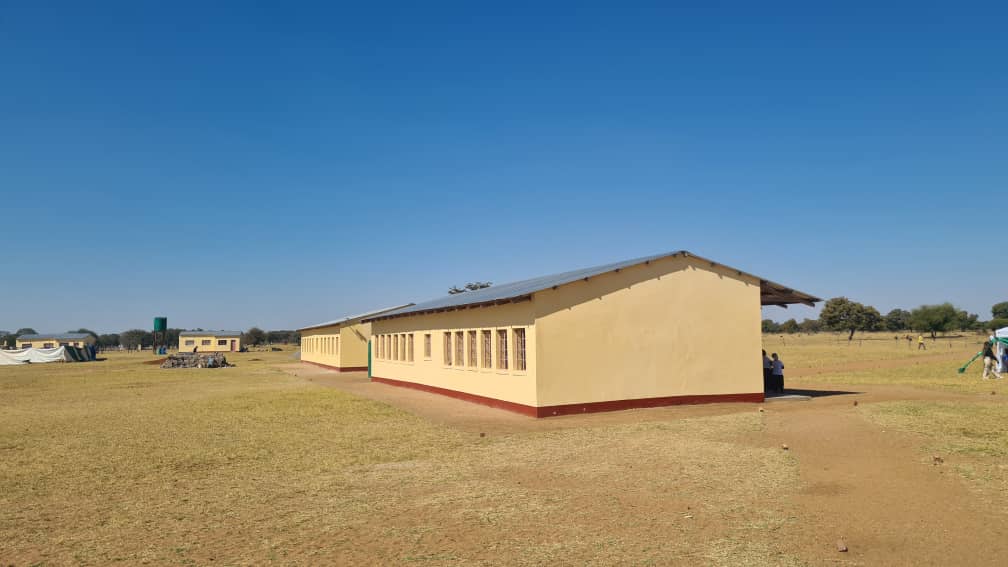
Constructed through a collaborative effort involving the Devolution Fund, the Constituency Development Fund (CDF), contributions from the diaspora community, CAMPFIRE and other development partners, the school is expected to ease pressure on existing learning institutions while reducing the long distances previously travelled by learners to access secondary education.
The commissioning marks another milestone in Government’s drive to improve education infrastructure through a whole-of-Government and whole-of-society approach, with several new schools established across Bulilima District in recent years.
Officially commissioning the school at the weekend, the Minister of State for Matabeleland South Provincial Affairs and Devolution, Albert Nguluvhe, said the project reflects Government’s commitment to expanding access to quality education in line with Vision 2030 and National Development Strategy 2 (NDS2).
“For many years, the shortage of primary and secondary schools in some parts of the province forced children to walk long distances or drop out of school, thereby discouraging the transition from primary to secondary education,” he said.
Minister Nguluvhe said education is one of the key pillars of Zimbabwe’s socio-economic transformation.
“Government continues to prioritise investment in education as a catalyst for sustainable development in line with Vision 2030, which seeks to transform Zimbabwe into a prosperous and empowered upper-middle-income economy,” he said.
Minister Nguluvhe said the establishment of Tjemahale Secondary School aligns with the Human Capital Development and Innovation pillar under NDS2 while advancing Sustainable
Development Goal 4, which promotes inclusive and equitable quality education.
“The establishment of Tjemahale Secondary School is fully aligned with National Development Strategy 2, particularly the pillar on Human Capital Development and Innovation, which recognises education as the bedrock of national transformation,” he said.
“This project also gives practical expression to Sustainable Development Goal Number Four, which calls for inclusive and equitable quality education and lifelong learning opportunities for all.”
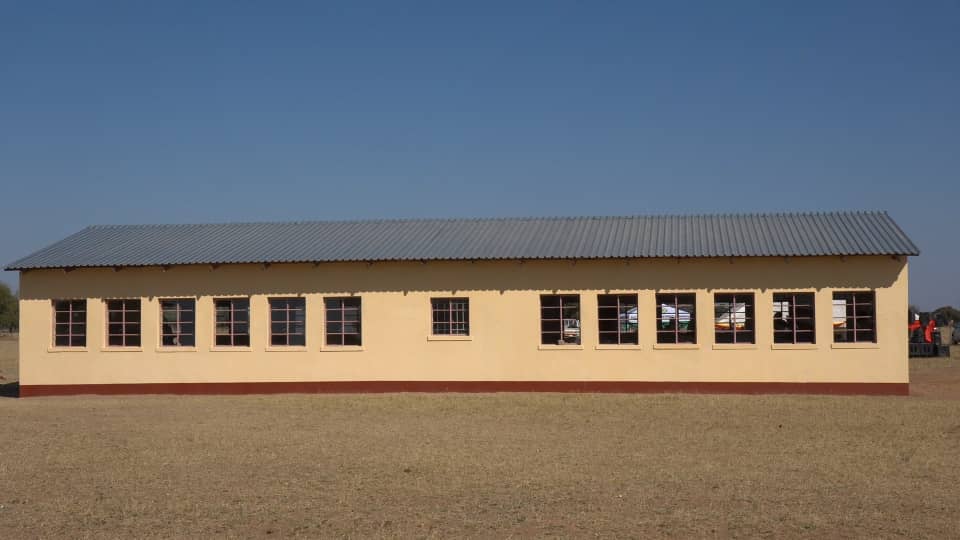
The school comprises two classroom blocks, two F14 teachers’ houses, a science laboratory, a solar-powered borehole, ablution facilities and other supporting infrastructure designed to create a conducive learning environment.
Minister Nguluvhe said the institution is among 40 schools across Matabeleland South benefiting from science laboratories being constructed as part of the legacy projects for the country’s 46th Independence Day commemorations.
“This strategic investment demonstrates Government’s unwavering commitment to strengthening science, technology and innovation as key drivers of industrialisation in line with the Heritage-Based Education 5.0 model,” he said.
“I am confident that once these laboratories are fully equipped and operational, we shall witness increased uptake of Science, Technology, Engineering and Mathematics (STEM) disciplines in Bulilima District and Matabeleland South Province as a whole.”
Before the school’s construction, local learners walked up to eight kilometres to attend Siyaphambili and Phakama secondary schools, exposing many, particularly girls, to absenteeism, school dropouts, early marriages and other social challenges.
Minister Nguluvhe commended the local community, the diaspora and development partners for working together to address the challenge.
“Through the unwavering commitment of local residents, contributions from our sons and daughters in the diaspora, the Constituency Development Fund, support from CAMPFIRE and devolution funding, this long-held dream has become a reality,” he said.
“I am informed that the school was constructed at a total cost of US$156 742, financed through a combination of multiple funding sources. This achievement is a practical demonstration of the whole-of-Government and whole-of-society approach.”
The minister urged the community to safeguard the new infrastructure and continue supporting the school’s development.Bulilima Rural District Council chief executive officer, Mr Billiat Mlauzi, said the project was a major step towards improving access to education and service delivery.
“Today we commission Tjemahale Secondary School to mark yet another historic milestone in Bulilima District’s development trajectory. This achievement enhances access to education and improves service delivery as we journey towards Vision 2030,” he said.
Mr Mlauzi said the district has 11 schools under construction, in addition to clinics, bridges and other public infrastructure projects being implemented through devolution funding.
Speaking at the same event, Deputy Minister of ICT, Postal and Courier Services and Bulilima legislator Dingumuzi Phuthi applauded the diaspora community for its contribution to the project and said Government was also expanding ICT infrastructure in rural schools to bridge the digital divide.
“As children of Bulilima, we have demonstrated that we can build our country. I salute the diaspora community for contributing to this cause. Today, we look at this school with pride because we have done it,” he said.