Nyore Madzianike
Senior Reporter
The Government is determined to restore order on the country’s roads following a surge in road traffic accidents which had claimed 1 979 lives and left 8 061 people injured as at September 30, 2026.
A total of 48 150 road traffic crashes were recorded during the period, with more than 94 percent attributed to human error, while stray animals have also contributed to accidents.
Speaking at the High-Level Road Safety Indaba in Harare this Friday, Vice President Dr Kembo Mohadi called on the Zimbabwe Republic Police to intensify enforcement, close loopholes and bring perpetrators to book.
He said everyone must be accountable for their action or inaction on the roads, including pedestrians and driving instructors.
“It is with a deep sense of sorrow that we were briefed that as of September 30, 2026, Zimbabwe has already recorded 48 150 crashes which have claimed 1979 lives and left some 8 061 with various degrees of injury,” he said.
“Honourable Ministers and distinguished delegates, we cannot accept a situation in which road traffic crashes are treated as an unavoidable consequence of mobility.
“Many of these crashes are preventable through responsible road use, effective enforcement, sound infrastructure, appropriate technology, and strong institutions.
“It is within our collective reach for us to respond positively to all the foregoing factors, hence, my clarion call today is for unity of purpose between and among all key stakeholders as we tackle this scourge head-on.”
Vice President Mohadi said road traffic crashes were also placing pressure on health institutions, diverting resources from development, disrupting business operations and imposing significant social and economic costs on the country.
He said Zimbabwe’s pursuit of economic growth, modernisation and efficient transport infrastructure should be accompanied by efforts to ensure that roads preserve lives rather than become places of preventable tragedy.
The Vice President said the country should use the Indaba to lay a firm foundation for a National Plan of Action that would promote accountability and measurable progress towards reducing road carnage.
“Our commitment must be clear; every Zimbabwean should be able to travel on our roads with greater confidence that their safety is the Government’s priority,” he said.
“We must adopt the trajectory that takes us on target to reduce road carnage by 50percent, (compared to 2020 figures) by the year 2030, in line with Vision 2030 and the Second Decade of Action Against Road Safety.”
He said the Government was committed to providing leadership, policy direction and an institutional framework necessary to protect human life.
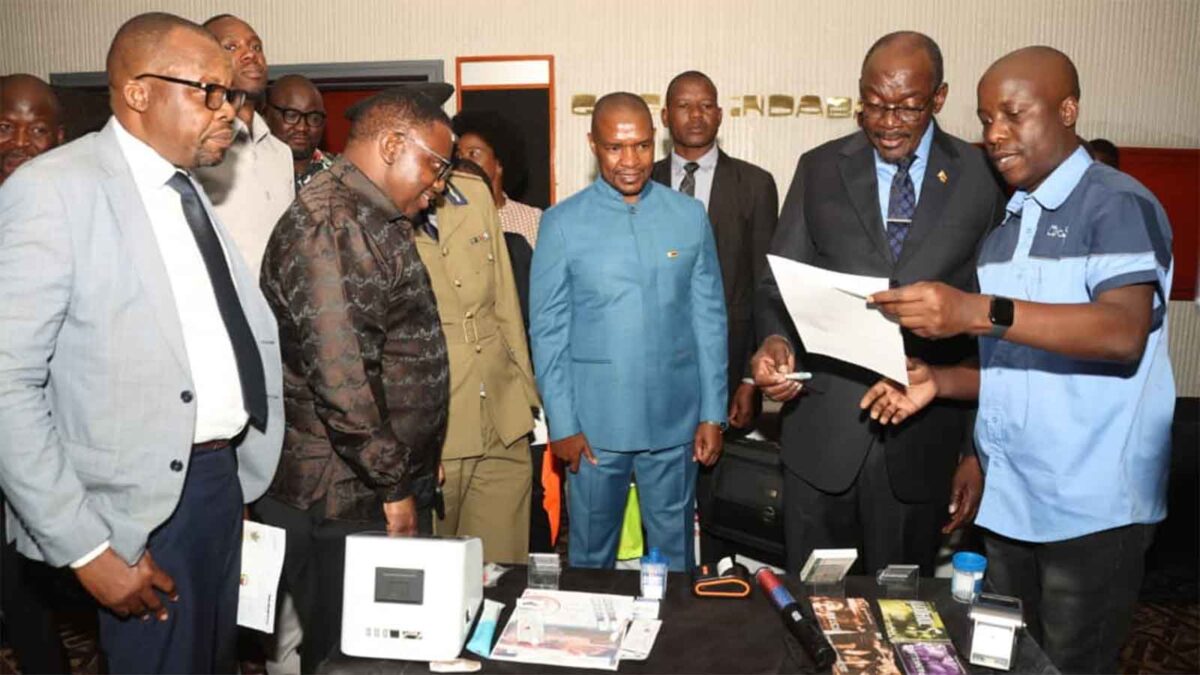
Vice President Dr Mohadi said the deployment of technology in road safety enforcement was expected to address shortcomings associated with human intervention.
He said the Smart Traffic Management System had already recorded more than four million violations across 20 intersections in Harare within weeks of its rollout.
“It is very disturbing that within weeks of rollout, the Smart Traffic Management System has already logged more than 4 million violations across 20 intersections in Harare,” he said.
“These violations are more than double the number of registered vehicles in Zimbabwe, thus about three violations per vehicle on average, and this is in Harare alone. We cannot carry on like this. As Government, we are determined to restore order on our roads.
“I therefore urge the Zimbabwe Republic Police to intensify enforcement, close loopholes and bring perpetrators to book. Everyone must be accountable for their action or inaction on the road, even pedestrians and driving instructors.
“In the same vein, I also call upon the judiciary to process traffic cases promptly and impose appropriate sentences without delay, fear or favour.
“If special courts for traffic offences are needed, they should be established swiftly to address road carnage decisively.”
Vice President Dr Mohadi said the country needed evidence-based decision-making, using available data from the police to guide interventions aimed at reducing road accidents.
He said motorists, pedestrians and cyclists must obey road rules and regulations at all times, even in the absence of police.