admin
admin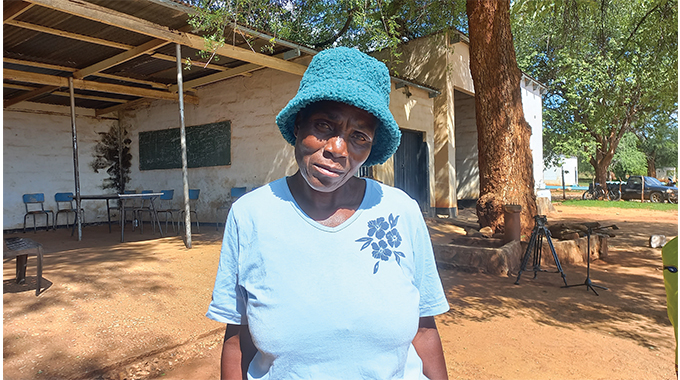
Sukulwenkosi Dube-Matutu, Matabeleland South Bureau Chief
GOVERNMENT has put in place various measures to boost agricultural production and among them is training of lead farmers who have been selected to spearhead agricultural projects in the rural areas.
The lead farmer concept was first introduced in the late 1990s. They were tasked to spearhead a number of agriculture programmes. Government has now moved on to upscale the role of lead farmers. Their training has been modified to incorporate modern farming practices.
The lead farmers have taken an active role to boost agriculture production under the Climate proof Intwasa/ Pfumvudza programme.
Government is committed towards transforming the agricultural sector and the support of the Pfumvudza/Intwasa programme is one of the priority programmes meant to boost food production.
Government adopted Intwasa/Pfumvudza to address the problem of low production and productivity which continued to negatively affect food security in Zimbabwe.
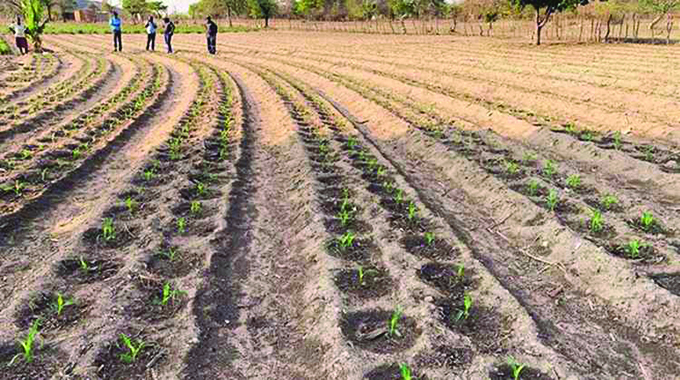
The concept promotes climate proofing agriculture by adopting conservation farming techniques and it involves the utilisation of small pieces of land and application of the correct agronomic practices for higher returns.
A majority of farmers in Matabeleland South province have received crop input packages for traditional grains for the 2022/23 farming season under the Climate-Proofed Presidential Inputs Scheme, popularly known as Intwasa/Pfumvudza.
Matabeleland falls under agro-ecological regions three, four and five characterised by a low rainfall.
Government announced that this year, the distribution of seed types and varieties for the Pfumvudza/Intwasa programme will depend on the climate and soils of each region in order to boost production.
The lead farmer approach is one of the strategies being used by the Ministry of Lands’ Agriculture, Water, Fisheries and Rural Development to try and reach all farmers across the county under the Pfumvudza/Intwasa programme. Their role is mainly to disseminate farming related messages to farmers, educate fellow farmers and to make follow ups on progress that has been made by farmers and to encourage those lagging behind.
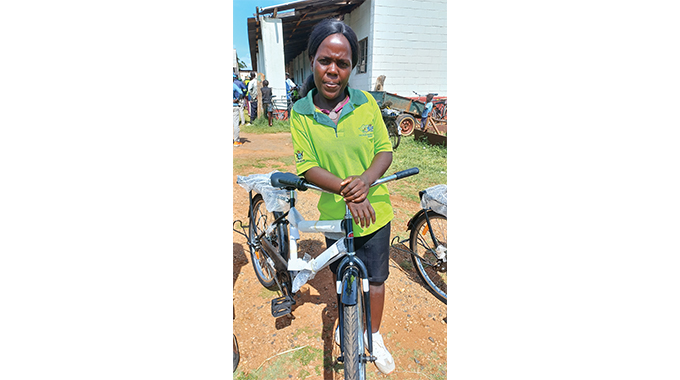
A lead farmer from Bethel Village in Gwanda, Ms Virginia Moyo said she attends training workshops and then shares the knowledge with her fellow farmers. She said the trainings are usually held once every month.
“As a lead farmer my main role is to educate and motivate fellow farmers, it’s difficult for extension officers to reach out and supervise all farmers, hence we were incorporated within the agricultural sector. We used to hear about lead farmers in the past but the concept was never effective until now when Government trained us and deployed us.
“I was first evaluated before I was appointed as a lead farmer. The extension officers looked into my farming habits to see whether I could be an example to my fellow farmers. We were trained as lead farmers and we continue to receive training so that we can remain relevant and so that we can learn new farming techniques. I then share the knowledge with my fellow farmers,” she said.
Ms Moyo said during the process of teaching other farmers she also learns from them. She said it was her role to motivate farmers to come up with solutions and better methods to improve their production.
Ms Khekhe Nyathi from Diba Village in Bulilima District said in the past farming was just an activity that was done without applying much technique. She said now the practice has evolved with the main target being to ensure that farmers maximise their production.
“Farming has evolved and that is why we have lead farmers today. I’m glad to be at the forefront of this evolution. Being a lead farmer acts as a motivating factor for me to do better. I’m also a farmer and my fellow farmers should learn from me and I should be an example of how things should be done. This responsibility pushes me to do better and to learn more,” she said.
Ms Merjury Sola from Mpumelelo Village in Ward 1 said her main purpose was to ensure that farmers were highly productive either by educating them, making follow ups and encouraging them. Ms Sola said she loves farming and it was her passion to share the knowledge she has acquired with other farmers. She said improved farming methods could help to improve the livelihoods of many through enhanced production.
Matabeleland South acting provincial agricultural director rural development services,
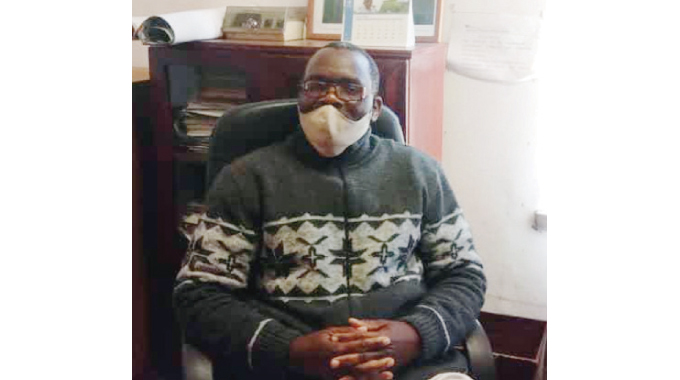
said when the lead farmer concept was first introduced it was focusing on a few agriculture aspects. He said the concept was now targeting all agricultural dynamics. Mr Ndlovu said more and more lead farmers were being trained and incorporated into the system. He said the province has over 1200 lead farmers.
“The concept has been adopted by a number of development partners. The Department of Agritex is being assisted by developmental partners to mobilise resources for capacity building of lead farmers. Our main target is to have as many farmers being lead farmers. The concept is enterprise based, we can have a lead farmer responsible for poultry, we can have a leader farmer under horticulture, small livestock etc.

The task of lead farmers is to mobilise other farmers, bring farmers together, create a conducive learning and knowledge sharing environment for farmers, the lead farmer also links the other farmers to the technical arm which can either be Government or the private sector. The lead farmer creates that enabling environment for farmers to adopt concepts and also teach other farmers,” he said.
Mr Ndlovu said a lead farmer is knowledgeable in the particular enterprise of focus. He said the lead farmers also links the rest of the farmers with the entire value chain. Mr Ndlovu said the farmer to farmer knowledge sharing processes have proven to be effective. — @ DubeMatutu



 Online Reporter