Judith Phiri [email protected]
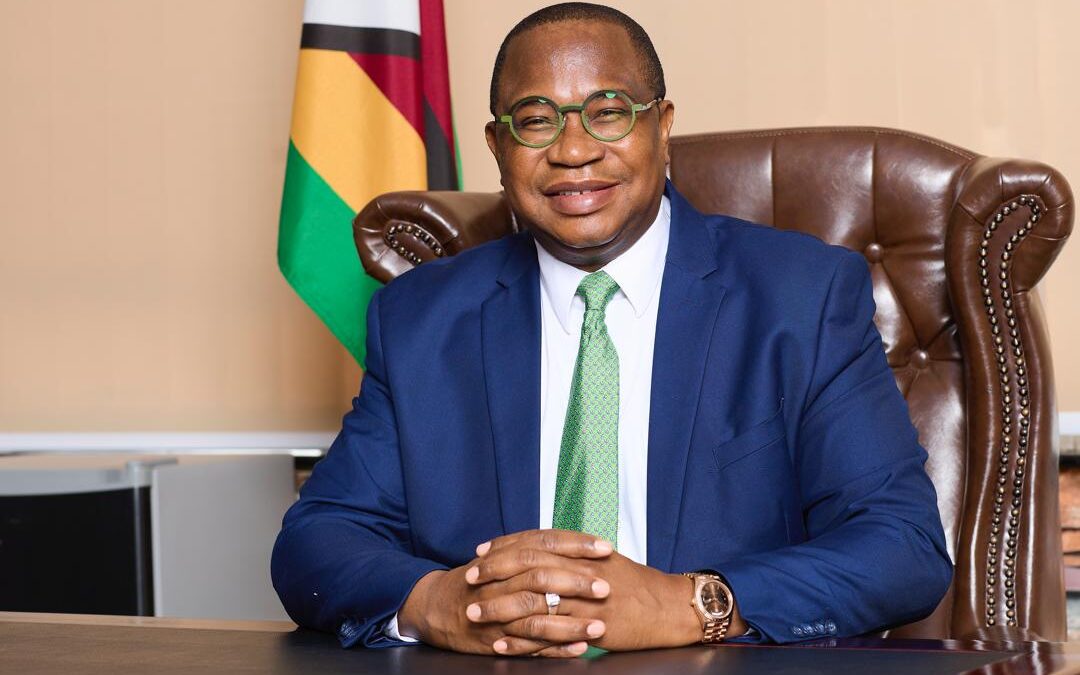
FINANCE, Economic Development and Investment Promotion Minister Professor Mthuli Ncube has defended the beverages sugar content tax, insisting that the levy remains necessary to address the health risks associated with excessive sugar consumption and support healthcare funding.
The tax has attracted criticism from beverage manufacturers and other industry stakeholders, as well as the Ministry of Industry and Commerce, who argue that it raises production costs, affects product prices and places additional pressure on businesses already facing high operating expenses.
However, delivering his final responses at the 2027 National Pre-Budget Seminar in Bulawayo on Saturday, Prof Ncube said there was no justification for removing the levy, despite calls for a further review.
The tax was introduced in January 2024 as part of Government efforts to discourage excessive consumption of sugar-sweetened beverages and mobilise resources for cancer treatment and essential medical equipment.
“There is need for Government to adequately finance health costs associated with excessive consumption of added sugar, hence, the introduction of the tax.
“Whereas it is important to benchmark with regional peers, I am pleased to advise that the current rate of US$0,001 pre gram is a result of extensive consultations with beverage manufactures, which presents an administratively simple methodology of exempting the first 4g of added sugar,” he said.
Prof Ncube said Government needed to ensure that the levy remained effective, arguing that manufacturers should consider reducing the added sugar content of their products to protect consumers.
“There is, thus, need to minimise the risk of making the tax ineffective, also considering that the measure is misconstrued as a tax on sugar production. Ordinarily, manufacturers should take a deliberate decision to reduce the component of added sugar in specified beverages, in order protect consumers,” he said.
Government collected US$29 169 209 from the levy in 2024 and US$59 416 884 in 2025, although
the figures are preliminary and remain subject to verification and audit.
Meanwhile, Prof Ncube said Government had taken steps to cushion consumers and the productive
sector against rising fuel costs by reducing or temporarily removing fuel taxes.
Responding to a proposal for a fuel price subsidy, he said Government had been adjusting taxes
since March 2026 to ease the impact of fuel price increases and contain inflationary pressures.
“I am pleased to advise that Government has, since March 2026, removed or temporarily reduced
fuel taxes, with a view to cushion the productive sector and the general public, also cognizant of the
need to contain the inflationary pressure associated with fuel price increases,” he said.
“At the peak of the Middle-East Conflict, Government had to forego an average of US$30 million
per month, in order to reduce fuel costs. The current price of diesel is also a result of the reduction
of fuel taxes, which has gone a long way in easing inflationary pressures,” he added.
On a proposal for the Zimbabwe Revenue Authority (ZIMRA) to work with local authorities in
collecting presumptive tax, Prof Ncube said the suggestion had been noted.
He said existing legislation already provided for such collaboration, with local authorities entitled to
a 10 percent incentive on revenue collected.
“Treasury is already working with local authorities on enhancing administrative modalities thereof,
also considering the challenges being faced by local authorities in the collection of their statutory
rates,” he said.
The minister also addressed proposals to change the rules governing the tax deductibility of
corporate interest expenses.
A proposal had been made to limit interest deductibility to 30 percent of earnings before interest,
taxes and amortisation (EBITA), instead of the current debt-to-equity limitation.
Prof Ncube said the existing restriction was intended to curb tax avoidance by limiting excessive
interest deductions, which can reduce corporate income tax payable.
“The migration to the EBITA methodology, which is likely to undermine Corporate Income Tax
contribution may not be desirable. The proposal will, thus, be carefully studied, cognizant of the
need to safeguard Government revenues,” he said.
He said proposals to introduce a sliding-scale, price-linked mineral royalty regime would also be
examined, taking into account administrative complexities and the risk of revenue losses.
An appropriate structure would be adopted while safeguarding fiscal balance and ensuring that
companies continued to contribute fairly to Government revenue, he said.
Prof Ncube also acknowledged proposals from the Portfolio Committee on Industry and Commerce
on the intermediated money transfer tax (IMTT), route-to-market provisions, manufacturing tax
incentives, the definition of mining, export taxes and mineral royalties.
He said the manufacturing sector was already benefiting from tax incentives covering corporate
income tax, withholding taxes, value-added tax and customs duty, among other measures. The
minister encouraged manufacturers to take advantage of the existing incentives to increase
production.
He said Treasury had also noted calls for further incentives to address structural challenges,
including high electricity tariffs and deficiencies in road and rail infrastructure.
However, Prof Ncube cautioned against relying excessively on tax incentives, saying this could
undermine domestic resource mobilisation and the country’s Vision 2030 development targets.
“Ordinarily, tax incentives should be provided where the productive sector is facing tax challenges, hence, the proposals for additional incentives, especially on Corporate Income Tax is tantamount to entrenching the economy into a Race to the Bottom dilemma, thereby undermining Domestic
Resource Mobilisation strategies towards achievement of Vision 2030,” he said.
“With regards to recommendations on mining-related issues, it would be prudent that responses be provided in the context of recommendations from the responsible Portfolio Committee.”