Online Reporter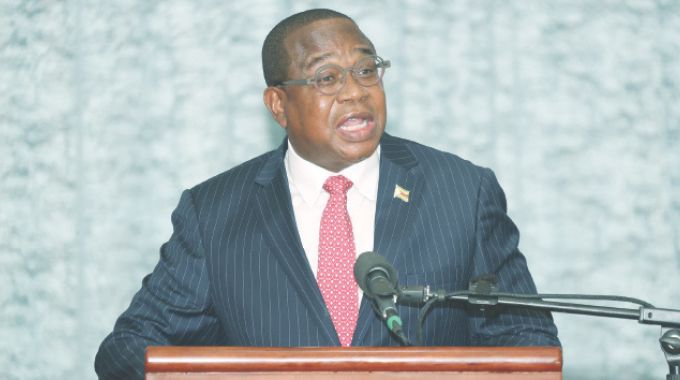
Rutendo Nyeve, [email protected]
GOVERNMENT is working on measures to reduce the cost of doing business on the Zimbabwe Stock Exchange (ZSE) as it seeks to make the bourse more competitive and stem the migration of companies to the United States dollar-denominated Victoria Falls Stock Exchange (VFEX).
In an interview recently in Victoria Falls, Finance, Economic Development and Investment Promotion Minister Professor Mthuli Ncube said Government had asked ZSE management to submit proposals on how listing and other operational costs could be lowered.
The move comes amid growing concerns over the cost of maintaining a listing on the ZSE, with some companies opting to delist from the local bourse in recent years, while others have migrated to the VFEX.
“The two platforms, ZSE and VFEX, can grow together successfully. I think an issue that we need to deal with on the ZSE is the cost of doing business. I have asked management to come back to me with proposals so that those costs can be lowered in order for the ZSE to be competitive,” said Prof Ncube.

Companies including National Foods, Innscor Africa and Lafarge Cement Zimbabwe have delisted from the ZSE, with market participants pointing to factors including compliance costs, liquidity constraints and currency-related considerations.
Prof Ncube said the existence of the two exchanges should not be viewed as a competition in which one must undermine the other, arguing that each platform has a distinct role to play in developing Zimbabwe’s capital markets.
“The VFEX, its primary job is to attract foreign direct investment, making use of the financial centre, especially economics on status, to attract foreign direct investment. That’s not immediately available on the ZSE platform,” he said.
“So it is quite clear that with some differentiation in terms of their roles, and we believe as Government, both can grow together successfully.”
The ZSE, established in 1896, is Zimbabwe’s oldest stock exchange, while VFEX was launched in October 2020 as a subsidiary of the ZSE and operates from the Victoria Falls Special Economic Zone.
Unlike the ZSE, which has traditionally traded primarily in local currency, VFEX is denominated in United States dollars and was established to attract foreign capital by providing investors with greater protection from exchange-control risks and other incentives.
Prof Ncube said Government was also looking at the broader capital-markets ecosystem, which includes other
platforms targeting different categories of businesses and investors.
“And they are not the only two exchanges, by the way. We also have the Finsec, the commodity exchange, then the Zimbabwe Entrepreneurship Exchange and our view is that each of these is targeting certain aspects of opportunity for public listing for investors and all of them ought to grow,” he said.
Minister Ncube said Government was prepared to consider incentives that would enable the different platforms to fulfil their respective mandates.
“As a policymaker whose job it is to focus on these things, I have every reason to find incentives and also I need ideas in terms of incentives that I can throw at these platforms,” he said.
Prof Ncube said the Zimbabwe Entrepreneurship Exchange (ZEEX), in particular, was expected to provide small and medium enterprises with easier access to capital.
“For instance, if you look at ZEEX, we want it to be a platform for supporting SMEs. We are discounting public listings, raising capital,” he said.
The Government’s efforts come as authorities seek to deepen Zimbabwe’s capital markets and provide businesses with alternative avenues for raising long-term financing.
The VFEX has emerged as an important platform for companies seeking access to United States dollar-denominated capital and international investors.
Over the past five years, the exchange has facilitated capital raises exceeding US$100 million across several sectors and has 21 counters, including Pfuma Real Estate Investment Trust, which raised US$25 million through its listing.
The exchange was also recently recognised by TIME Africa as one of Africa’s leading frontier exchanges, highlighting its growing profile as a regional investment and financial-services platform.
Meanwhile, Government has already introduced measures aimed at reducing the cost of transactions in the capital markets.
In early 2025, capital gains withholding tax on share sales was reduced from two percent to one percent, a move welcomed by market participants as supportive of efforts to stimulate activity on the local capital markets.
Regulators are also reviewing listing requirements and fees amid concerns from listed companies over the cost of maintaining a presence on the bourse.
The Securities and Exchange Commission of Zimbabwe has acknowledged receiving complaints from listed companies regarding the cost of maintaining listings, with proposals submitted to Government on ways of easing the burden.
For the ZSE, reducing the cost of doing business could therefore become critical in retaining existing counters, attracting new listings and ensuring that the country’s oldest exchange remains a viable source of long-term capital for Zimbabwean businesses.